
Major overview
Major in forensic investigation and contribute to solving crimes
Forensic investigation focuses on how evidence is identified, collected and interpreted to support criminal investigations. By combining scientific knowledge with investigative methods, you’ll learn how to examine crime scenes and contribute to accurate, evidence-based outcomes.
Part of our Bachelor of Forensic Science – the only undergraduate course of its kind in WA – the Forensic Investigation major equips you with the practical skills and theoretical knowledge needed to work in crime scene and investigative environments. You’ll build a foundation in chemistry, biology and statistical data analysis, alongside specialised areas such as forensic anatomy, anthropology and digital imaging. You’ll also explore criminology, policing and the legal system to understand how forensic science operates within the broader criminal justice system.
Throughout your forensic investigation major, you’ll learn from practising forensic scientists how forensic science is applied to criminal investigations. You’ll develop hands-on skills in crime scene examination, including documenting scenes, collecting evidence and applying forensic techniques in simulated environments. You’ll also learn how to retrieve, analyse and evaluate forensic information from a range of sources.
Our Forensic Investigation major is designed to complement a primary major in Forensic Biology or Forensic Chemistry and Toxicology, allowing you to tailor your forensic science degree and build a broader forensic skillset aligned with your interests and career goals.
By the time you graduate, you’ll be equipped with the knowledge and practical experience needed to launch your forensic investigation career. This major also offers a solid foundation that can prepare you to progress to our Master of Forensic Science (Professional Practice), allowing you to further expand your expertise.
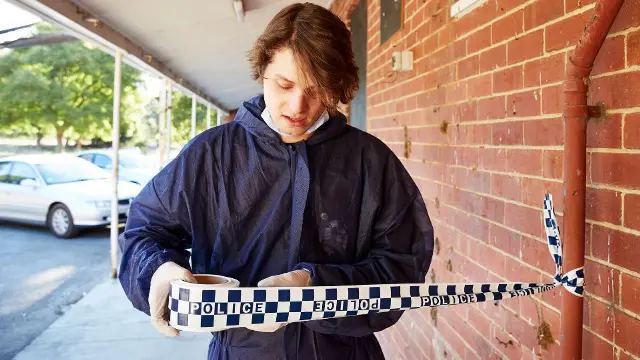
3 reasons to study forensic investigation at Murdoch University
- Study a contemporary curriculum shaped by current and emerging forensic science practices.
- Learn from experienced academics and practitioners with real-world forensic investigation expertise.
- Gain hands-on experience applying forensic techniques in simulated crime scene environments.
What you’ll learn
- Build a foundation in forensic science, including chemistry, biology and statistical data analysis relevant to investigations.
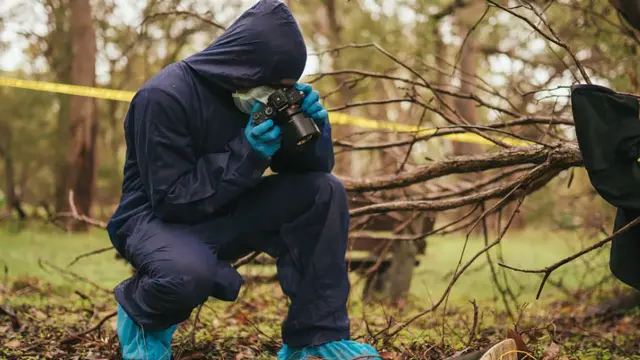
- Develop practical skills in crime scene investigation, including documentation, photography and forensic evidence collection.
- Apply forensic techniques such as fingerprinting, impression evidence analysis and crime scene reconstruction.
- Retrieve, analyse and evaluate forensic information from a range of sources to support investigations.
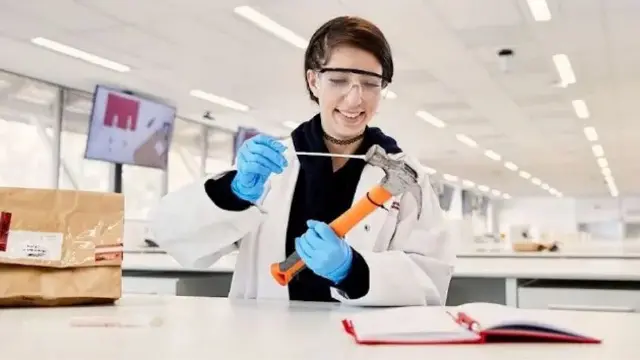
- Perform and interpret forensic laboratory and field investigations associated with crime scene work.
- Understand the role and evaluation of forensic science within the criminal justice system, including legal and ethical considerations.
Not only could I study a Bachelor of Science in Forensic Biology and Toxicology, and a Bachelor of Criminology, but I had the opportunity to study them as a combined degree.
Danika, Medical, Molecular and Forensic Sciences
Your future career in forensic investigation
Forensic investigation professionals play a key role in supporting criminal investigations through accurate evidence collection and analysis. Our Forensic Investigation major prepares you for a forensic science career in investigative and operational environments, where you can contribute to real-world justice outcomes.
You could work in law enforcement agencies, forensic units, government organisations and private investigation services, or continue your studies in forensic science at postgraduate level.
Potential roles include:
- Crime scene investigator
- Forensic officer
- Evidence technician
- Forensic analyst
- Investigation support officer
- Research assistant
For more details about our Forensic Investigation major, download our information pack.
Start dates
| Starting period | Location | Face to Face | Online | Mixed mode |
|---|---|---|---|---|
| Semester 1, 2027 | Murdoch | Yes | No | No |
| Semester 2, 2027 | Murdoch | Yes | No | No |
| Semester 1, 2028 | Murdoch | Yes | No | No |
| Semester 2, 2028 | Murdoch | Yes | No | No |
View the dates for our teaching periods or find out more about attendance modes.
Major Structure
Visit the Course Handbook - Get detailed information on units, prerequisites, and pathways.
To help plan the structure of your course, search for our suggested course plans.
How to Apply
Majors are part of a degree and can't be applied on their own. Apply for a related degree first, then choose your major once enrolled.