Major Undergraduate

Forensic Chemistry and Toxicology


Study mode
Part Time Full Time
Study mode
Full Time
Murdoch code
MJ-FCTX
What is a Major?
A major is your primary area of focus within a degree. It determines the core subjects you'll study and the skills you'll master.

Major overview

Contribute to criminal investigations with a major in forensic chemistry and toxicology

Chemical evidence plays a critical role in forensic investigations, from identifying illicit substances to interpreting trace materials. In forensic chemistry and toxicology, you’ll apply scientific techniques to analyse chemical evidence, inform legal investigations and contribute to fair and evidence-based outcomes. 

Part of our Bachelor of Forensic Science – the only undergraduate course of its kind in WA – the Forensic Chemistry and Toxicology major equips you with the knowledge and practical skills to work with chemical and toxicological evidence in forensic contexts. You’ll build a strong foundation in chemistry, analytical science and toxicology while learning how substances are identified, measured and interpreted in laboratory settings. 

Throughout your forensic chemistry and toxicology major, you’ll learn from experienced lecturers who have applied chemistry in forensic contexts, gaining insight into current industry practices. You’ll develop hands-on skills using advanced instrumental analysis techniques and simulation and modelling software, preparing you to analyse complex forensic evidence. 

You’ll apply your learning through practical, competency-based coursework, working with industry-relevant methods and instrumentation to investigate real-world scenarios. 

You can tailor your forensic science degree by combining this major with Forensic Biology or Forensic Investigation, building a broader skillset aligned with your interests and career goals. By the time you graduate, you’ll be equipped with the knowledge and practical experience needed for a forensic science career.  

The Forensic Chemistry and Toxicology major also offers a solid foundation that can prepare you to progress to our Master of Forensic Science (Professional Practice), allowing you to further expand your expertise.
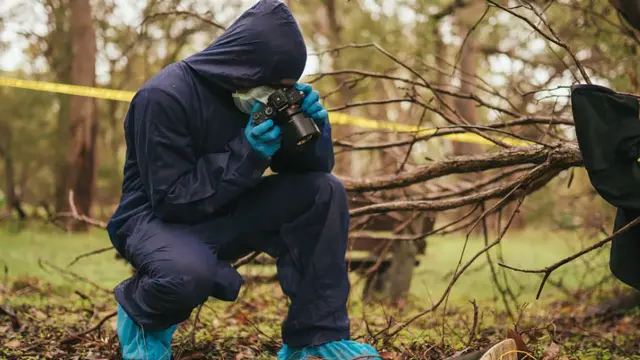
Forensic science student collecting evidence at an outdoor crime scene

3 reasons to study forensic chemistry and toxicology at Murdoch University

  1. Study a cutting-edge curriculum that reflects current and emerging forensic science practices. 
  2. Learn from leading lecturers with real-world experience applying chemistry in forensic contexts. 
  3. Gain practical, hands-on, competency-based experience using advanced, industry-relevant analytical methods and instrumentation.

What you’ll learn

  • Build a strong foundation in chemistry, analytical science and toxicology relevant to forensic analysis. 
  • Analyse forensic evidence such as illicit drugs, gunshot residues, fibres, glass and other physical materials. 
  • Apply advanced instrumental analysis techniques to identify and measure chemical substances. 
  • Use simulation and modelling tools to investigate and interpret complex forensic scenarios. 
  • Examine emerging areas such as environmental pollution, food fraud and contamination and pharmaceutical authentication. 
  • Develop the ability to solve complex forensic chemistry and toxicology problems and communicate findings in legal and professional contexts, including ethical responsibilities.

Not only could I study a Bachelor of Science in Forensic Biology and Toxicology, and a Bachelor of Criminology, but I had the opportunity to study them as a combined degree.

Danika, Medical, Molecular and Forensic Sciences
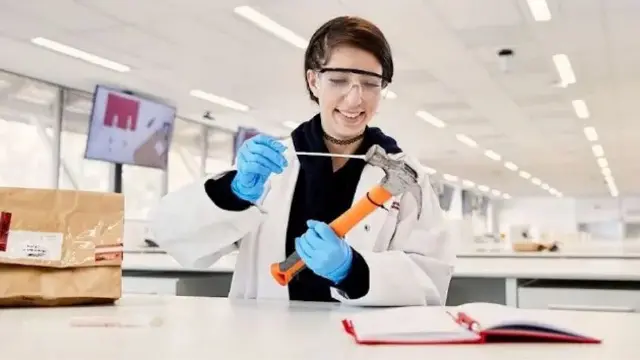
Murdoch University MMFS student with hammer prop
Forensics student in overalls taking photo of crime scene

Your future career in forensic chemistry and toxicology

With a Forensic Chemistry and Toxicology major, you could play a key role in analysing chemical evidence to support criminal investigations and justice outcomes. You could pursue a forensic chemistry and toxicology career in forensic laboratories, government agencies, environmental testing facilities or research institutions, or continue your studies in forensic science at postgraduate level. 

Potential roles include: 

  • Forensic chemist 
  • Forensic toxicologist 
  • Drug analyst 
  • Chemical criminalist 
  • Laboratory analyst 
  • Environmental chemist 
  • Research scientist
For more details about our Forensic Chemistry and Toxicology major, download our information pack.

Start dates

Starting period Location Face to Face Online Mixed mode
Semester 1, 2026 Murdoch Yes No No
Semester 2, 2026 Murdoch Yes No No
Semester 1, 2027 Murdoch Yes No No
Semester 2, 2027 Murdoch Yes No No

View the dates for our teaching periods or find out more about attendance modes.

Major Structure

Visit the Course Handbook - Get detailed information on units, prerequisites, and pathways.

To help plan the structure of your course, search for our suggested course plans.

Unit code Unit name Credit points

How to Apply

Majors are part of a degree and can't be applied on their own. Apply for a related degree first, then choose your major once enrolled.

Undergraduate Course

Bachelor of Forensic Science

Study a forensic science degree at Murdoch University and gain hands-on experience in crime scene investigation and laboratory analysis. Apply today.

Have a question? Get in touch.

1300 687 3624

1300 687 3624

1300 687 3624

Send an enquiry

Send an enquiry

Send an enquiry

Live chat

Live chat

Live chat