
Master of Applied Psychology (Professional)
How to apply
- Study mode
- Part Time Full Time
- Full time duration
- 1
- Murdoch code
- M1238
- First year fee (domestic)
-
2026 $34,800
2027 $36,000
- Full course fee (domestic)
-
2026 $34,800
2027 $36,000
- Australian Qualifications Framework level
- Level 9 - Masters Degree (Coursework)
The fees provided are indicative and intended only as a guide. They are based on a typical full-time enrolment for a first year student at Murdoch University of 24 credit points. The indicative fee is based on the applicable domestic fee.
Course overview
If you’re working towards becoming a registered psychologist and have completed your fourth year, this course provides you with the next step required in the 5+1 pathway.
You’ll undertake coursework, practicums, and research to gain knowledge of psychological practice. Gain work-ready skills in assessment (e.g. Mental State Exam, WAIS) and intervention (e.g. CBT, family-based interventions) all based on the latest psychological approaches and research findings in a supportive learning environment.
Develop the personal and professional skills you need in practice by completing two practicums, including simulated practical experiences and an internship at an external workplace.
This course provides a pathway into the Master of Applied Psychology (Clinical Psychology) based on performance and availability of places. There are also placement streams (including school and disability settings) providing industry-based learning experiences.
Entry to this course is very competitive and requires a recognised and accredited undergraduate psychology degree, plus either Honours in Psychology (with at least 2A Honours), a Graduate Diploma in Psychology (with a distinction average), or a 4-year Bachelor of Psychology with evidence of relevant experience in the field.
Pathway information for Aboriginal and/or Torres Strait Islander applicants
Murdoch University aspires to be the first choice for First Nations peoples. We wholeheartedly welcome and encourage Aboriginal and/or Torres Strait Islander people to consider applying for our psychology programs. Across our psychology courses, places are reserved for Aboriginal and/or Torres Strait Islander students. While these applicants must meet the specified criteria for each course to gain admission, they will not go through the competitive selection process. These places are reserved under an exemption to the Equal Opportunity Act 1984, which is applied to promote equality and aligns with Australian Indigenous Psychology Education Project (AIPEP) guidelines for creating equity pathways for Aboriginal and/or Torres Strait Islander applicants. If you would like more information, please contact Charles Young at charles.young@murdoch.edu.au.

3 reasons to study a Master of Applied Psychology (Professional) at Murdoch University
- Learn from leading academics and experienced clinicians who are committed to helping you succeed in your studies.
- Gain professional experience with real people.
- Establish a network of valuable industry contacts through your practical placement that will open up employment opportunities when you graduate.
What you'll learn
- Suicide prevention
- Assessment for adults and children
- Intervention with children and adults
- Counselling skills
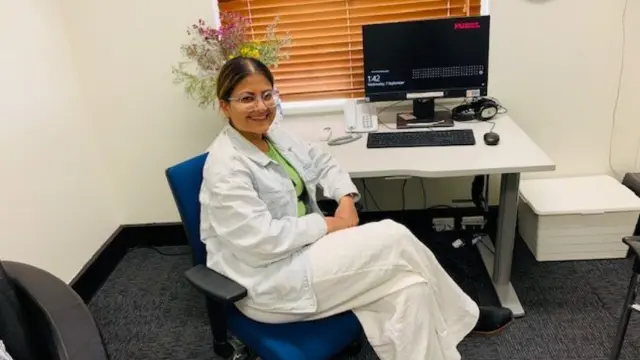
What I am enjoying the most about the course is the varied experience and expertise I am able to draw upon in my time here, both in the area of psychological research as well as clinical practice.
Veena Singh, Psychology

Your future career
Job prospects for professional psychologists are very good and employment growth is expected to be strong. Upon graduation from this course, students will be highly employable in a wide variety of areas including private practice (once you have met registration requirements) and working in various public and private sector agencies.
You could work in the following areas: health, community development, justice, education, and disabilities. Careers could include:
- School Psychologist
- Clinical Psychologist (if you gain entry after completing the Masters of Applied Psychology Professional)
- Paediatric assessment services
- Disability sector work
- Alcohol and drug counselling
Professional accreditation
This course is accredited as a Level 3 course by the Australian Psychology Accreditation Council (APAC).
Professional recognition
Graduates of this course are eligible to apply for registration with the Psychology Board of Australia (PsyBA).
Start dates
| Starting period | Location | Face to Face | Online | Mixed mode |
|---|---|---|---|---|
| Semester 1, 2027 | Murdoch | Yes | No | No |
| Semester 1, 2028 | Murdoch | Yes | No | No |
View the dates for our teaching periods or find out more about attendance modes.
Admission requirements
English Requirements
You must meet a minimum standard in English to study at Murdoch, which for most courses can be demonstrated by providing evidence that you have completed Year 11 and 12 in Australia at any level if you are a domestic student, or through either English proficiency tests, university preparation courses, English language courses, previous tertiary study or vocational education.
Other Requirements
Graduate students must be registered from the start of their higher degree as a provisional psychologist. Within the first two weeks of commencing the course, the student must gain provisional registration with Psychology Board of Australia. As many agencies require all staff working with their clients or patients to have a police clearance, applicants are required to obtain a Federal police clearance (which will include WA clearance) and a separate Working with Children Check is required. The applicant meets the cost of these clearances. Please note that some organisations providing professional placements require students to provide full immunisation records. All applicants must be in a position to provide these records if required.Recognition of Prior Learning
Everyone has a different path to university so if you’ve already completed formal or informal learning, you could receive advanced standing. Recognition of Prior Learning (RPL) can reduce the amount of study needed to complete your degree by giving you credit for certain units.
Formal learning can include previous study in higher education vocational education or adult and community education. Informal learning can include on the job learning, various kinds of work and life experience.
This information applies to courses offered at our Australian campuses only. Courses offered at our Dubai and Singapore campuses or delivered by Open Universities Australia may have different requirements.
Plan your course
Explore the sample course structure below to get an idea of what your degree could look like, or take the next step in planning your degree:
Use the Course Visualiser - Build your personalised study plan interactively.
Visit the Course Handbook - Get detailed information on units, prerequisites, and pathways.
To help plan the structure of your course, search for our suggested course plans.
Fees & Scholarships
Course fees
First year fee
2026 $34,800
2027 $36,000
Full course fee
2026 $34,800
2027 $36,000
The fees provided are indicative and intended only as a guide. They are based on a typical full-time enrolment for a first year student at Murdoch University of 24 credit points. The indicative fee is based on the applicable domestic fee.
Scholarships
Make the most of your university experience by reducing the financial costs with a scholarship. Whether you're a high achiever or have experienced hardship, we offer a wide range of scholarships and awards to students from all walks of life. Explore our scholarships to find the ones you could be eligible for as a new Murdoch student as well as what's available throughout your degree.
View all scholarshipsHow to Apply
Your document checklist
Ready to apply? Before you start, make sure you have all the following documentation ready for a quick application.
Compulsory documents
Evidence that you meet Academic entry and English language requirements such as:
- Official Academic Transcripts and Certificates of Completion (of your highest academic study)
- Evidence of meeting the minimum English language requirements
Course specific documents
- A completed Personal Statement
- A letter from the Australian Psychological Society if your qualifications were obtained overseas
- A recent Curriculum Vitae
- Two referee reports – one academic and one professional to be submitted by your referees here
Recommended documents (if applicable)
- Change of name documentation
- Marriage certificate
- Unit outlines if applying for Advanced Standing


Apply directly to Murdoch
If you are a non School leaver, you can apply for most undergraduate, honours and postgraduate courses directly through our online application system.
View all ways to apply
There are many ways to apply to Murdoch University as we know everyone has a different path and journey. Get started and take the next step.
All fees are indicative and are provided as a guide only. The actual fees will depend on the individual units you enrol in. You should refer to your Letter of Offer for specific course and fee related information.
The first-year indicative fee is based on a typical full-time enrolment at Murdoch University of 24 credit points.
For domestic students, including Australian citizens, permanent residents and New Zealand citizens, the indicative fee is based on the applicable Commonwealth Supported fee.
Indicative fees for international students are based on applicable full fee paying rates. For details, see 2027 International Fees.
The estimated, indicative fee covers tuition fees only, and certain additional fees and charges may apply, depending on the course and units you choose. It also does not take into account any scholarships or bursaries for which you may be eligible.
The estimated, indicative fee assumes no fee increases or indexation. Over time, fee increases or indexation may occur and will affect the estimate. If you are a full fee paying student, this may occur at the start of your second and each subsequent year of study. In the case of Commonwealth Supported students, this will occur for each new calendar year in line with Government policy.
All fee estimates are provided in Australian dollars.