Major Undergraduate

Forensic Biology and Toxicology

Major details for:
Murdoch code
MJ-FBTX
Study mode
Full Time or Part Time
What is a Major?
A major is your primary area of focus within a degree. It determines the core subjects you'll study and the skills you'll master.

Major overview

Put your curiosity to work as you investigate crime from a scientific viewpoint. Our course is unique in WA as it focuses on biology and life sciences, and forensic science including DNA analysis and Toxicology.

Industry terms such as forensic palynology (the use of pollen grains to connect a suspect to a crime scene), forensic anthropology (the identification of skeletal remains) and forensic entomology (the insects that decompose human remains) will become part of your professional vocabulary.

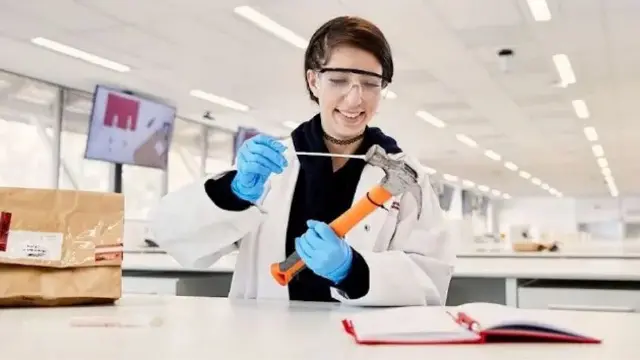
You will learn the dynamics of blood pattern analysis and test your knowledge in the lab, exploring your fingerprints and features that are used for identification. You’ll also investigate wildlife crime through DNA analysis using the same techniques that are used to identify elephant ivory and rhino horn.

Using the latest cutting-edge analytical technology, you will learn how to identify toxins in body fluids and contaminated products, helping you piece together crimes.

Along with the technical skills, you will also get hands-on experience with forensic DNA profiling and analysing human profiles in simulated casework.

3 reasons to study Forensic Biology and Toxicology at Murdoch

  1. Get hands-on experience as you apply DNA profiling and other forensic techniques from the lab to simulated crime scenes.
  2. Help solve real-life homicide and missing persons cases through our Cold Case Review initiative and study in state-of-the-art-labs.
  3. Learn the latest real-world techniques and policies, with course input and guest lectures from forensic experts from PathWest, and ChemCentre.

What you’ll learn

  • Forensic science
  • Forensic DNA analysis
  • Forensic anatomy and anthropology
  • Forensic toxicology

Your future career

With a degree in Forensic Biology and Toxicology, you could pursue a range of roles in Australia or overseas. Careers could include:

  • Crime Scene Officer
  • Forensic Biologist
  • Forensic Investigator
  • Forensic Toxicologist
  • Wildlife Forensics Officer

If your dream is to become a Scene of Crime Officer or Forensic Investigator, you can progress your studies to apply for our Master of Forensic Science (Professional Practice) after completing this degree.

For further admission information about this course, please download our Information Pack.

Start dates

Starting period Location Face to Face Online Mixed mode
Semester 1, 2026 Murdoch No No No
Semester 2, 2026 Murdoch No No No
Semester 1, 2026 Murdoch Yes No No
Semester 2, 2026 Murdoch Yes No No
Semester 1, 2027 Murdoch No No No
Semester 2, 2027 Murdoch No No No
Semester 1, 2027 Murdoch Yes No No
Semester 2, 2027 Murdoch Yes No No

View the dates for our teaching periods or find out more about attendance modes.

Starting period Location Face to Face Online Mixed mode
Semester 1, 2026 Murdoch No No No
Semester 2, 2026 Murdoch No No No
Semester 1, 2026 Murdoch Yes No No
Semester 2, 2026 Murdoch Yes No No
Semester 1, 2027 Murdoch No No No
Semester 2, 2027 Murdoch No No No
Semester 1, 2027 Murdoch Yes No No
Semester 2, 2027 Murdoch Yes No No

View the dates for our teaching periods or find out more about attendance modes.

Major Structure

Visit the Course Handbook - Get detailed information on units, prerequisites, and pathways.

To help plan the structure of your course, search for our suggested course plans.

Unit code Unit name Credit points

How to Apply

Majors are part of a degree and can't be applied on their own. Apply for a related degree first, then choose your major once enrolled.

Have a question? Get in touch.

1300 687 3624

1300 687 3624

1300 687 3624

Send an enquiry

Send an enquiry

Send an enquiry

Live chat

Live chat

Live chat