Major Undergraduate

Forensic Chemistry

Major details for:
Murdoch code
MJ-FC
Study mode
Full Time or Part Time
What is a Major?
A major is your primary area of focus within a degree. It determines the core subjects you'll study and the skills you'll master.

Major overview

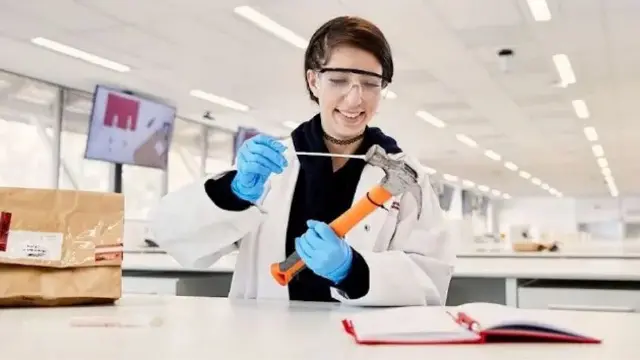
Forensic Chemistry is the application of chemical knowledge to problems in the field of Forensic Science. The sky is the limit for what you can apply this to - from identification of illegal drugs and poisons through tracking down novel performance enhancing drugs, detecting counterfeit over the counter and prescription drugs, to even assessing claims of contaminated food or art fraud.

Forensic Chemists not only need to be able to analyse chemical materials they also need to be able to understand how the chemical signatures of illegal processes might be masked or hidden and that requires a chemical level understanding of material and drug synthesis and manufacturing and the environmental fate of chemical pollutants.

This major will expose you to the underlying chemistry for these processes and allow you to develop the required skills to address issues in forensic science across all these areas. Get hands on practice using advanced instrumental analysis techniques and experience how we can use advanced simulation and modelling software to assist in understanding how a chemical substance might be manufactured or masked. Get the chance to also learn how we can modify current and emerging methods for application in the Forensic Sciences and how these sometimes complicated methods and results can be communicated in a legal context.

3 Reasons to study Forensic Chemistry at Murdoch

  1. Learn from and interact with lecturers who have experience applying chemistry in a forensic context across a range of areas, including traditional forensic chemistry, namely illicit drugs, gunshot residues, fibres, glass, and other physical evidence, through to emerging forensic areas such as environmental pollution, food fraud and contamination, and pharmaceutical authentication, among many more.
  2. Research-inspired and industry-led curriculum content, ensures that your level of knowledge is current and at the edge of innovative developments,
  3. Practical, hands-on, competency-based coursework, with access to advanced and industry-relevant analytical methods and instrumentation.

What you’ll learn           

  • The underlying principles and concepts of forensic chemistry.
  • Methods of forensic chemistry, including the processes involved in developing scientific knowledge.
  • How to retrieve, analyse, synthesise and evaluate forensic information from a range of sources.
  • Conveying scientific ideas, arguments and conclusions clearly and coherently through well-developed written and oral communication skills.
  • Identifying, analysing and generating solutions to unpredictable or complex forensic Chemistry problems by applying scientific knowledge and skills with initiative and well-developed judgement.

Your career

Careers could include employment in government and commercial forensic and environment laboratories, in positions such as;

  • Laboratory Technician
  • Clinical or Forensic Toxicologist
  • Chemical Criminalist
  • Drug Analyst
  • Environmental Chemist

Start dates

Starting period Location Face to Face Online Mixed mode
Semester 1, 2026 Murdoch No No No
Semester 1, 2026 Murdoch Yes No No
Semester 1, 2027 Murdoch No No No
Semester 1, 2027 Murdoch Yes No No

View the dates for our teaching periods or find out more about attendance modes.

Starting period Location Face to Face Online Mixed mode
Semester 1, 2026 Murdoch No No No
Semester 1, 2026 Murdoch Yes No No
Semester 1, 2027 Murdoch No No No
Semester 1, 2027 Murdoch Yes No No

View the dates for our teaching periods or find out more about attendance modes.

Major Structure

Visit the Course Handbook - Get detailed information on units, prerequisites, and pathways.

To help plan the structure of your course, search for our suggested course plans.

Unit code Unit name Credit points

How to Apply

Majors are part of a degree and can't be applied on their own. Apply for a related degree first, then choose your major once enrolled.

Have a question? Get in touch.

1300 687 3624

1300 687 3624

1300 687 3624

Send an enquiry

Send an enquiry

Send an enquiry

Live chat

Live chat

Live chat