
Major overview
Understand and apply chemistry to solve real-world challenges
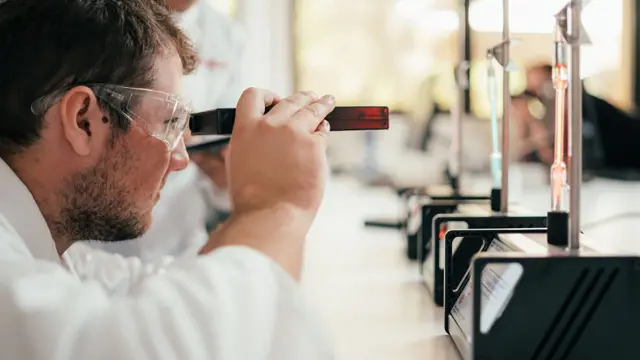
3 reasons to study chemistry at Murdoch University
- Build practical, job-ready skills by combining hands-on lab work with digital tools to solve real-world chemistry problems.
- Gain professional experience through co-designed extracurricular activities, including opportunities to collaborate with industry partners.
- Learn in a supportive, research-led environment, with small classes and approachable academics who provide personalised guidance and bring real-world research into your studies.
What you’ll learn
- Build foundational knowledge in organic, inorganic, analytical and physical chemistry.
- Apply laboratory techniques to analyse chemical substances and reactions.
- Use computational and simulation tools to model chemical systems and interpret data.
- Design experiments and solve chemical problems using scientific methods.
- Understand applications of chemistry in areas such as materials, energy and environmental systems.
- Communicate scientific findings clearly to technical and non-technical audiences.
It's applicable to quite literally everything, from business intelligence and marketing reporting to finance and applied sciences - anything to do with biological, medical or veterinary sciences.
Jaiden di Lanzo, Mathematics and Statistics

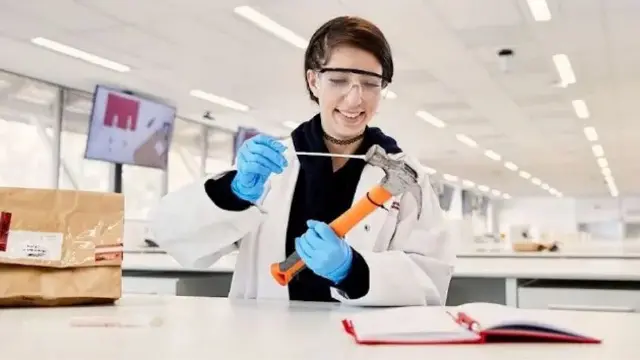
Your future career in chemistry
- Chemist
- Laboratory analyst
- Materials scientist
- Environmental scientist
- Research scientist
- Quality control or assurance specialist
Start dates
| Starting period | Location | Face to Face | Online | Mixed mode |
|---|---|---|---|---|
| Semester 1, 2027 | Murdoch | Yes | No | Yes |
| Semester 2, 2027 | Murdoch | Yes | No | Yes |
| Semester 1, 2028 | Murdoch | Yes | No | Yes |
| Semester 2, 2028 | Murdoch | Yes | No | Yes |
View the dates for our teaching periods or find out more about attendance modes.
Major Structure
Visit the Course Handbook - Get detailed information on units, prerequisites, and pathways.
To help plan the structure of your course, search for our suggested course plans.
How to Apply
Majors are part of a degree and can't be applied on their own. Apply for a related degree first, then choose your major once enrolled.
Bachelor of Science (Physical Sciences)
Study a physical sciences degree at Murdoch University and gain hands-on experience in chemistry and physics with real-world applications. Apply now.