
Announcement
Take the next step with Honours or Masters in Agricultural Science in 2027
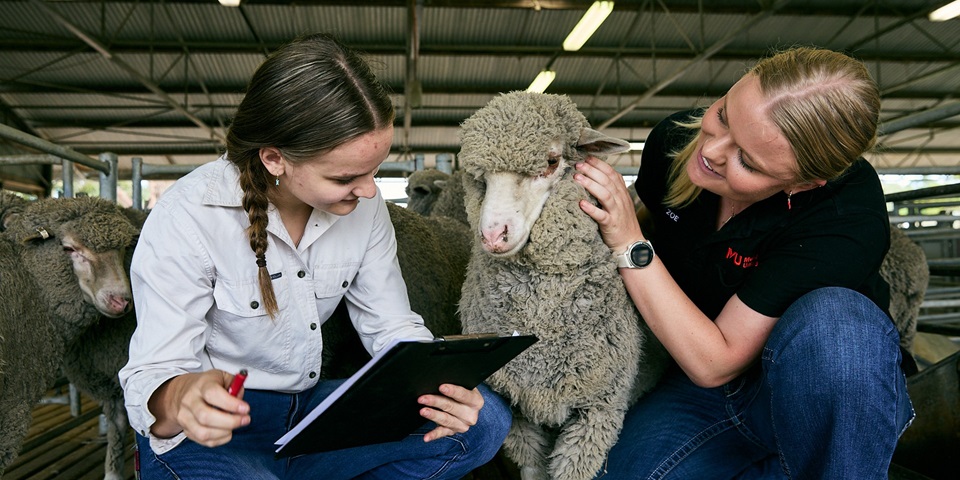
Interested in taking your studies further and gaining hands-on research experience? Honours with the School of Agricultural Sciences gives you the opportunity to work with our researchers on a focused project in an area that interests you.
Honours is an opportunity to develop your research, problem-solving and communication skills while working closely with an academic supervisor. Projects span the breadth of agricultural science, giving students the chance to explore real research questions and contribute to work relevant to agriculture and related industries.
Explore the available projects here find an opportunity that matches your interests. A snapshot of available projects are listed below. Projects are updated regularly, so please check our main pages for honours and masters for up-to-date lists.
Virtual fencing technology for ecological grazing
This project will explore how virtual fencing technology can be used for ecological grazing using goats for management of fuel load (fire risk management) and weed control.
Projects will be available focussed on:
- Assessing containment and feedbase utilisation using virtual fencing in a range of grazing scenarios
- Assessing the behavioural responses and learning processes of goats to virtual fencing collars through direct observations, and via videos.
Level: Honours or Masters
Contact:
- Caroline Jacobson and Lynda Perkins
- Joe Gebbels
- Behavioural responses: Emma Dunston-Clarke
Managing Merino weaners to thrive and survive
Merinos play a key role in the Australian sheep meat industry, representing approximately 70% of lambs born and 55% lambs slaughtered. Previous studies have reported Merino weaner survival remains an issue with 50% of farms reporting Merino weaner mortality above industry targets (≥4% per annum). Poor reproductive performance in maiden Merinos also remains an issue compared to adult ewes, with a 24% difference in marking rate relative to mature ewes attributable largely to 22% difference in reproductive rate and to a lesser extent 3% difference in lamb survival. This has important industry impact because maidens represent 25% Merino-Merino joinings that provide ewe replacements. This project will identify opportunities for post-weaning nutrition and management to deliver cost-effective improvements in weaner survival and subsequent reproductive performance across a range of Merino genotypes
This project will validate the effects of weaning weight, fat and reproduction ASBVs on reproductive performance
Level: Honours or Masters
Contact:
Weaning strategies in sheep systems
Weaning is a stressful experience, especially when conducted abruptly in extensive systems, and has long-term consequences on production and growth. This project will explore strategies to mitigate lamb stress of the weaning process, with the aim to refine current methods to produce best practice guidelines. The project will involve data collection in the field in September/October 2027, 2028 and 2029. This project is available to students starting in Semester 2 of each year.
Level: Honours
Contact:
Trace element nutrition in cattle
Trace element deficiencies can affect cattle health and productivity, but mineral status is influenced by complex interactions between soils, pastures and animals.
The project will explore factors that contribute to variation in trace element status, including relationships between mineral availability in soils and pastures and mineral status in cattle. The research will contribute to a better understanding of trace element nutrition under Western Australian production conditions and provide experience in cattle nutrition, livestock health and the interpretation of animal and environmental data.
Level: Honours or Masters
Contact:
Behaviour and demeanour of livestock under commercial conditions
Understanding how livestock behave under commercial production conditions provides important insights into animal welfare and how animals respond to management practices and environmental challenges. Several Honours projects are available that involve the analysis of existing video footage to investigate behaviour and welfare outcomes in cattle and pigs.
Cattle: Two projects available examining the behaviour and demeanour of Bos indicus cross cattle undergoing long-distance road transport in northern Australia. Students will analyse video footage collected from commercial transport studies to investigate how different rest (spelling) durations influence cattle behaviour and recovery following transport. Behaviours of interest may include standing, lying, drinking, activity patterns, and other indicators of adaptation and welfare.
Pigs: One project is available examining the behavioural responses of pigs to different forms of environmental enrichment. Students will analyse video footage to compare behavioural outcomes between enrichment treatments and assess their effectiveness in promoting positive welfare.
Level: Honours
Contact:
Sheep measles and hydatid disease: what can abattoir data tell us?
The student will analyse surveillance data to identify patterns in disease occurrence, including geographical and temporal trends and potential risk factors. The project provides an opportunity to work with a large, industry-relevant dataset and develop skills in epidemiology, data analysis and livestock health surveillance.
Level: Honours or Masters.
Contact:
Respiratory pathogens associated with pneumonia in Western Australian sheep
Pneumonia is an important respiratory disease of sheep, but the pathogens involved and patterns of infection in Australian sheep are not well understood.
This project will analyse a dataset of PCR results for respiratory pathogens from Western Australian sheep sampled at slaughter to investigate the epidemiology of respiratory pathogen detection.
The student will examine patterns of detection of individual pathogens and co-detection of multiple pathogens, and explore associations with available animal and disease characteristics. The project will contribute to a better understanding of the epidemiology of respiratory pathogens associated with pneumonia in WA sheep and provide experience in livestock epidemiology, infectious disease and analysis of molecular diagnostic data.
Level: DVM project or Coursework Masters project (biosecurity or food security)
Contact:
- Caroline Jacobson
- Mieghan Bruce
- Joan Lloyd
- Emmanuelle Haslin
Evaluating phytogenic feed additives in beef cattle production
Phytogenic feed additives are increasingly being explored as nutritional strategies to support animal performance, health and feed efficiency. However, their effectiveness can vary depending on the type of phytogenic compounds used, diet composition and production conditions.
This project will evaluate the use of selected phytogenic feed additives in beef cattle production, with a focus on their effects on feed efficiency, animal performance and indicators of animal health and productivity. The project will combine animal measurements with feed, rumen and biological sample analysis to better understand the responses to phytogenic supplementation.
The project is supported by industry partners, providing the opportunity to work on a commercially relevant research question and gain experience at the interface between animal nutrition research and the livestock feed industry. The findings will contribute to understanding how phytogenic feed additives can be used effectively in beef cattle production.
Level: Honours or Masters
Research areas: Beef cattle nutrition | Phytogenic feed additives | Feed efficiency | Animal health | Applied livestock research
Contact:
What’s hiding in our feeds? Characterising mycotoxin contamination in animal feeds in Western Australia
Mycotoxins are naturally occurring fungal metabolites that can contaminate animal feeds and negatively affect animal health and productivity. However, there is limited information on the occurrence and distribution of mycotoxins in feed commodities produced and used in Western Australia.
This project will establish baseline information on the occurrence of major mycotoxins in economically important feed ingredients, including wheat, barley, oats, lupins, canola meal, hay and silage. The student will investigate the prevalence of individual mycotoxins, the occurrence of multiple mycotoxin contamination, and the potential risks associated with contaminated feeds for livestock production.
The project combines laboratory analysis with data interpretation and provides an opportunity to develop skills in animal nutrition, feed quality and safety, analytical techniques and applied livestock research. The findings will generate valuable information for livestock producers, veterinarians, nutritionists and the feed industry and provide baseline data to support future surveillance and research in Western Australia.
Level: Honours or Masters
Research areas: Animal nutrition | Feed safety | Mycotoxins | Livestock health
Contact:
Can emulsifiers help cattle cope with heat stress?
Heat stress is a major challenge for beef production, reducing feed intake, nutrient utilisation and animal performance. Nutritional strategies that improve the efficiency with which cattle utilise dietary energy may therefore provide an opportunity to maintain productivity during periods of high environmental heat load. Emulsifiers are feed additives that can influence nutrient digestion and utilisation.
This project will evaluate whether supplementing beef cattle diets with a nutritional emulsifier can help maintain feed intake, nutrient utilisation, animal performance and physiological resilience during periods of heat stress. The project will combine animal measurements with environmental monitoring and nutritional and/or physiological assessments, providing the student with experience in beef cattle nutrition, heat-stress physiology and applied livestock research.
The findings will help determine whether emulsifier supplementation represents a practical nutritional strategy for supporting beef cattle productivity under hot Australian conditions.
Level: Honours or Masters
Research areas: Beef cattle nutrition | Heat stress | Feed additives | Nutrient utilisation | Animal resilience
Contact:
Can scent tell us when a sow is ready to breed? Characterising volatile organic compounds for oestrus detection in sows
Accurate detection of oestrus is essential for successful breeding in commercial pig production, but current approaches rely heavily on behavioural observations and boar exposure. Volatile organic compounds (VOCs) produced by animals may provide biological signatures of reproductive status and offer a new, non-invasive way of identifying when sows are ready to breed.
This project will investigate changes in VOC profiles around oestrus in weaned sows and explore their relationship with reproductive and behavioural indicators. The aim is to identify potential biomarkers that could ultimately contribute to the development of practical technologies for more objective and efficient oestrus detection.
The project is supported by the WA swine industry, giving the student an opportunity to work on a real-world reproductive challenge of direct relevance to commercial pig production. Students will develop practical and transferable skills in animal reproduction, experimental design, animal monitoring and sampling, biomarker research, data analysis and interpretation, and working with industry partners.
Level: Honours or Masters
Research areas: Pig reproduction | VOCs | Biomarkers | Oestrus detection | Precision livestock farming
Contact:
Can we smell boar taint? Using volatile organic compounds to improve pork quality
Boar taint is an undesirable odour and flavour that can occur in pork from entire male pigs and represents an important meat-quality challenge for the pork industry. Identifying reliable biological markers of boar taint could support the development of more rapid and objective approaches for identifying affected carcasses.
This project will investigate whether patterns of volatile organic compounds (VOCs) can be used as biomarkers of boar taint. The student will examine relationships between VOC profiles and established indicators of boar taint and investigate whether combinations of biomarkers can distinguish pork with different levels of boar taint.
The project is supported by the WA swine industry, providing an opportunity for the student to tackle an important commercial meat-quality problem. Students will gain experience in meat science, animal production, experimental design, sample collection, biomarker discovery, data analysis and interpretation, and industry-focused research. The project will provide an excellent introduction to translational research and demonstrate how scientific findings can contribute to practical solutions for the livestock and meat industries
Suitable for: Honours or Masters
Research areas: Meat science | Pork quality | VOCs | Biomarkers | Analytical chemistry
Contact: Pietro Celi
Effects of Host Plant Stress on Chemical Attraction of Polyphagous Shot Hole Borer
Host plant condition may influence susceptibility to PSHB infestation through changes in volatile emissions. This project will investigate how plant stress affects volatile profiles and PSHB host-selection behaviour. Volatile compounds from healthy and stressed host plant materials will be collected and characterised using GC-MS. Laboratory behavioural assays will examine beetle responses to different host materials and selected chemical compounds. The project will provide insights into how host plant stress influences PSHB attraction and identify potential chemical indicators associated with host susceptibility.
Level: Honours or Masters
Contact:
Screening Biological Control Agents Against Polyphagous Shot Hole Borer
Effective biological control options for PSHB remain limited, highlighting the need to identify promising natural enemies and microbial agents. This project will evaluate selected biological control candidates, particularly entomopathogenic fungi, against PSHB under controlled laboratory conditions. Experiments will assess their effects on beetle survival and mortality, with additional investigations into infection rates and treatment concentrations. For an M.Sc. project, promising candidates may be further evaluated against different developmental stages or within artificial gallery systems. The research will provide preliminary evidence for developing sustainable biological control strategies for PSHB in Australia.
Level: Honours or Masters
Contact:
Evaluating Entomopathogenic Fungi for Biological Control of Polyphagous Shot Hole Borer
Entomopathogenic fungi offer potential alternatives to conventional insecticides for managing invasive insect pests. This project will investigate the susceptibility of PSHB to selected fungal biological control agents, such as Beauveria bassiana and Metarhizium species. Laboratory bioassays will evaluate fungal pathogenicity, concentration-dependent mortality and time to death. The M.Sc. component may investigate fungal persistence and effectiveness under conditions representing PSHB galleries. The project will identify promising fungal isolates and provide baseline information for future biological control development.
Level: Honours or Masters
Contact:
Evaluating Predatory Mites for Biological Control of Chilli Thrips in Berry Crops
Chilli thrips, Scirtothrips dorsalis, is an important pest affecting blueberry, Rubus and other horticultural crops. Predatory mites offer potential biological control options, but their effectiveness can vary among species and environmental conditions. This project will evaluate selected predatory mites, including Neoseiulus cucumeris and Amblyseius swirskii, for their ability to suppress chilli thrips populations. Laboratory experiments will investigate predation rates, prey-stage preferences and predator performance. Selected treatments may be further evaluated on host plants under glasshouse conditions. Outcomes will help identify effective predatory mites for integration into chilli thrips management programs.
Level: Honours or Masters
Contact:
Evaluating Insect Predators for Sustainable Management of Chilli Thrips
Predatory insects can contribute to biological control of chilli thrips in horticultural production systems. This project will investigate the effectiveness of selected natural enemies, including predatory bugs, lacewings and predatory thrips, against Scirtothrips dorsalis. Laboratory bioassays will assess predator feeding rates, prey-stage preferences and effects on thrips survival. The M.Sc. component may investigate predator performance under different prey densities and host plant conditions. The research will identify promising natural enemies and generate practical information to support biological control programs in Australian berry production.
Level: Honours or Masters
Contact:
Understanding the effects of soil pH on micronutrient availability in wheat and canola
Improving nitrogen use efficiency in industrial hemp production
Impact of soil amelioration in transforming grain production systems
Contact:
- Frances Hoyle (and discussion with DPIRD team)
Can a consistent visual and semantic knowledge system improve how different audiences recognise, navigate and understand soil information?
This project is linked to the National Soil Education Opportunity (NSEO) co-investment with GRDC and Murdoch University.
Students could complete both a practical build and a proper evaluation component of a soil knowledge base gateway and assess whether information systems work equally well for growers, advisers, educators and emerging professionals. Focus testing could include recognition and recall, comprehension, navigation speed, consistency across channels, user preference and learning design.
Level: Honours or Masters
Contact:
- Frances Hoyle
- Kaisa Freeman
Pioneering targeted recombination by pushing the boundaries of Mendel's meiosis using CRISPR/cas genome editing
Are you ready to join the next revolution in plant genetics? This project offers motivated students the chance to explore one of the most exciting frontiers in genome engineering: targeted recombination. Recombination naturally shuffles genetic material during reproduction, creating diversity that plant breeders use for crop improvement. But in many crops, it's rare and unpredictable, slowing breeding progress. Imagine being able to guide recombination exactly where it matters most. Using CRISPR/Cas genome editing, this project aims to do just that—reshuffling DNA precisely to assemble key traits like stress tolerance, disease resistance, and yield stability (CRISPR–Cas-mediated chromosome engineering for crop improvement and synthetic biology).
You'll gain hands-on experience in CRISPR editing, molecular biology, and advanced genomics. You'll apply these tools to WA's major crops, such as wheat and canola, working alongside industry partners. Beyond technical skills, you'll help drive real-world outcomes in food security and climate resilience.
A basic knowledge of genetics and molecular biology required.
Level: Masters. This project is suitable for accelerated research masters with training
Contact
Unlocking wheat's full reproductive potential for hybrid breeding using the latest techniques in synthetic biology and genome editing (CRISPR/Cas)
Wheat feeds more people worldwide than any other crop—yet yields have stagnated for decades. Unlike rice and corn, which benefit from hybrid breeding, wheat remains inbred and self-fertilizing. Hybrids could boost yields by 10–22%, but high seed production costs—caused by wheat’s floral architecture and poor outcrossing—blocks progress. This project aims to overcome that barrier by enhancing wheat’s female receptivity to airborne pollen, cutting seed costs and unlocking hybrid potential. The result: more stable harvests, higher yields, and stronger food security in a changing climate. Backed by the Australian Research Council, BASF, and a global alliance of seed companies and universities (New genomic resources to boost research in reproductive biology to enable cost-effective hybrid seed production), this is your chance to work at the frontier of plant genetics. As a Master’s student, you’ll gain hands-on expertise in CRISPR/Cas9 editing, synthetic biology, molecular cloning, transformation, microscopy, and trait phenotyping—skills in high demand across academia and industry. Help shape the future of agriculture with real-world impact.
Basic knowledge of genetics and molecular techniques required.
Level: Masters. This project is suitable for accelerated research masters with training
Contact
Using molecular/genetic tools to identify and quantify root-lesion nematodes infesting soils for broadacre agriculture in Western Australia
Root-lesion nematode infestation is widespread in the soils of broadacre agriculture throughout Australia, and it can reduce crop productivity beyond certain infestation thresholds. Currently, about 12 species are known to infect many broadacre crops, including wheat and barley. The level of infestation of different species depends on soil type and the susceptibility of the crops they infect, and high infestations can result in “crop circles” where wheat and barley seedlings are stunted in paddocks.
Understanding how they affect crop growth and managing them effectively depends on how well the nematodes are characterised. The project will use morphological traits, staining techniques, and a combination of quantitative molecular techniques to identify nematode species and quantify infestation levels of different species in soils.
Level: Honours
Contact:
Evaluating the efficacy of bio-stimulants for soil quality enhancement against root-lesion nematodes in soils for broadacre agriculture in Western Australia
This project will investigate anecdotal evidence on whether bio-stimulants used to improve soil quality and plant growth may also suppress root-lesion nematodes, a major constraint to crop productivity in Western Australia's broadacre agriculture.
The student will gain hands-on experience in soil and plant analysis, experimental design, data collection, evaluation of innovative biological solutions for sustainable crop production and work with a WA-based agronomy company. The project is ideal for students interested in agronomy, soil science, plant health, and biotechnological innovations, while contributing to the future of Western Australia’s agriculture.
Level: Honours
Contact:
Evaluating the effectiveness of nanoparticles in improving the application of dsRNAs as biopesticides against root-lesion nematodes infesting wheat and barley
RNA interference (RNAi) is a naturally occurring gene-silencing mechanism found in plants, animals, fungi, and many pests. It can be engineered to specifically switch off genes in an organism when double-stranded RNA (dsRNA) of the target gene is introduced into a cell, reducing the amount of mRNA present and thereby interrupting translation of a gene product (protein). When the target protein is essential to the organism, its absence can affect the organism's growth and survival.
The technology is used to deliver dsRNA as biopesticides because dsRNA is specific, more environmentally friendly than chemical pesticides, and cheaper than developing nematode-resistant varieties, making it attractive for sustainable crop protection.
For target pests that feed on plant roots, such as root lesion nematodes that attack wheat and barley, the dsRNA must be present in the roots for the technology to work effectively. Target dsRNA applied to plants via foliar spraying must therefore translocate to the roots or be absorbed from soil when applied directly or with fertilisers.
The project will investigate the effectiveness of nanoparticles in improving the delivery and performance of dsRNA biopesticides against root-lesion nematodes in wheat and barley, specifically whether nanoparticles can
- Improve translocation and delivery of dsRNA from leaves to roots
- Protect dsRNA applied to leaves or soil from degradation through UV radiation, microbial activity, and environmental conditions
- Improve dsRNA uptake by target pests
- Enhance persistence of dsRNA in soil and plant tissues.
Level: Honours or Masters
Contact:
Drivers of farm resilience
This project will investigate the factors that enable or constrain farmers’ adoption of regenerative and climate-smart agricultural practices, with particular attention to profitability, risk, farmer goals and confidence in practice change. Using existing longitudinal survey data complemented by additional data such as qualitative and/or spatial data, the research will examine why some producers transition towards reduced-input and soil-health-focused farming systems while others do not. The project will identify practical leverage points for industry, researchers and policymakers seeking to support profitable, resilient and farmer-led transitions in Australian agriculture.
Level: honours or masters
Contact:
Soil health and decision-drivers
Level: honours or masters
Contact:
Utilising different on-farm water sources for the development of smart agricultural sprays.
- Characterise the water quality of different on-farm water sources across the Western Australia Wheatbelt
- Identify how water quality impacts formulation development, performance and longevity
- Improve the cost-effectiveness of sustainable agricultural spray formulations for Australian growers
Announcement
Take the next step with Honours or Masters in Agricultural Science in 2027
Posted on