
The Perth Zoo – Zoo and Wildlife Medicine Residency/Professional Doctorate program is based within the Veterinary Services team at Perth Zoo and undertaken in conjunction with Murdoch University’s School of Veterinary Medicine, with the opportunity to undertake clinical work at additional locations as appropriate, including Rottnest Island and Yanchep National Park. The Professional Doctorate involves coursework delivered through Murdoch University in epidemiology and One Health and a significant research dissertation up to 60,000 words or the equivalent of 2-3 research papers.
The next resident will be appointed in July 2029.
The three year residency will commence in July 2029. A merit-based selection process will be initiated in February 2029.
For more information about the application process please contact Lyndall Pengelly, Administrative Assistant Veterinary Department, Perth Zoo by email or call 08 9474 0317.
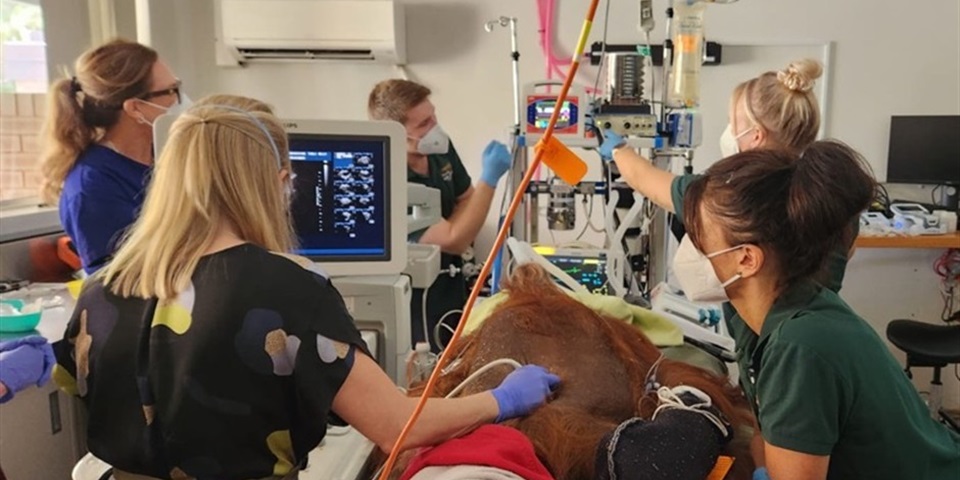
The Perth Zoo Veterinary Services team provides the animal health service to Perth Zoo, including preventative medicine, surgery, nutrition, reproductive management, quarantine, biosecurity, transaction health management, zoonoses and disease investigation, and emergency animal care. The team aims to provide the highest possible levels of health care, welfare, husbandry, species management and exhibit design for the animals under our care to enable Perth Zoo to achieve its operational and strategic objectives. The team works in close collaboration with the Perth Zoo Science and the Native Species Breeding Program to provide ex-situ breeding health and disease monitoring, triage and treatment and wild population health management for our focus threatened species including hairy marron, western ground parrot and black cockatoos.
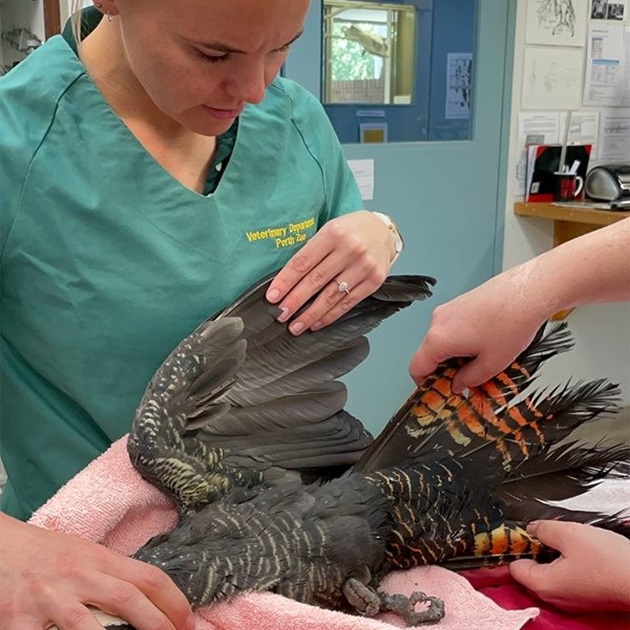
A significant portion of the veterinary team’s workload is devoted to black cockatoo recovery through the black cockatoo project which triages and manages over 400 Black Cockatoos per year, which significantly assists species recovery. The veterinarians also provide expert advice in zoological and wildlife matters through consultancies, media engagement, lectures, and written material.
The veterinary services team are an evidence based, science driven team contributing to Perth Zoo’s research outputs by providing research design expertise, as well as sample collection, storage and advice. In addition to the support provided this Residency Program, the veterinary services team also provides training in wildlife, zoological and conservation medicine to veterinary students at Murdoch University. The veterinary services team collaborate with Parks and Wildlife in state wildlife emergency response, for example marine mammal strandings and entanglements, and aim to provide ongoing strategic direction and operational support to triage and manage species of conservation significance for example black cockatoos, hairy marron, numbats, western ground parrots, and western swamp tortoises. The veterinarians provide koala health and disease management to the Yanchep Parks and Wildlife koala colony including intensive care management and provide telehealth and clinical on the ground veterinary services to quokkas on Rottnest Island. The veterinarians also provide advice on wider population health and management to the Western Australian Department of Biodiversity, Conservation and Attractions, for example disease preparedness and biosecurity recommendations for Highly Pathogenic Avian Influenza.
The three year residency will commence in July 2026. A merit-based selection process will be initiated in February 2026. Applicants must have a veterinary degree registrable in Western Australia, Australia, a minimum of 2 years experience in veterinary practice and be a resident or citizen of Australia, or a New Zealand citizen.
The Graduate Research Office (GRO), School of Veterinary Medicine and Perth Zoo will co-fund the tax-free Strategic Partnership Scholarship of $43,500 p.a. over the three year period. Perth Zoo’s contribution will also cover project costs. A uniform, personal protective equipment and a workspace will be provided by Perth Zoo.
Applicants should have a logical and evidence-based approach to clinical case investigations, a strong academic background, and strong written and verbal communication skills. They should also demonstrate good time-management skills, have the ability to work well in a team and a strong commitment to the fields of zoo, wildlife and conservation medicine. The residency has a strong research focus alongside clinical work, and therefore the applicant should have previous experience in research or professional investigation.How to apply
Ready to apply? Get started with applying for your preferred Murdoch course.
Explore study areas
Discover study areas at Murdoch and choose the path that’s right for you.