
The Currumbin Wildlife Sanctuary – Wildlife and Conservation Medicine Residency/Professional Doctorate program is based within the Veterinary team at Currumbin Wildlife Hospital, with the opportunity to work at additional locations as appropriate including wildlife conservation and fieldwork opportunities.
The next three-year residency will commence in July 2029. A merit-based selection process will be initiated in March 2029.
For further information about the application process please email ZooWildlifeResidents@murdoch.edu.au.
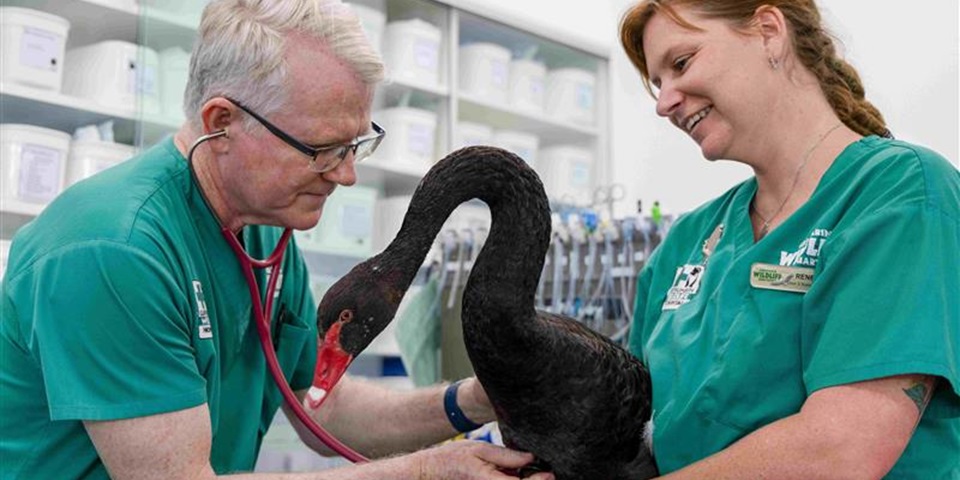
Currumbin Wildlife Hospital provides veterinary care for approximately 16,000 wildlife cases annually and for the almost 1,000 animals that reside at Currumbin Wildlife Sanctuary, in managed care. The veterinary team provides a high level of care to all patients in a purpose-built veterinary hospital that is well equipped diagnostically, clinically, and surgically.
The Sanctuary managed captive animals receive a wide range of veterinary care focusing on quarantine, biosecurity, preventative medicine, reproductive management, nutrition, transactional health management, disease investigation, and surgery. Currumbin Wildlife Hospital also provides veterinary support for multiple international koala collections.
The wildlife case load has a high level of emergency cases, with regular zoonoses and mass mortality investigations. Currumbin Wildlife Hospital has a dedicated koala Intensive Care Unit and rehabilitation facilities for a wide range of species.
The veterinary department also includes a dedicated koala ecology team, doing ongoing research focusing on chlamydial vaccine and urban ecology. Currumbin Wildlife Sanctuary has two ex situ breed-for-release programs, Eastern Bristle Birds, and Taudactylus liemi (Tinker frog), that have regular ongoing veterinary input.
The veterinary team contribute to many research projects and currently have a 0.6 Post Doctorate Koala Research Fellowship and a full time Lab Technician to assist with research and diagnostic lab work. The diagnostic lab includes PCR, blood gases, coagulation profiles, along with standard biochemistry and automatic slide stainer for consistent cytology and blood smear evaluation.
A PC2 lab and education centre with dedicated molecular laboratories are currently under construction and expected to open in mid-2027, greatly enhancing research opportunities for the team including the resident.
The successful candidate would be trained in and work across all aspects of the clinical, conservation and research arms of Currumbin Wildlife Hospital.

The three-year residency will commence in July 2026. A merit-based selection process will be initiated in March 2026. Applicants must have a veterinary degree registrable in Queensland, a minimum of 2 years’ experience in veterinary practice and be a resident or citizen of Australia (this includes New Zealand nationals).
Applicants should have a logical and evidence-based approach to clinical case investigations, a strong academic background, and strong written and verbal communication skills. They should also demonstrate good time-management skills, have the ability to work well in a team and a strong commitment to the fields of zoo, wildlife and conservation medicine. The residency emphasises research alongside clinical work, and therefore the applicant should have previous experience in research or professional veterinary investigations.
A work uniform, personal protective equipment and a workspace will be provided by Currumbin Wildlife Sanctuary. The School of Veterinary Medicine and the Graduate Research Office (GRO) will co-fund the tax-free scholarship of $43,500 p.a. over the three-year period. The Professional Doctorate involves coursework delivered through Murdoch University in epidemiology and One Health and a significant research dissertation up to 60,000 words or the equivalent of 3 research papers.
How to apply
Ready to apply? Get started with applying for your preferred Murdoch course.
Explore study areas
Discover study areas at Murdoch and choose the path that’s right for you.