Water monitoring using cybernetic mussels
Community, industry and research come together to tackle water health under the Alcoa Foundation Cybernetic Water Monitoring Project. In partnership with the Alcoa Foundation, researchers have developed an early warning and response system for fish kills.
The exciting new project uses sensors attached to mussels to capture real-time data on the health of key river systems in the south-west of WA. Under the guidance of HBI aquatic scientist Dr Alan Cottingham, school students and Aboriginal ranger groups are monitoring the data for signs of changes to water quality.
"The data we're capturing are live-streamed to the network and tells us when the mussels are open and feeding, and when they are closed - likely due to unhealthy water. These mussels are an early warning system for our waterways. By monitoring their activity, we can detect and respond to fish kill events before they happen" says Dr Cottingham.
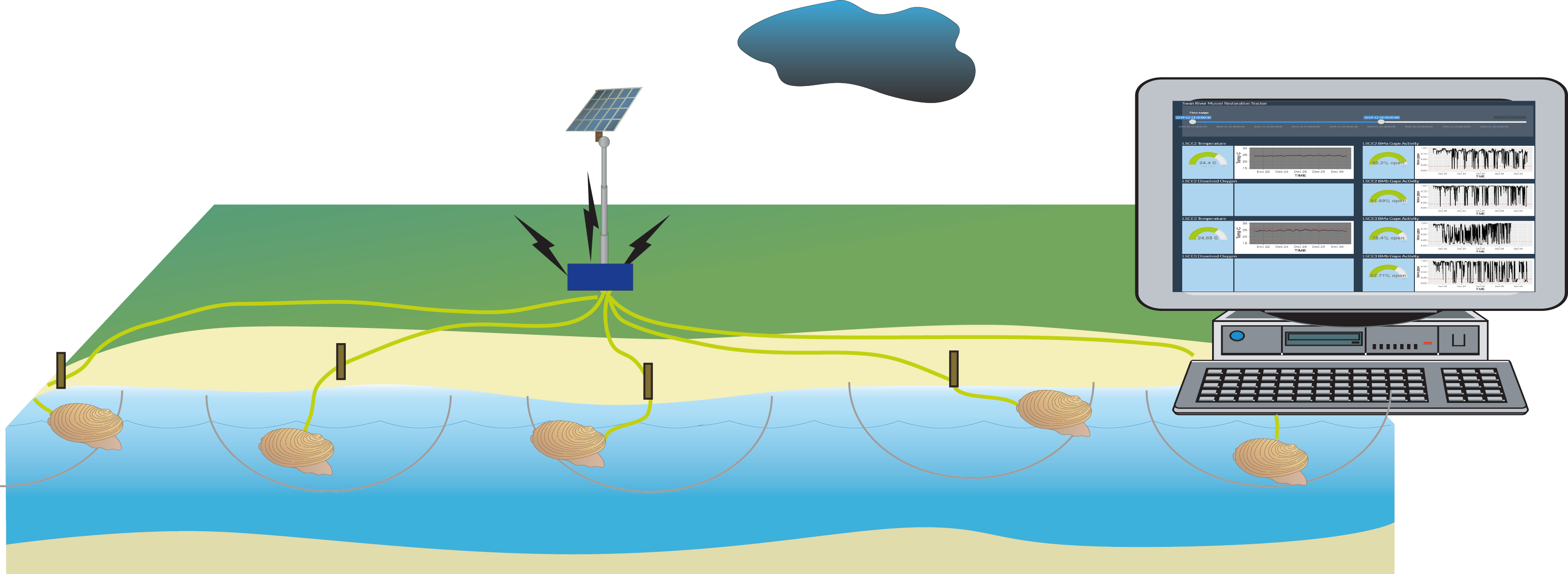
Illustration of how Spyvalve's work. Credit: Alan Cottingham
Citizen scientists are monitoring live data via the Spyvalve website. The bivalves are monitored for normal processes such as feeding, breathing and excreting. When pollution is detected, they close their shell for protection. These data are live-streamed to the network and analysed in the cloud and an alarm produced when all bivalves at a station close for several minutes.
Project partners and collaborators

Lead researchers