
Project Wetland Science is an exciting new hands-on learning experience connecting Western Australian students with real scientists, technology, and Traditional Knowledge to explore the health of local wetlands. Through authentic fieldwork, students test water quality, identify aquatic species, track turtles, and interpret live data from Spyvalve mussel sensors—all while learning from Indigenous Elders about the cultural stories and ecological importance of these waterways.
Designed to align with the WA Curriculum for Year 9 Science and Year 11 Science in Practice, the program offers teachers a fully supported package with permits, data sheets, and risk management covered. Students collect and analyse real environmental data, sharing their findings through scientific posters or websites. These are presented at a showcase event attended by program scientists and community partners.
Project Wetland Science offers young people the opportunity to experience genuine environmental science in their own backyard, building curiosity, confidence, and a sense of stewardship for Western Australia’s unique wetland ecosystems. For a full outline, see the Project Wetland Science Teacher's Guide.
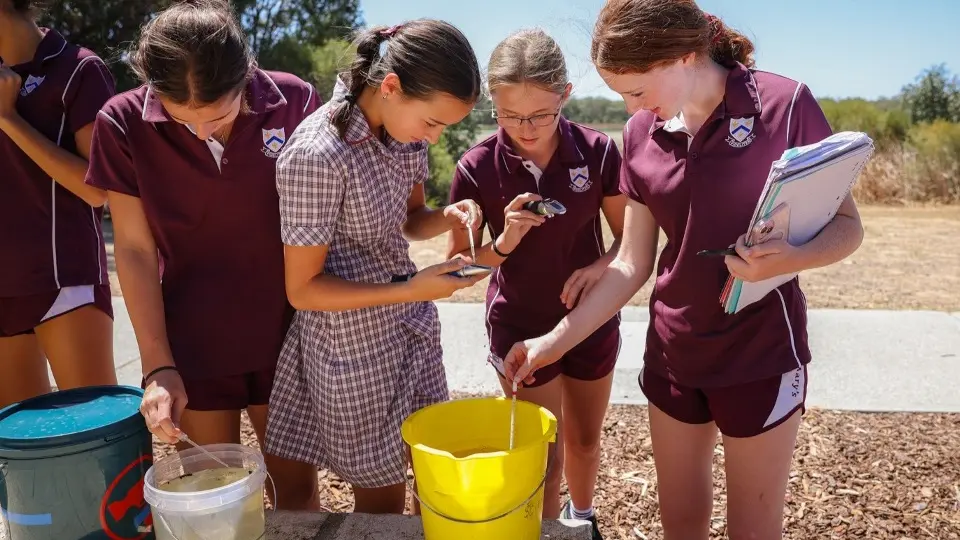
Key features
The HBI Wetland Science Program connects students with real-world environmental research, offering hands-on field experiences using digital monitoring technologies, to support wetland conservation and ecological studies. The program features:
- Guest Scientist Wetland Science Presentation
A scientist-led incursion introducing students to wetland ecology, conservation challenges, and scientific research methods.
- Scientist-Guided Wetland Excursion
On-site water quality testing at a local wetland, with digital monitors available upon request.
- Real Research Project Themes
Students work alongside scientists at the wetland, collecting real-world data across five integrated themes: turtle tracking, spyvavle mussels, macroinvertebrates, feral fish, and water quality testing.
- Guest Scientist at Student Presentation Events
Scientists provide expert feedback, and present HBI awards for: Best Scientific Analysis and Best Science Communication Poster (displayed at the field site for public education).
- Teacher Resource Pack
Includes WA wetland science background materials, an assessment rubric, and a structured student project outline to support classroom learning.
- Public Awareness & Impact
Winning posters are displayed on-site at target wetlands, educating the community on key wetland conservation issues.
Teacher's guide
The Project: Wetland Science Teacher's Guide provides a comprehensive overview of the program, how it's delivered, and how it links to the curriculum.
Program details
Suitability
This program is currently targeted at year nine Science students. It is also suitable for:
- Year 11 Science in Practice - Context: Environmental Monitoring students
- Year 9-12 STEM and Environmental Science electives students
- School sustainability clubs and environmental clubs.
Duration
One term, preferably Term 2 or 3 due to the availability of water in wetlands. Program components occupy approximately 10-12 hours of learning time.
Availability
Currently taking bookings for 2026.
Lesson overview
Six-phase program starting with teacher preparation workshop, followed classroom lessons, incursions and excursions. See the Teacher's Guide for a comprehensive overview.
Cost
Price on enquiry.
Enquiries
Please register your interest below.
Additional resources
- Freshwater Fish Distribution in Western Australia (Dept of Fisheries website)
https://freshwater.fish.wa.gov.au/ - Native freshwater fishes of south-western Australia poster (Murdoch University)
- Freshwater Fish Distribution in Western Australia Interactive Tool (Dept of Fisheries)
- Don't Dump That Fish (YouTube video - Dept of Fisheries)
- Carter's Freshwater Mussel - westralunio-carteri (DWER webpage)
https://rivers.dwer.wa.gov.au/species/westralunio-carteri/ - Health Rivers South-West (DWER website)
https://rivers.dwer.wa.gov.au/ - Water monitoring using cybernetic mussels (Murdoch University YouTube)
- South Capel Wetlands Monitoring Program - Project Video (Murdoch University YouTube)
- Saving Our Snake-Necked Turtle project website https://www.sosnt.net.au/
- South-Western Snake-Necked Turtle - Chelodina oblonga (DWER website)
https://rivers.dwer.wa.gov.au/species/chelodina-oblonga - Baby turtles released into wild to boost vulnerable species (Murdoch University YouTube)
Funder acknowledgement
Delivery of the Project Wetland Science cybernetic mussels experience within the Peel region is generously sponsored by the Alcoa Foundation and delivered with the support of the Western Australian Government Healthy Rivers South-Western Australia program.


Case Study: St Mary's Year 9 Wetland Ecology Project
Inspiring Future Ecologists through the Year 9 Wetland Ecology Project
Engaging Students in Real-World Wetland Conservation Science
St Mary’s Anglican Girls School, Perth, 2023
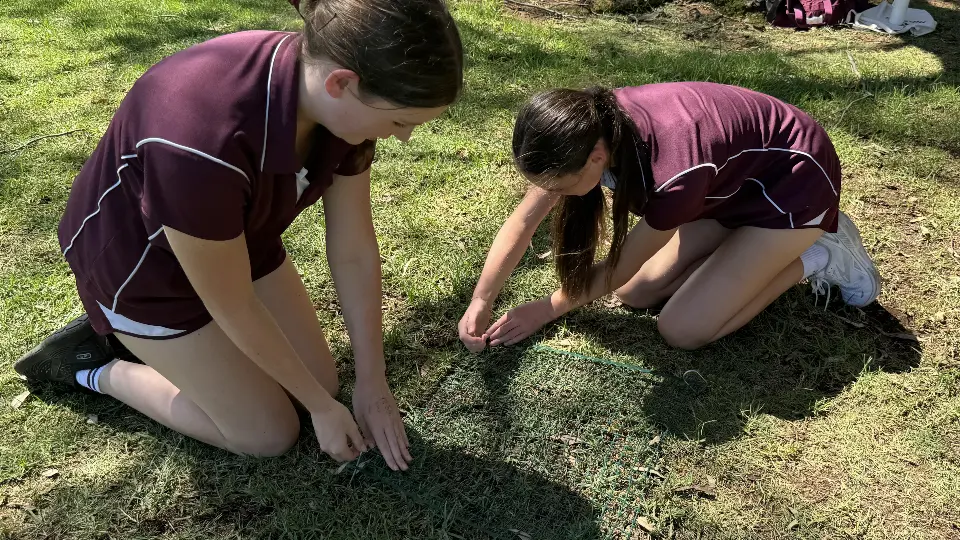
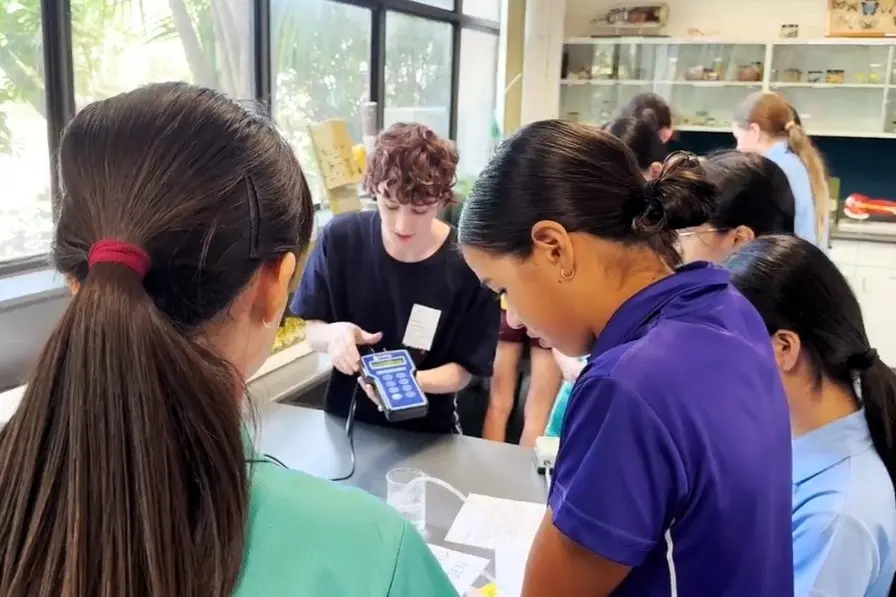
Through Project: Wetland Science, more than eighty year-nine students from St Mary's Anglican Girls School became aquatic ecologists for a term, with the help of the Harry Butler Institute. In a pilot iteration of the program, the year nine classes learned about wetland science from HBI scientists with expertise in snake-necked turtles, focusing their studies on nearby Lake Gwelup. They undertook an investigation of the Lake's water quality and its impact on the declining southwestern snake-necked turtle population.
Authentic Fieldwork and STEM Learning
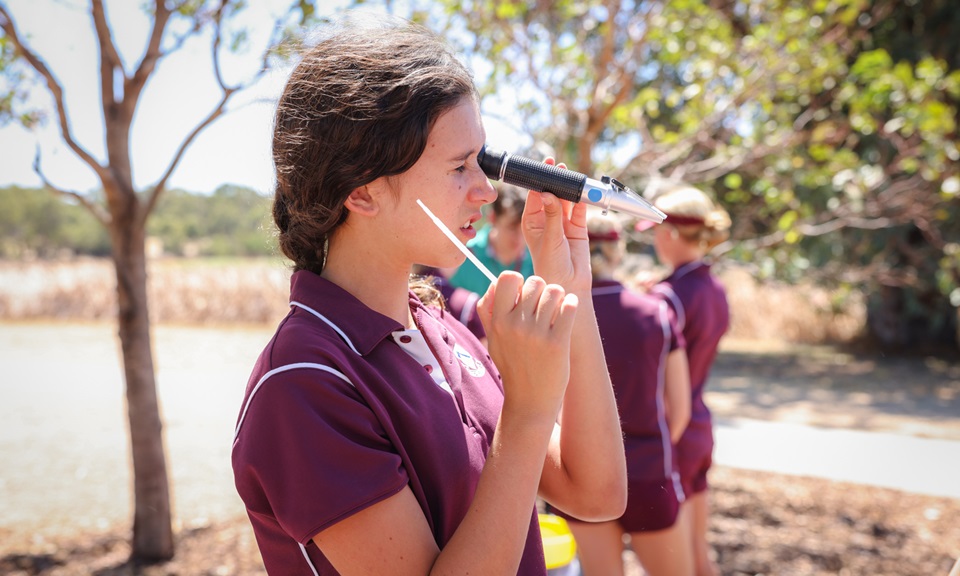
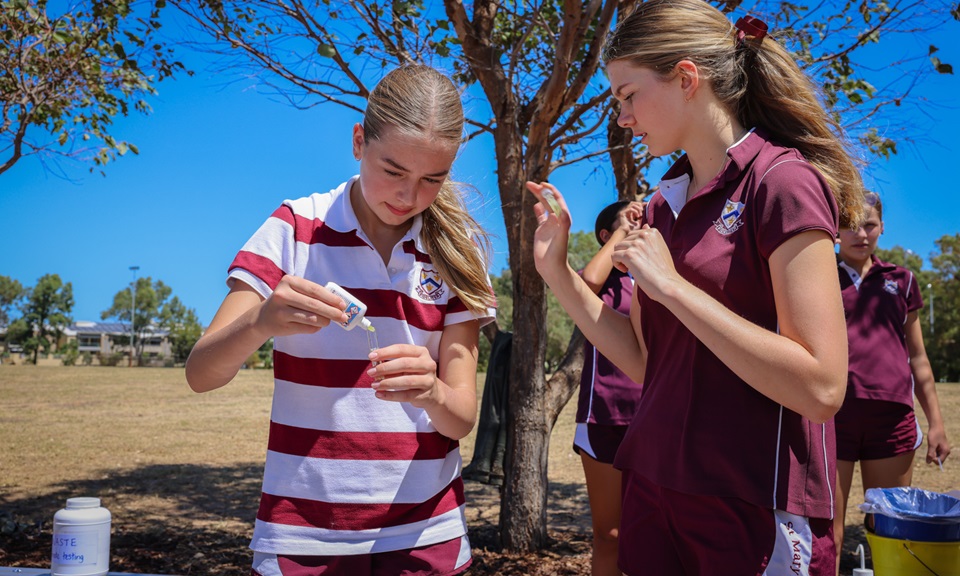
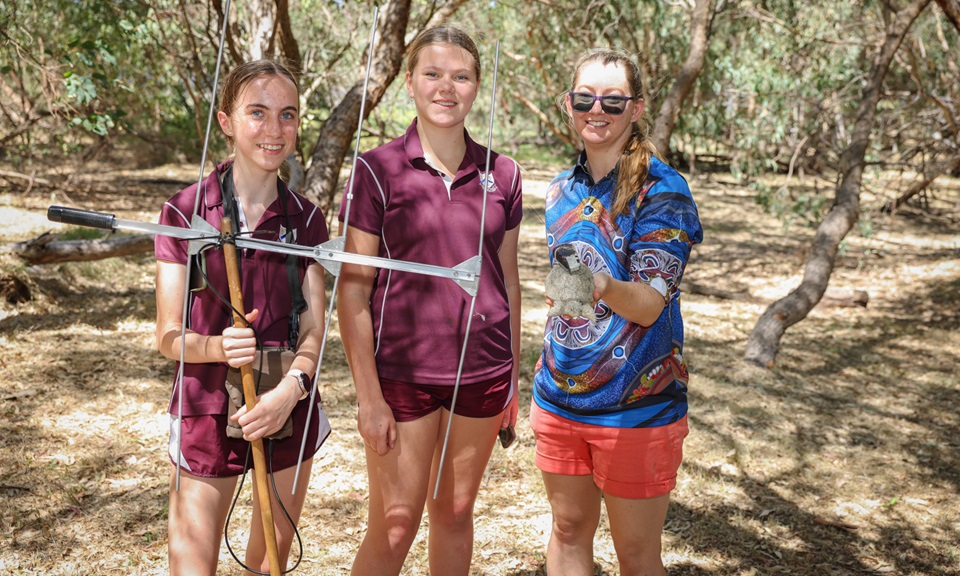
Students conducted fieldwork under the guidance of aquatic ecologist Dr. Anthony Santoro and PhD candidates Kiera Gordan and April Sturm. Students learned to use environmental monitoring equipment to collect their own data on key water quality parameters. They interpreted this data and used it to assess the health of the wetland. Students also explored tracking technology for monitoring turtles and tested nest protection techniques to improve hatchling survival rates.
Applying Knowledge to Real-World Problems
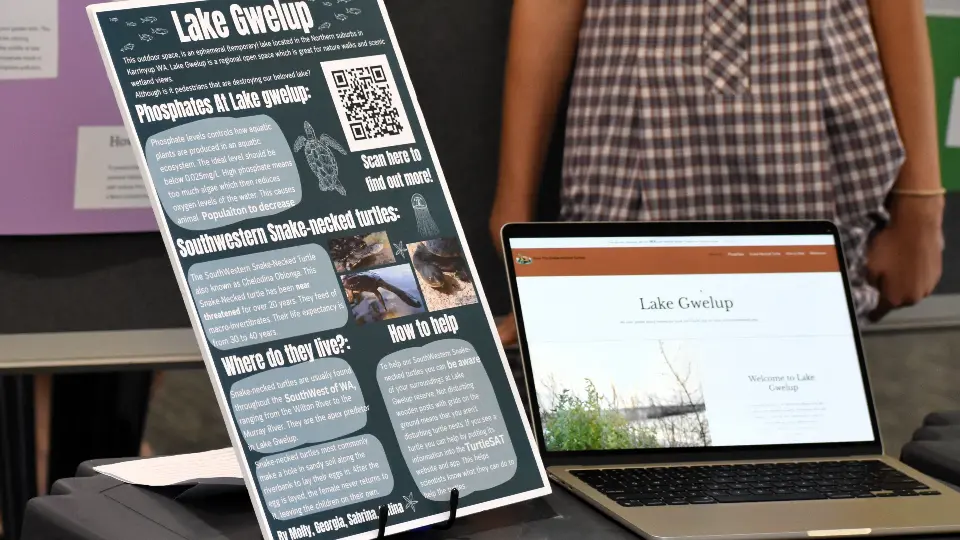
Students developed a website to present their research findings and water quality recommendations. They also created an educational poster to inform the local community about wetland conservation and the threats facing these turtles.
Showcasing and Communicating Scientific Findings
The program concluded with a presentation session where students shared their project work with teachers and parents, as well as representatives from the local government, and the HBI team. Students were awarded for best scientific analysis, judged by HBI experts, and the best educational poster, selected by the local government representative. The winning poster was displayed at Lake Gwelup to raise public awareness of the turtle’s plight. This event provided an opportunity for students to present their work and communicate their findings, highlighting the importance of communicating scientific findings and students’ role in conservation efforts.