
Drones driving dugong conservation
Areas of research
Dugongs, conservation management
Technology utilised
Drones, GPS-satellite tags
Lead researchers

Dr Christophe Cleguer
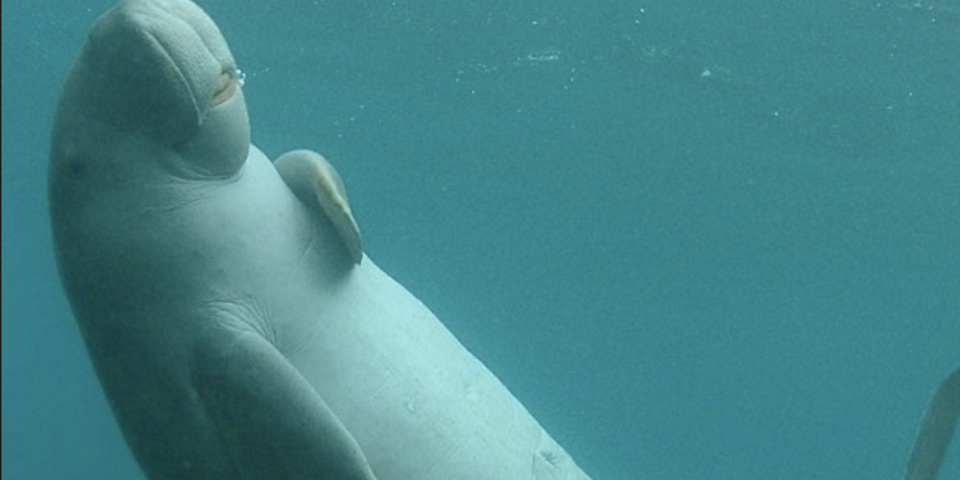
Dr Cleguer is on a mission to save the dugong, using unmanned aerial vehicles, or ‘drones’ to survey and assess dugongs and their habitats.
The vast amount of data generated by these aerial surveys is making a significant impact on the way dugong conservation and management is undertaken. In doing so, it’s also saving critical habitat for a host of other marine species.
Dugongs act as a bellwether for the overall ecosystem – seagrass meadows with dugongs are healthy. And when areas of seagrass are healthy, they provide a habitat for other sea life and play an important role in sustaining clean seawater and safeguarding coasts from erosion.
These big creatures, commonly referred to as ‘sea cows’, can be difficult to find and research by boat so a higher vantage point is required to locate, track and study them.
Researchers have found the use of drones in marine research has many advantages and opportunities. On average, a three-week research trip can involve 90 aerial survey flights and generate approximately 25,000 images. This comprehensive level of detail is difficult to achieve by other means.
The team’s aerial surveys are complemented by tracking using telemetry tools that enable them to develop a broader understanding of the animals’ use of space and behaviour. For example, Dr Cleguer uses GPS-satellite and accelerometry tags on dugongs to track and understand how the animals move at night, as drones are only able to fly in the daytime.
In addition to being much safer for scientists, aerial technology has a reduced carbon footprint and the data collected is more accurate, including the ability to pinpoint the location of the animal more effectively.
The team are continually building upon knowledge of the dugong’s spatial ecology, using these technologies to build a story and a deeper understanding of dugongs – when they feed, rest, their movements and of course, their critical habitats.
This
data is already helping to draw important linkages between dugong
presence and seagrass habitats, helping communities understand the
extent of conservation efforts required to ensure dugong survival.
Lead researchers
Dr Christophe Cleguer
Areas of research
Dugongs, conservation management
Technology utilised
Drones, GPS-satellite tags
Lead researchers
Dr Christophe Cleguer