
News
Tayler shares innovative pharmacology education and research at international congress
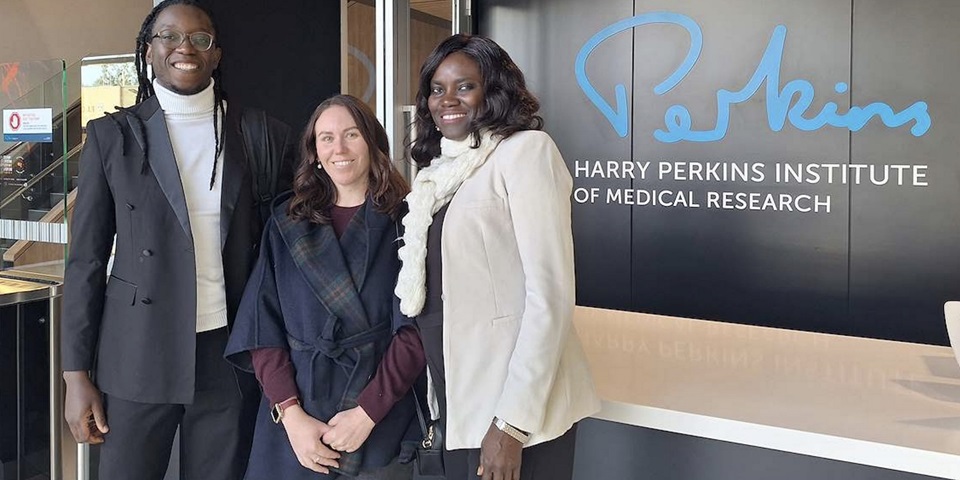
Dr Tayler Kent (middle) and colleagues at the 2026 World Congress of Pharmacology
Dr Tayler Kent from Murdoch University's School of Medical, Molecular and Forensic Sciences (MMFS) recently showcased both teaching innovation and emerging toxicology research at events associated with the 2026 World Congress of Pharmacology (WCP 2026), connecting with international educators, researchers and clinicians from across the globe.
Ahead of the congress, Tayler was invited to present at a satellite meeting jointly organised by the UWA School of Biomedical Sciences, the Australian Society of Clinical and Experimental Pharmacologists and Toxicologists (ASCEPT) Education Special Interest Group and the International Union of Basic and Clinical Pharmacology (IUPHAR) Education Section.
The satellite meeting was one of several events held around the World Congress of Pharmacology, which takes place every four years and attracts leading experts from across the pharmacological sciences. Designed to give international visitors additional opportunities to engage with Australian institutions and colleagues, the event included tours of UWA's teaching facilities and research laboratories, presentations from invited speakers and discussions on contemporary challenges and opportunities in pharmacology education.
A key theme emerging from the meeting was the impact of generative artificial intelligence and other rapidly evolving technologies on higher education. Presenters also explored initiatives supporting academic and professional development, as well as the transformation of pharmacology education in different international contexts.
Tayler's presentation, From Bench to Bedside and Beyond: Pharmacology through a Combined Biomedical and Sociological Lens, highlighted the distinctive interdisciplinary approach taken within Murdoch's pharmacology and toxicology programs. The presentation showcased how students develop foundational knowledge in pharmacokinetics, pharmacodynamics and systems pharmacology through BMS317, advance their understanding of systems toxicology and analytical techniques in BIO367, and examine the broader social, political, historical and public health dimensions of medicine through BMS205.
The invitation provided an opportunity to share MMFS teaching practices with an international audience while learning from educators working in a range of disciplines and educational settings.
Following the satellite meeting, Tayler presented research in the Toxicology session at the World Congress of Pharmacology, held in Melbourne. The presentation, titled Herbal Supplements Disrupt Central Carbon Metabolism and Nucleotide Signalling in Testicular Cells, described findings from an exploratory study examining the effects of herbs commonly found in fertility supplements on testicular cell function. This collaborative work was co-authored by Dr Bob Du, Professor Andrew Currie, Professor Garth Maker and Associate Professor Anne Barnes.
While preliminary, the research suggests that exposure to these compounds may disrupt key metabolic pathways, including glycolysis and the tricarboxylic acid (TCA) cycle, and alter concentrations of nucleotides involved in cellular signalling. The findings have helped guide the direction of a larger study that will further investigate the mechanisms underlying these changes.
The presentation generated valuable discussion among delegates, particularly around the biological mechanisms that may explain the observed metabolic effects and how future studies could be designed to explore them in greater depth.
For Tayler, one of the most rewarding aspects of both presentations was the opportunity to discuss teaching and research with international experts.
"Sharing ideas with colleagues from around the world often leads to valuable feedback, new perspectives and opportunities to strengthen and expand ongoing projects," Tayler said.
International conferences such as WCP play an important role in fostering collaboration, building professional networks and exposing staff and students to the latest developments in research, education and industry. They also provide opportunities to showcase the innovative work being undertaken within MMFS on a global stage.
Learn more about our courses in Biomedical Science