
News
Scholarship Awarded to Dana Hicks Research into Cardiometabolic Disease
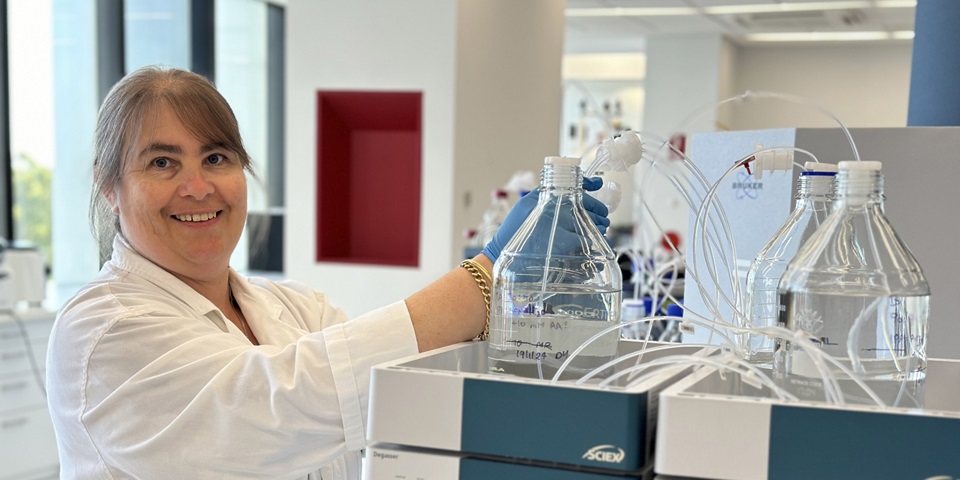
The School of Medical, Molecular and Forensic Sciences (MMFS) extends its warmest congratulations to PhD candidate Dana Hicks, who received the 2025 Graduate Women WA Open Scholarship.
Dana’s dedication, rigorous academic training, and innovative approach have positioned her as a rising star within our research community, and we celebrate her achievements as she continues her doctoral journey.
Receiving the 2025 Graduate Women WA Open Scholarship will enable Dana to expand her research on organ-specific metabolism and mitochondrial function in cardiometabolic disease.
Unravelling the Mechanisms of SGLT2 Inhibitor Therapy
Dana’s research looks at how SGLT2 (sodium-glucose co-transporter 2) inhibitor treatment works in people with heart and metabolic diseases. While these treatments are recognised for their protective effects on the heart, the metabolic pathways responsible for these benefits remain poorly understood.
Dana’s work addresses this critical knowledge gap by asking pivotal questions: How do lipid composition and metabolism differ among organs in cardiometabolic disease? Are there common or organ-specific lipid signatures that could shed light on disease progression? Can advanced lipid profiling help identify biomarkers for early disease detection, treatment response, or risk stratification?
Innovative Research Methods
To tackle these questions, Dana employs a suite of leading-edge analytical techniques including mass spectrometry (LC-MS/MS) for comprehensive lipid analysis and nuclear magnetic resonance (NMR) spectroscopy to profile low-molecular-weight metabolites and lipoproteins. To further understand organ-specific metabolism, Dana conducts blood and tissue sampling to measure the uptake and release of metabolites by different tissues. These data are integrated and analysed using advanced multivariate statistics and pathway analysis, offering a holistic view of metabolic changes across organs.
Currently, Dana is expanding her workflow to include a broader array of lipids, notably acylcarnitines and cardiolipins. This enables a deeper exploration of energy metabolism and mitochondrial function, helping to identify how energy is made and used in cells, and how problems with this process may lead to cardiometabolic disease. By understanding these pathways, Dana’s work could lead to better ways to diagnose and treat these diseases in the future.
Academic Pathway
Dana started her academic studies with a Bachelor of Science, focusing on Biomedical Science, Genetics, and Molecular Biology, which sparked her interest in metabolomics. She then went on to complete a Master of Systems Medicine (Research) at the Centre for Computational and Systems Medicine and the Australian National Phenome Centre. Dana credits her MMFS undergraduate degree with providing a robust foundation in molecular biology and genetics —insights that have proven invaluable in her current research.
Dana’s work is guided and supported by a team of expert scientists: Dr Nicola Gray (primary supervisor), Professor Julien Wist, Professor Girish Dwivedi, and Professor Bu Yeap. She also collaborates with Dr Lakshini Herat and Professor Markus Schlaich from the Dobney Hypertension Centre.
Dana extends her sincere gratitude for generously funding awarded by the Graduate Women WA Open Scholarship (2025), to whom she for enabling the expansion of her project. For further information about the scholarship, please visit: https://graduatewomenwa.org.au/
Congratulations again to Dana Hicks for her outstanding commitment and contribution to advancing knowledge in human health. The MMFS School is proud to support and celebrate her achievements.
N. Warburton