
News
Empowering the Next Generation of Scientists to Fight Infectious Diseases
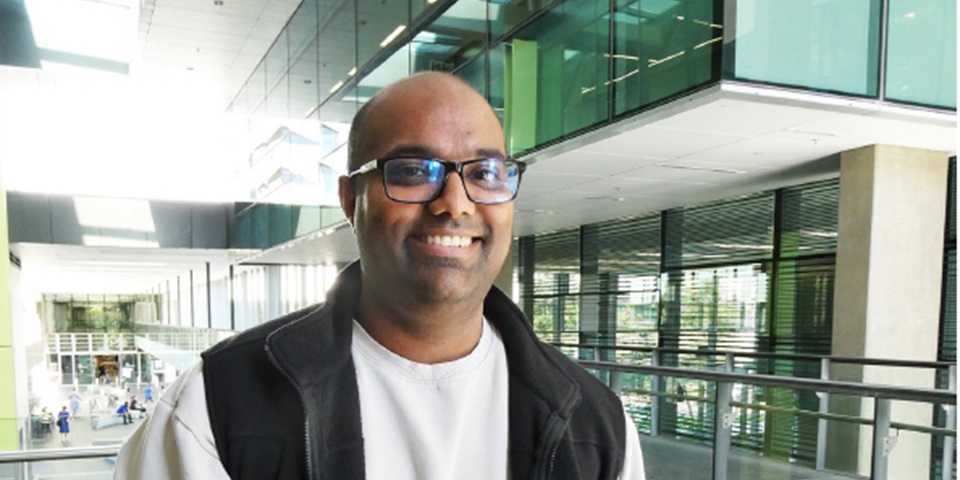
Meet-our-teachers: Dr Shakeel (Shaxx) Mowlaboccus, a dynamic early career academic conducting cutting-edge research in the global fight against antimicrobial-resistant bacteria
Dr Shakeel Mowlaboccus is the Deputy Academic Chair for the new Master of Infectious Disease Surveillance and Control program, providing postgraduate students with essential skills and knowledge to tackle the increasing challenge of drug-resistant infectious diseases.
Shaxx specialises in investigating the molecular epidemiology and evolution of bacterial pathogens of public health concern using advanced genomic technologies. His research program integrates genomic surveillance of multidrug-resistant bacteria, improved detection of antimicrobial resistance in clinical settings, investigation of the evolutionary pathways of drug-resistant pathogens, and discovery of the molecular mechanisms underlying resistance to novel and last-line antibiotics. Previously, as a Medical Scientist at PathWest Laboratory Medicine WA (Fiona Stanley Hospital), Shaxx was instrumental in establishing and implementing routine genomic sequencing of microbial pathogens within diagnostic workflows.
Shaxx currently serves as a bioinformatics analyst for the Australian Group on Antimicrobial Resistance and collaborates nationally and internationally to support surveillance programs monitoring multidrug-resistant bacterial pathogens such as MRSA, Enterococcus faecium and Neisseria gonorrhoeae. His work builds on the foundations established by his mentor, Professor Geoffrey Coombs, a leading expert in antimicrobial resistance. Shaxx’s research is supported by Murdoch University's AMRID Research Laboratory, which employs advanced technologies for pathogen screening and disease control across humans, animals, and the environment.
Alongside his research, Shaxx is dedicated to teaching, science communication, and inclusive education. He has supervised many research students from diverse backgrounds. He also holds leadership roles, including International Young Ambassador for the American Society for Microbiology (2023–2025), Chair of the Western Australian branch of the Australian Society for Microbiology, and executive committee member of the Australian Society for Antimicrobials.
As the School of MMFS prepares to welcome its inaugural cohort into the Master of Infectious Disease Surveillance and Control, Shaxx is energised by the opportunity to inspire and mentor the next generation of scientists. Prospective students will benefit from Shaxx’s enthusiasm and hands-on teaching approach, gaining practical laboratory experience and exposure to cutting-edge techniques in infectious disease surveillance, outbreak detection, and control.
The program offers the flexibility of a 12-month industry placement, research internship, or bioinformatics project dissertation, ensuring graduates are ready to meet the evolving demands of infectious disease surveillance.
“I'm excited to teach and work alongside our new students,” Shaxx says. “Together, we’ll be tackling real-world challenges and contributing to a safer, healthier future for communities in Australia and beyond.”
If you’re a science graduate or professional eager to address the critical issue of antimicrobial resistance, consider joining the Master of Infectious Disease Surveillance and Control—where you’ll learn from leaders in the field and help shape the future of global health.
You can read more about our undergraduate and postgraduate programs in Biomedical Science here.