
student story
The Invisible Battle in our Lungs: A/Prof Prêle’s Breakthroughs in Immune Research
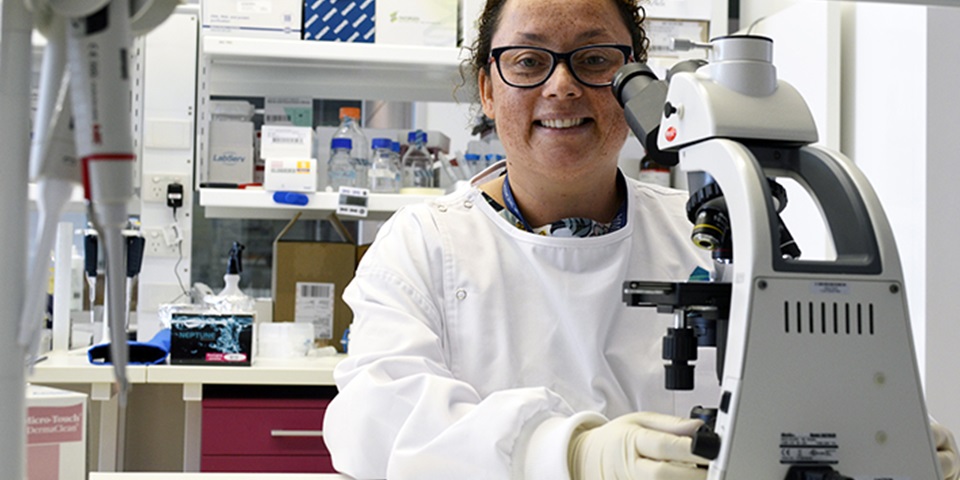
Meet your teachers - Donald Charlton interviewed A/Prof Cecilia Prêle’s about her research journey and current work on fibrosis
"Sometimes a failed experiment teaches us far more than a successful one" ~A/Prof Prêle.
Associate Professor Cecilia Prêle, a leading researcher at Murdoch University, is tackling one of medicine’s most complex challenges—fibrosis. While fibrosis is part of the body’s natural healing process, it can become harmful when unregulated. A/Prof Prêle’s research aims to unravel the cellular and molecular mechanisms behind this process, particularly in the lungs and inner ear. Her story is not just one of scientific discovery, but of adaptability, mentorship, and the vital role of science communication in making complex research accessible to broader audiences.
Her current work focuses on the immune system, especially the role of B-cells—immune cells known for producing antibodies. “We’re investigating whether B cells are pathogenic in fibrotic conditions, and if so, how could we therapeutically target them?” she explained. One of her team’s recent papers revealed that patients with idiopathic pulmonary fibrosis show increased B-cell activity in their blood and lung tissue. This discovery suggests that the immune system may play a bigger role than previously thought. As a result, treatments targeting B cells could open new and more effective ways to manage the disease, offering fresh hope for patients.
Interestingly, A/Prof Prêle’s research journey has moved through diverse aspects of human biology and health. Her PhD focused on bone biology; she transitioned through fields such as cancer research and cardiac regeneration over time. “All that knowledge feeds into what I do today,” she reflected, highlighting the importance of interdisciplinary learning.
Her team uses advanced methods, including mouse and guinea pig disease models, micro-CT imaging, and spatial transcriptomics - the cutting-edge technique that investigates the spatial organisation of gene expression within tissues. Combining these tools allows them to study how disease develops and responds to treatment at different levels, from the whole organ to individual genes, giving them a detailed and well-rounded understanding of lung disease. A recently funded project also aims to develop a diagnostic tool to match patients early on with the most effective treatments.
A/Prof Prêle offers timeless advice for aspiring scientists: “Don’t be afraid of failed experiments, we can often learn a lot from them. Keep learning and take every opportunity to develop your knowledge and skills.”
Donald Chizuni Charlton