
News
From Mine to Market: Philippine Delegation Explores Australia’s Mining Innovation on Murdoch University Study Tour
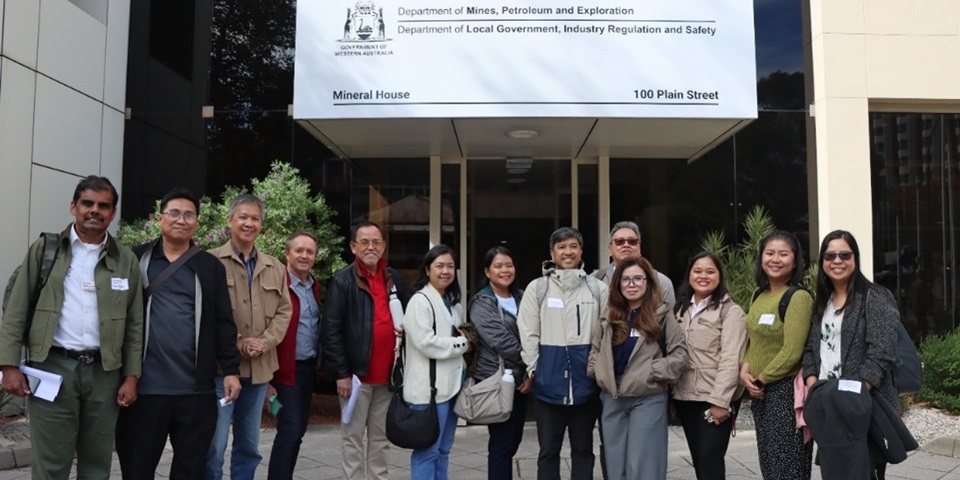
Associate Professor Manickam Minakshi Sundaram, far left, and Associate Professor Martin Anda, fourth from left, with delegates from the Philippine SEAG2G program
In May, Murdoch University welcomed an 11-member delegation from the Philippines for an intensive six-day study tour showcasing Australia’s mining sector—offering a firsthand look at the people, partnerships and innovations shaping the future of resources.
The visit formed part of the Australian Department of Foreign Affairs and Trade’s Southeast Asia and Australia Government Partnerships (SEAG2G) program, which aims to strengthen collaboration between Australia and Southeast Asia through knowledge sharing, policy development, and technical capability building.
Led by Associate Professor Martin Anda, Professor Tania Urmee and Associate Professor Manickam Minakshi Sundaram from the School of Engineering and Energy, the study tour was designed to provide a holistic view of the mining value chain—from extraction to downstream processing—while highlighting the importance of sustainability, community engagement and economic diversification. The program was supported by the International College Engagement Office, with Ella Durand, Annie‑Pierre Fortier and Denyse Lim ensuring a seamless experience for participants.
A delegation driving national priorities
The Philippine delegation was led by Mike Cabalda, Head of the Mines and Geosciences Bureau (MGB), and brought together senior representatives from key government agencies, including the Department of Environment and Natural Resources – MGB, the National Commission on Indigenous Peoples (NCIP), the Department of Trade and Industry – Bureau of Investments (DTI‑BOI), the Department of Finance (DOF), and the Bangsamoro Autonomous Region in Muslim Mindanao’s Ministry of Environment, Natural Resources, and Energy (BARMM MENRE).
Together, the group represented a cross-section of expertise spanning environmental stewardship, investment strategy, Indigenous engagement and regional development—reflecting the Philippines’ commitment to strengthening its mining sector in a responsible and sustainable way.
Learning on the ground
Across Western Australia, the delegation experienced the mining sector beyond the classroom. From the vast scale of Alcoa’s Huntly bauxite mine to the complex processing operations at the Pinjarra refinery and Tianqi Lithium’s facility, participants gained insight into the technological and environmental systems underpinning modern resource industries.
Visits to rehabilitation sites and the Kwinana heavy industrial precinct demonstrated how legacy mining activities can be transformed, while trips to Premier Coal Mine and the Muja and Bluewaters power stations highlighted the ongoing evolution of energy production.
A highlight of the program was the visit to Collie, where delegates explored emerging transition industries including battery manufacturing, renewable energy developments, and innovative mine rehabilitation projects. These experiences underscored the region’s shift toward a more diversified and sustainable economic future.
Reflecting on the impact of the tour, Associate Professor Manickam Minakshi Sundaram noted,
“This study tour was about more than showcasing Australia’s mining sector—it was about sharing practical knowledge and building relationships that support long-term, sustainable development. By bringing together government, industry and research, we can learn from each other and create pathways for value-adding and innovation that benefit both Australia and our regional partners.”
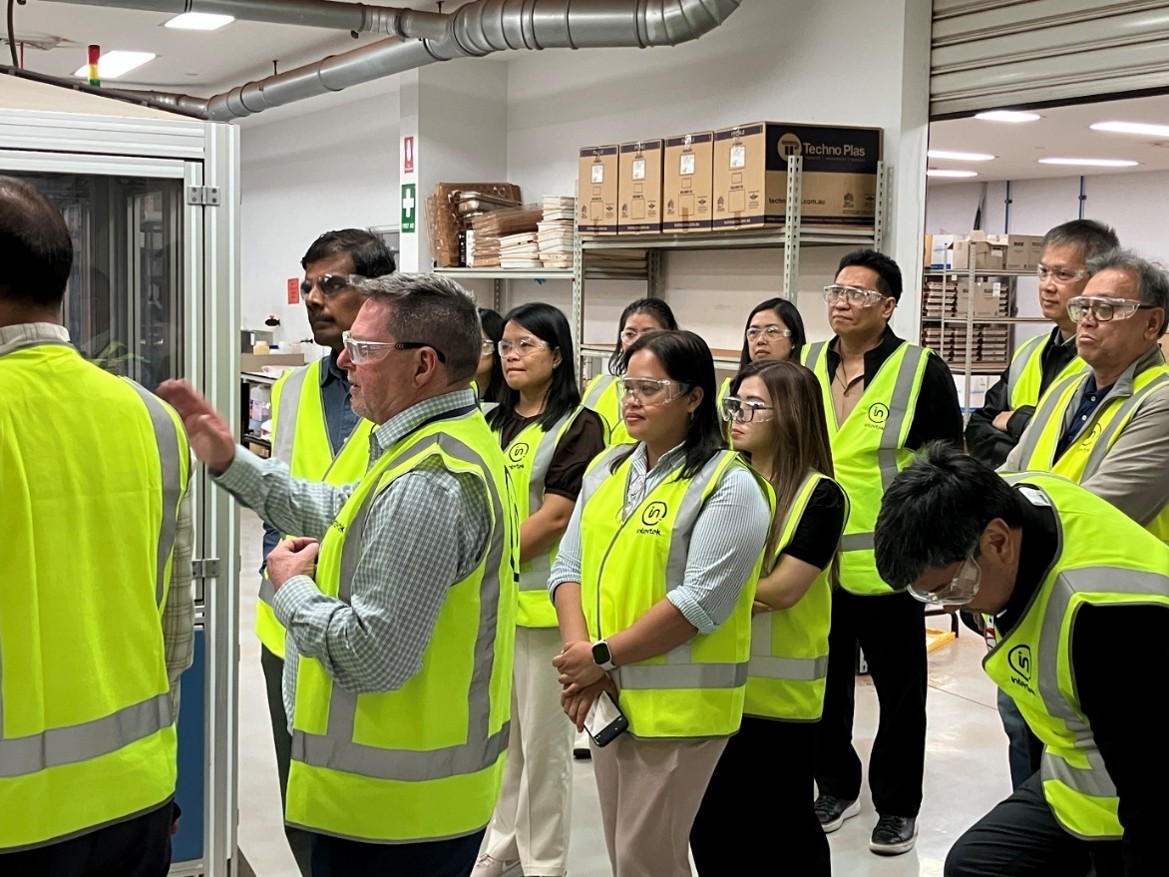 Delegates from the Philippine SEAG2G program on a site tour
Connecting policy, industry and research
The study tour also created opportunities for deeper engagement through technical seminars with government agencies, including the Department of Mines and the Minerals Research Institute of Western Australia (MRIWA). These sessions complemented site visits by providing insights into regulatory frameworks, research collaboration, and policy settings that support Australia’s mining sector.
The program concluded with an AusIMM networking event, enabling delegates to connect with industry professionals and researchers, and to continue conversations around shared challenges and opportunities.
Showcasing Murdoch University’s strengths
Building on the success of the inaugural Cambodia study tour, Murdoch University’s second SEAG2G program further demonstrated the University’s leadership in mining and resources education and research. The tours highlighted Murdoch University’s strong partnerships with industry, government and First Nations communities, as well as its capabilities in extractive metallurgy, mining law, advanced analytical sciences, energy systems and resource recovery.
Participants also learned about key initiatives such as the Rockingham Extractive Metallurgy Hub and other flagship research programs that are advancing innovation across the sector.
A recurring theme throughout the tour was the importance of downstream processing, value addition and technological innovation in maximising the economic and social benefits of mineral resources—an area of strong interest for the visiting delegation.
Strengthening regional partnerships
As the SEAG2G program continues, Murdoch University will host further delegations from across Southeast Asia, including Lao People's Democratic Republic in August 2026 and Timor‑Leste in September 2026.
These study tours are more than technical visits—they are platforms for building lasting relationships, exchanging ideas, and working collaboratively toward a more sustainable and inclusive future for the mining sector across the region.
News
From Mine to Market: Philippine Delegation Explores Australia’s Mining Innovation on Murdoch University Study Tour
Posted on
Topics