
News
Engineering the Future: ICPS 2026 Puts Perth at the Heart of Industrial Innovation
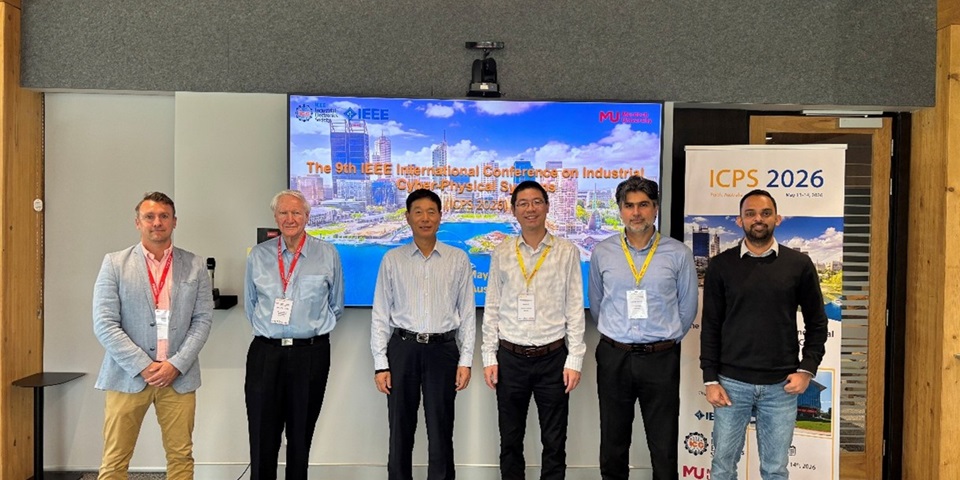
Michael Meehan, General Manager, Monitra, Dr Walter Green, Professor Qing-Long Han, Swinburne University of Technology Australia, Associate Professor Hai Wang, Murdoch University, Moayed Moghbel, Western Power and Dr Sheikh Izzal Azid, Murdoch University
From 11 to 14 May 2026, the School of Engineering and Energy welcomed the global industrial electronics and engineering community to Perth for the 9th IEEE International Conference on Industrial Cyber‑Physical Systems (ICPS 2026), jointly organised by the IEEE Industrial Electronics Society and Murdoch University.
Hosted at Murdoch University’s Boola Katitjin Conference and Events Centre, the four‑day conference brought together researchers, engineers, industry leaders and graduate students from around the world to explore the technologies shaping the future of industrial cyber‑physical systems, spanning artificial intelligence, energy systems, digital transformation, autonomous systems and advanced control.
As delegates arrived on campus, the atmosphere was one of energy and collaboration. From technical tutorials and keynote addresses to packed paper sessions and industry forums, ICPS 2026 showcased Perth as a global hub for engineering innovation, particularly in energy, automation and intelligent systems.
Associate Professor Hai Wang from Murdoch University’s School of Engineering and Energy served as one of the Conference General Chairs, leading an international organising team to deliver a technically rich and thoughtfully curated program. Reflecting on the conference, Associate Professor Wang said:
“ICPS 2026 has been an outstanding opportunity to bring together global expertise in industrial cyber‑physical systems, while also showcasing the strength of engineering research and industry engagement here in Western Australia. Hosting this conference at Murdoch University highlights our strong connections between academia, industry and real‑world impact.”
Across the week, delegates engaged in keynote speeches from globally recognised experts, alongside parallel technical sessions covering topics such as AI‑driven industrial systems, power electronics and energy networks, digital twins, cybersecurity, and autonomous and resilient control systems.
Distinguished Professor Qinglong Han, Pro Vice-Chancellor (Research Quality) at Swinburne University of Technology (SUT), delivered the opening keynote speech titled “Distributed Coordination Control of Multi-Agent Systems (MAS)”. His keynote provided a comprehensive overview of recent advances in distributed coordination control of MAS under intermittent sampling and communication constraints, addressing both foundational theories and emerging techniques in resilient and intelligent networked systems.
Professor Han highlighted the increasing importance of communication-aware and resilient coordination strategies for future industrial cyber-physical systems, particularly in complex and uncertain environments where continuous data exchange is impractical. His keynote attracted strong interests from national and international delegates across academia and industry and stimulated active discussions on future directions in intelligent control and distributed autonomous systems.
Industry forums added a practical dimension, offering insights from major energy and technology organisations operating in Western Australia and beyond, reinforcing the conference’s strong connection between theory and application. One of the highlights of the program was industry forum speaker Michael Meehan, General Manager (Australia) at Monitra, who shared insights drawn from extensive experience delivering advanced monitoring and diagnostic solutions across Australia’s energy sector. Commenting on his ICPS experience, Mr Meehan said:
“What makes ICPS unique is the genuine exchange between researchers and practitioners. The ideas discussed here have real relevance to how industry is tackling complex challenges in energy systems, cybersecurity and intelligent infrastructure. It’s encouraging to see such strong collaboration and forward‑thinking research coming from Murdoch University and its partners.”
His contribution exemplified ICPS 2026’s focus on bridging academic research with industrial implementation — a theme echoed throughout the conference program.
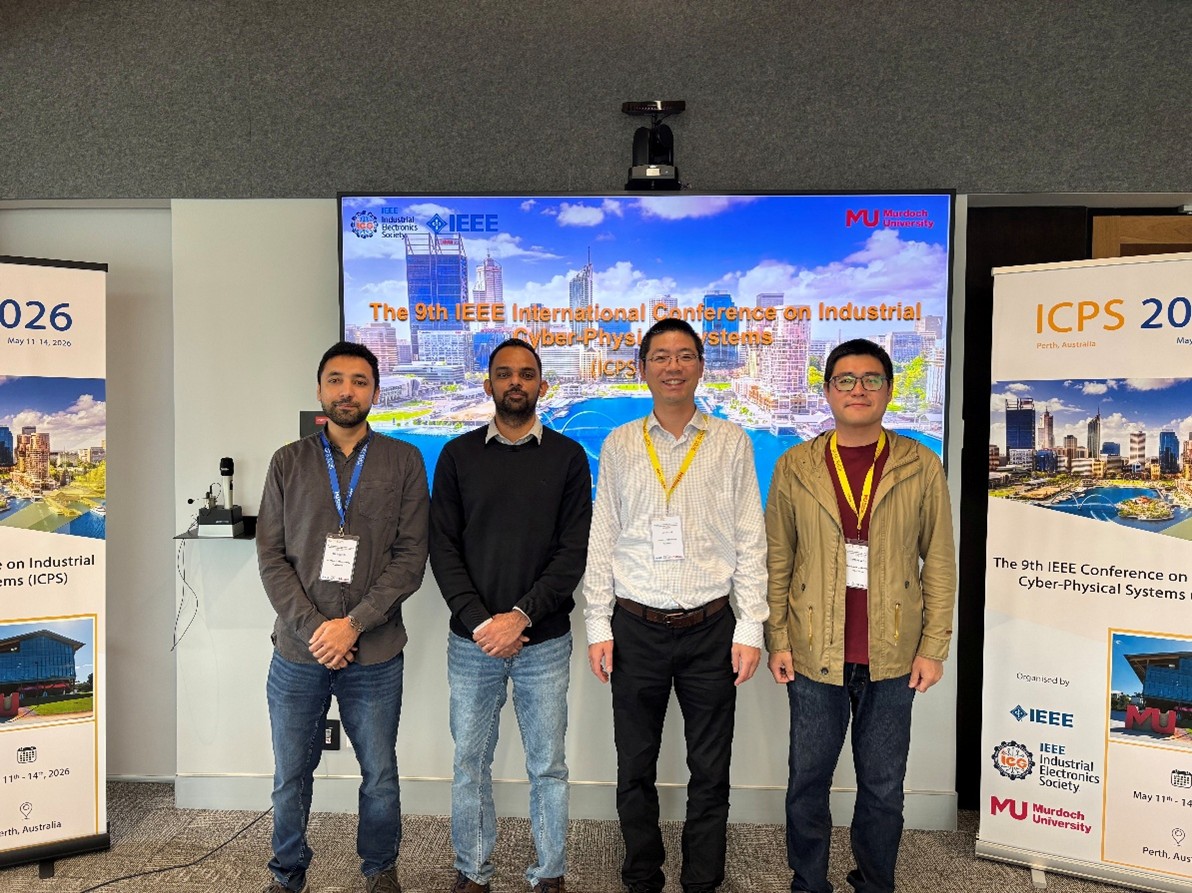 Nashit Ali, PhD candidate, Dr Sheikh
Izzal Azid, Associate Professor Hai Wang and Yinan Wang, PhD candidate all from
the School of Engineering and Energy, Murdoch University.
Nashit Ali, PhD candidate, Dr Sheikh
Izzal Azid, Associate Professor Hai Wang and Yinan Wang, PhD candidate all from
the School of Engineering and Energy, Murdoch University.
Associate Professor Wang also extended his sincere thanks to the many individuals who helped bring ICPS 2026 to fruition — from the international organising and technical committees to volunteers, reviewers and sponsors. In particular, he acknowledged the dedication of all the student volunteers led by Yinan Wang and Nishat Ali, whose behind‑the‑scenes work was instrumental in coordinating logistics, sessions and delegate support throughout the event.
“This conference would not have been possible without the incredible commitment of our team, especially our student helpers, whose hard work and professionalism were vital to the success of ICPS 2026,” he said.
As ICPS 2026 concluded with its closing ceremony, the message was clear: industrial cyber‑physical systems will play a defining role in shaping the future of energy, manufacturing and autonomous infrastructure — and Murdoch University is firmly positioned at the centre of that global conversation.
More information about the conference, program and speakers is available at the ICPS 2026 website: https://icps2026.ieee-ies.org
News
Engineering the Future: ICPS 2026 Puts Perth at the Heart of Industrial Innovation
Posted on
Topics