News
WA tech startup targets agriculture’s big health problem
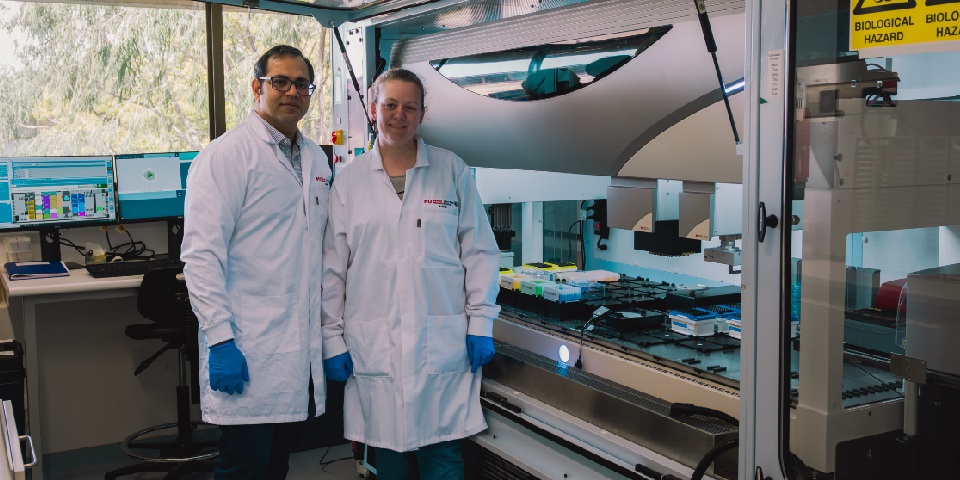
Cutting edge data and automation technology is poised to change the way we monitor and treat the most challenging diseases threatening livestock and livelihoods.
Murdoch University biotech startup Aquila Scientific has been awarded a $3 million Cooperative Research Centre Project grant to deliver world-first automated diagnostic solutions for animal health.
Led by leading biotechnology expert Professor Sam Abraham, the startup promises to radically increase the speed and accuracy with which animals are diagnosed with diseases and how effective they are treated.
“Antimicrobial resistance is one of the major global health challenges – for people, for plants and for animals – and we’re setting up to tackle it by combining our biotech expertise with leading edge robotics,” Professor Abraham said.
Antimicrobial resistance occurs when bacteria no longer respond to medicines, like antibiotics.
“Antibiotics have been curing disease in animals for decades. However, as the bacteria they treat change over time, so does their response to the once-revolutionary treatments,” he said.
“This results in resistance to these medicines.”
Aquila Scientific will pioneer diagnostic solutions to address this resistance and other diseases in animals with fast, large-scale testing for the agricultural sector.
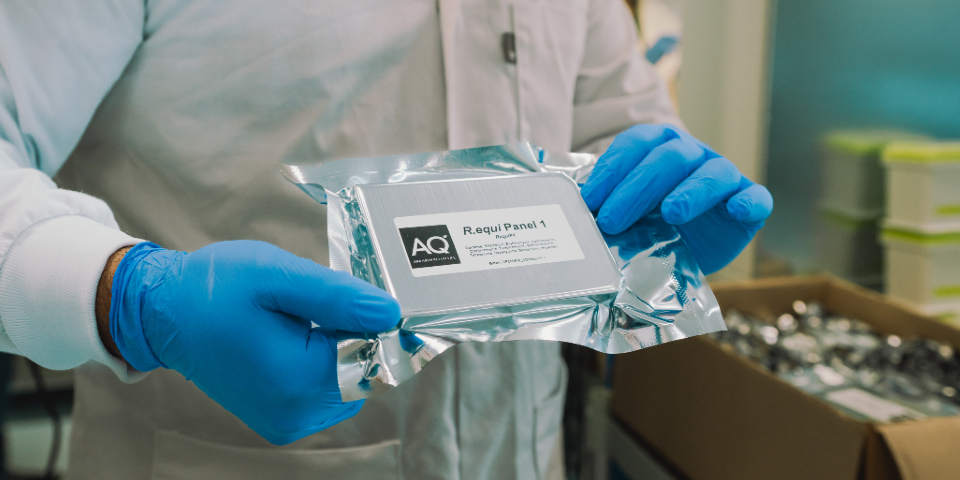
Image: The high-capacity sample testing plate developed by Aquila, which the company plans to produce in Australia in a national first.
Professor Abraham said improving the health of livestock was of national importance because food sits at the interface between humans, animals, and the environment.
“Bacteria are developing resistance to antibiotics faster than new antibiotics can be produced, and with livestock able to move bacteria through the food supply chain, we need to eliminate them at the earliest possible point,” Professor Abraham said.
Aquila Scientific has been set up to do exactly that, with automated robots able to not only process animal samples at greater scale than ever before but also harness the data from that processing.
Artificial Intelligence models will be deployed to constantly improve the accuracy of diagnosis and inform the development of treatment recommendations.
Our robots are also able to manufacture diagnostic kits for use on-farm, which puts our cutting-edge technology into the hands of farmers.
“It’s all about making our food chain more secure, our farms more resilient, and our animals happier, healthier and more productive.”
Global testing for infectious diseases on medical, veterinary and environmental samples is currently time-consuming, labour-intensive and costly. The new biotech developed from this project aims to change all that with the first ever Australian made tests.
The three-year project will see Aquila Scientific collaborate with a global leader in laboratory automation Tecan, Denmark’s Statens Serum Institut, University of Sydney’s School of Veterinary Science, and University of South Australia’s School of Pharmacy.
Together, the consortium will develop and commercialise the Aquila Azure™ – a compact, AI-driven, three-in-one diagnostic platform – and the Aquila SmartView™ antimicrobial susceptibility testing module.
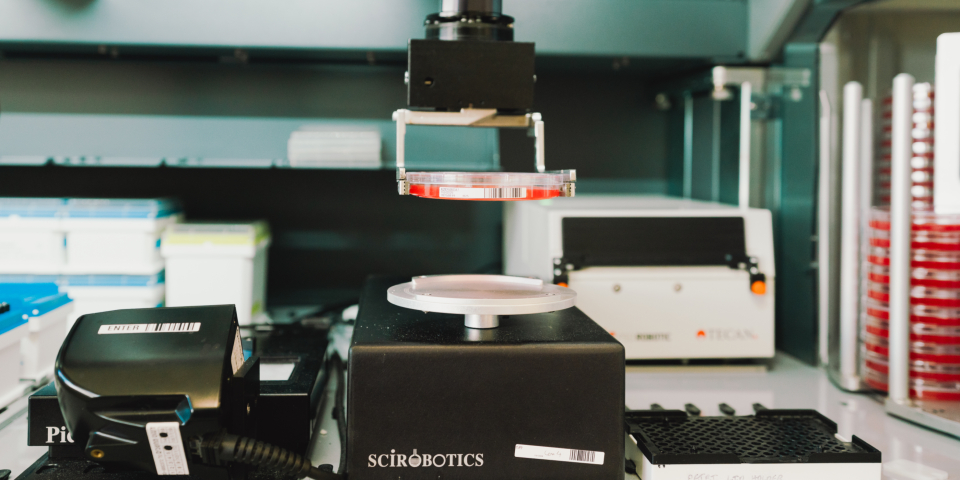
Image: One of the robots developed by the team to provide rapid, large-scale testing of samples.
These promise to build sovereign capacity in laboratory automation, creating high-value jobs, and deliver practical tools to combat antimicrobial resistance and emerging infectious diseases.
Aquila Scientific was born out of Murdoch University’s antimicrobial resistance and infectious diseases laboratory, where Professor Abraham undertakes research as part of the Harry Butler Institute and School of Medical, Molecular and Forensic Sciences.
Inspired by the latest innovations in biotech lab automation, genomics, and mass spectrometry, Professor Abraham brought the disciplines together to develop novel testing solutions for animal health.
He was joined on the journey by his wife and drug discovery and microbiology expert, Dr. Rebecca Abraham and his long-time mentor, veterinarian and epidemiologist, Professor David Jordan.
News
WA tech startup targets agriculture’s big health problem
Posted on
Topics