News
Research shows community help essential for native bats
-website1963a29f-5dc5-4124-a1d4-79282520e483.tmb-960-banner.jpg?Culture=en&sfvrsn=ecb5d954_1)
Community help is no longer just nice to have in the world of bat conservation, it is essential to large-scale bat monitoring and the protection of threatened and understudied species, according to new research.
Research from Murdoch University’s School of Environmental and Conservation Sciences has revealed that collaboration between universities, not for profits, government agencies and community members is the key to ensuring data collection is accurate, and that it flows into policy and practice.
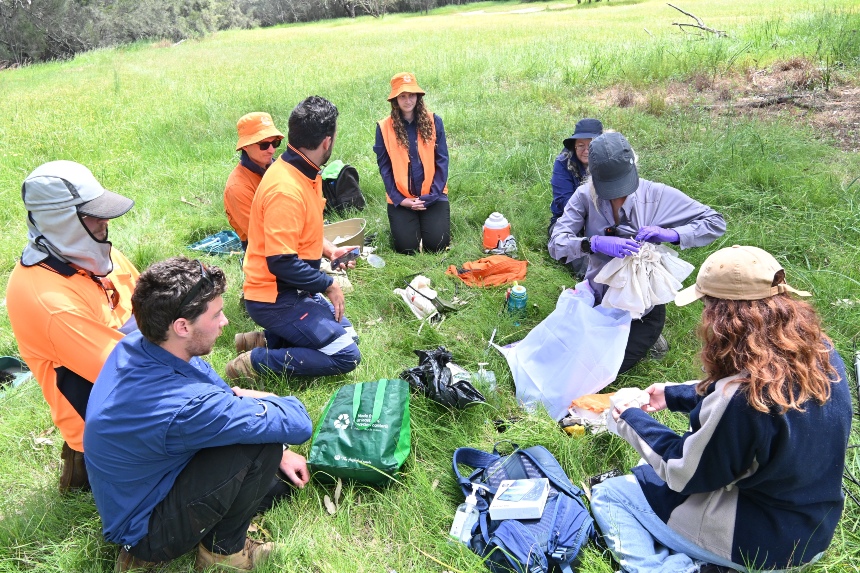
“Citizen science is playing an increasingly important role in bat research in Australia, helping us better understand our bats and support conservation efforts,” said lead researcher and ecologist Kelly Sheldrick.
“Citizen contributions are essential for advancing our understanding of bat ecology globally, particularly where large geographic areas and long-term data collection are involved.
“Large-scale data collection on bat distribution and seasonal activity, for example, can guide habitat protection efforts, inform adaptive land-use planning and improve early detection of population declines, enabling timely conservation interventions.
“Bats can get a bad rap, but they play important ecological roles, and the value of bats often goes unrecognised.”
Bats comprise about 25% of all mammal species and are found on every continent except Antarctica. They help to control insect populations, providing a natural form of pest control, benefiting agriculture and reducing the need for chemical pesticides.
They also play key ecological roles in pollination and seed dispersal, helping to maintain healthy ecosystems.
Findings of the scoping review revealed a growing number of citizen science projects across the globe in bat research and conservation, with recent research expanding geographic coverage, making advances in acoustic monitoring technology, and having stronger links to conservation outcomes.
The most common methods used in citizen science bat projects were acoustic surveys, however observations such as bat roost emergent counts, technical field research, desktop analyses of existing datasets such as iNaturalist, interviews, questionnaires and bat box monitoring also played key roles.
“Bats face multiple anthropogenic threats, including habitat clearing, collisions with wind turbines and persecution, often driven by fear or misinformation,” Ms Sheldrick said.
“Yes, they can sometimes find their way into roofs, sheds, chimneys, or other parts of buildings, but with a little care and education, we can coexist safely with our wildlife neighbours, while still enjoying the benefits of a healthy local ecosystem.
“It might not always be possible for everyone to get involved in a citizen science program, but every one of us can help by learning more about bats and how to support them.
“If you find a bat in your roof or house, don’t panic and don’t touch it. There are some simple steps you can take to help, like leaving an exit option open, turning off overhead fans and dimming the lights so they feel more comfortable to fly away.”
Members of the community can find more information about what to do if they find a bat on their property on the Australian Bat Society website, where they can also stay up to date with opportunities to get involved in community events and bat conservation.
Citizen science surveys were undertaken with relevant permits and under the supervision of trained ecologists.
The full research Citizen science for bat research and conservation: An international scoping review is available in The British Ecological Society Journal.
Find out more about combining your environmental passion with scientific expertise to protect and preserve threatened ecosystems by joining Murdoch's School of Environmental and Conservation Sciences.