News
New hope for inherited Motor Neurone Disease as potential drug passes milestone
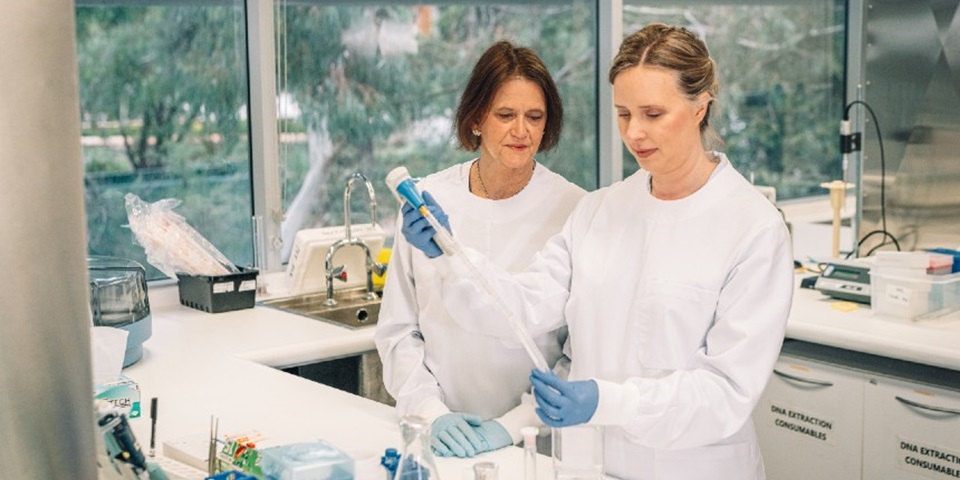
Murdoch University researchers have made significant progress towards a targeted treatment for an inherited form of Motor Neurone Disease.
The potential treatment, called C9-PMO, has passed critical milestones in laboratory models, showing that it is both safe and effective, and is now undergoing formal preclinical studies on the path to human trials.
Motor Neurone Disease (MND) is a devastating illness for which no effective treatments currently exist. As many as two Australians are diagnosed with MND every day.
If successful, the new drug could slow the progression of MND in people whose disease is caused by a genetic fault in the C9ORF72 gene, the major cause of inherited MND, improving the quality of life of patients and easing the burden on family carers.
Since 2019, Dr Ianthe Pitout, Emeritus Professor Sue Fletcher AO and their research team at the Personalised Medicine Centre at Murdoch University have been working on a type of RNA therapeutic or “genetic medicine”, called antisense oligonucleotides, that specifically targets the faulty part of C9ORF72 gene message.
Dr Pitout, a molecular geneticist with a track record in designing antisense oligonucleotide therapeutics for rare diseases, said testing the potential treatment in C9ORF72-linked MND patient-derived cell models was a significant step forward.
"Testing the drug in patient-derived cells is more meaningful than standard laboratory tests, because the cells carry the same genetic fault as the patient," Dr Pitout said.
"We used skin cells donated by MND patients, reprogrammed them into stem cells, and grew them into motor neurons, the type of brain cell that dies in MND.
"The results of tests in these MND patient-derived cells are extremely promising. We show that the C9-PMO successfully removed key signs of the disease in these models."
Internationally renowned RNA therapeutics pioneer Professor Fletcher said the testing also showed the drug can travel to where it is needed.
"A drug that works in cells in a dish in the lab must be able to travel through the body and reach the target cells in the nervous system in sufficient amounts to be effective," Professor Fletcher said.
"These pharmacokinetic studies confirm that our drug can do exactly that, which is a critical checkpoint between a promising laboratory discovery and a treatment that could genuinely help patients.
"About 10 per cent of MND cases are inherited. However, this research also has implications for sporadic MND because lessons learnt from one form of the disease help researchers to better understand the other."
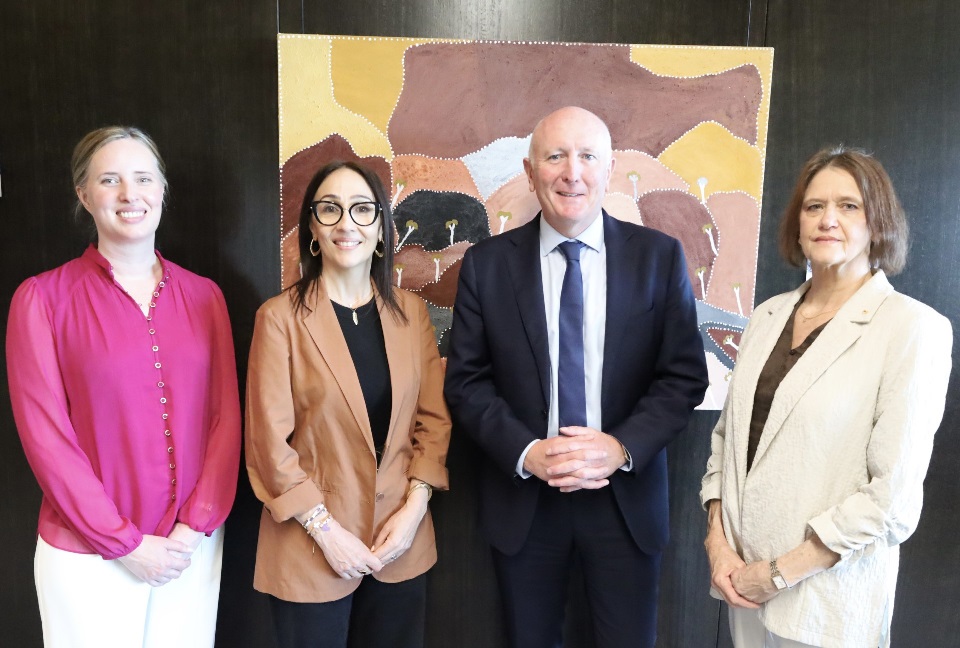
The research has been funded by the State Government's Future Health Research and Innovation (FHRI) fund and Racing for MNDi, with support from MND Australia, Ride the Wave For MND, and Care Cure Support, and a PhD scholarship in memory of Doriana Sumich.
“To date, the majority of funding for this project has come from WA, through competitive grants from the State Government and donations from charitable organisations. We are deeply grateful to our funders for their support that is making the development of the C9-PMO possible,” Dr Pitout and Professor Fletcher said.
The researchers also thank lived experience consultants Assunta Meleca and Joel Forsyth for their invaluable input and collaboration on this journey to develop a targeted medicine for C9ORF72-linked MND.
"Their guidance has shaped and inspired every stage of this research, and we are very grateful for their support," Dr Pitout said.
The research team will now look to continue to develop the drug. This will involve conducting further studies using a higher-quality preparation of the drug to build the safety evidence needed to progress to first-in-human trials.
“This is very much a WA-led innovation, with a clear translational pathway and line-of-sight to the clinic,” Professor Anthony Akkari, Director of the Personalised Medicine Centre at Murdoch University said.
“Dr Pitout and Professor Fletcher have our full support in the development of the C9-PMO to bring a new targeted medicine to the patients who so desperately need it.”
Minister for Medical Research Stephen Dawson said this was a significant milestone.
“We know the devastating impact MND can have on patients, their families and loved ones.
“That’s why WA is proud to have the Future Health Research and Innovation Fund. helping researchers work together to better understand health challenges like inherited MND and explore new approaches to tackling the disease.”
Racing for MNDi Founder and lived experience consultant Assunta Meleca said: “Having lost six family members to MND, I know firsthand the devastating impact this disease can have across generations. While genetic MND affects a smaller proportion of the MND community, we believe it holds some of the biggest clues to understanding the disease. That’s why investing in gene-targeted research is about more than advancing science; it’s about creating hope for families and future generations.”
News
New hope for inherited Motor Neurone Disease as potential drug passes milestone
Posted on
Topics
Community and Partnerships, General, Health, Research, Science, Technology
Health Futures Institute
The many interlinked facets of human health, from understanding the genome and its variable expression, to disease surveillance, health data linkage, mental health and navigating life's milestones, intersect at the Health Futures Institute.Learn more about our research.