News
New forensic tool provides intelligence to link serial killer victims by analysing facial similarities
Researchers at Murdoch University have developed a forensic intelligence tool which could help police link the victims of serial offenders by analysing their facial appearance.
Previous studies have shown that features such as age, sex, class and physical appearance can influence an offender’s choice of victim. It is also suspected that some serial killers seek out victims who resemble an opposite sex parent or a family member associated with childhood trauma.
“Serial homicide and sexual offenders are sometimes linked to many more offences than they are formally charged with,” said Associate Professor Brendan Chapman, Chair in the School of Medical, Molecular and Forensic Sciences at Murdoch University.
“In cases where evidence like DNA, fingerprints, CCTV or confessions, are available, they often get solved.
“Cases without those powerful types of evidence often remain unsolved or unlinked and go cold,” he said.
“A new method that could help link victims to victims, through subtle facial geometry similarities, may provide intelligence to help investigators focus their efforts.”
Led by Associate Professor Chapman, researchers explored Face Similarity Linkage (FSL) as a forensic tool to help identify potential connections between victims of sexually motivated crime.
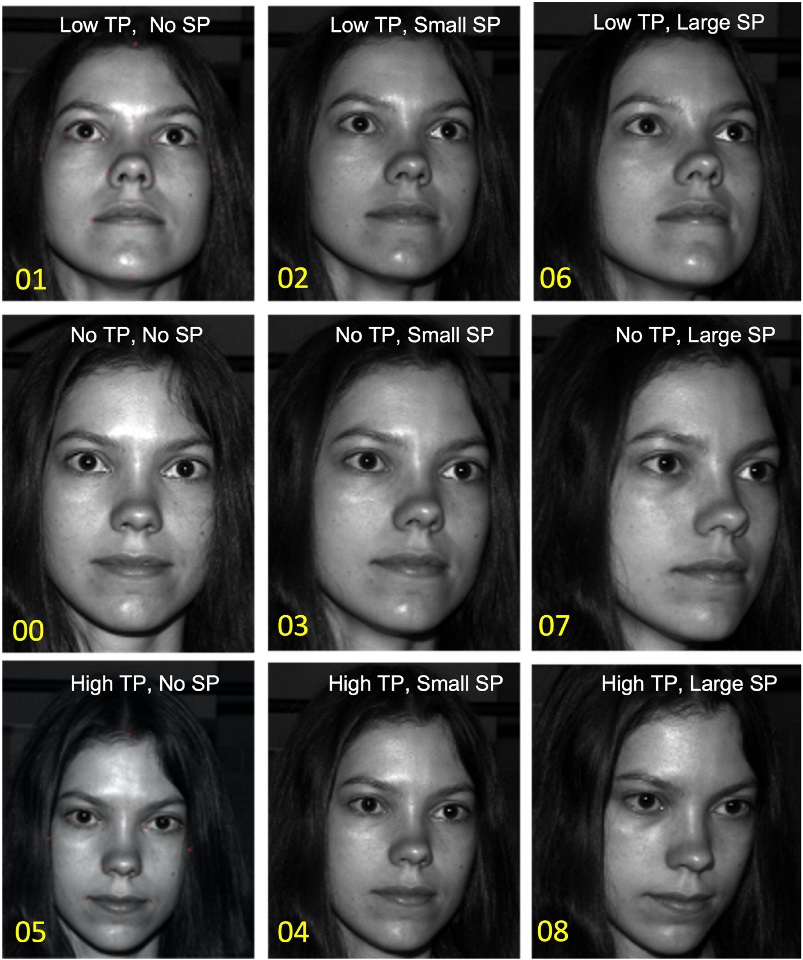
The team analysed photos of three people from a public research image database, each photographed at nine different angles — replicating the kind of informal, off‑angle images often supplied to police from social media or personal collections.
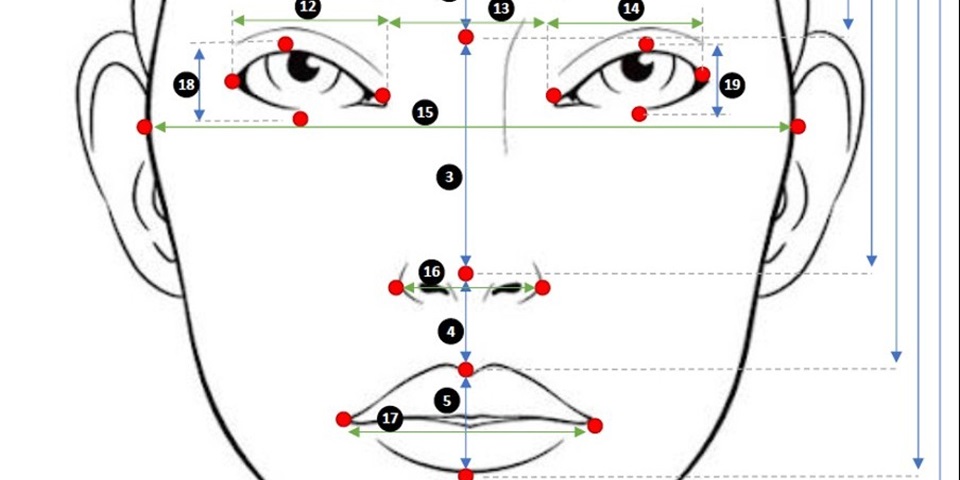
They then isolated 21 key facial landmarks — including the corners of the eyes, edges of the lips, chin and nose tip — measured the distances between them, and converted those measurements into ratios. This allowed the team to cancel out distortions caused by photo angle or scale and compare faces more reliably.
Using several tests to minimise variation between readers and camera angles, the researchers identified which facial measurements were most useful in distinguishing between the three unrelated individuals.
“We found 55 facial measurements that remained stable across different angles, allowing us to compare faces far more reliably than before,” Associate Professor Chapman said.
“These measurements could be used to find differences or similarities in the facial structure of victims, even with imperfect photos.”
“With only simple instructions, our untrained testers were still able to keep error rates to around five per cent, and we know we can drive that even lower with proper training.”
Associate Professor Chapman said the tool had the potential to be automated with artificial intelligence.
“We were quite deliberate in developing the technique to be easily adopted by investigators without the need for expensive or proprietary programs, however we’ve opened the door for AI to take it even further.
“An automated system could screen large numbers of victim images quickly and reliably, giving investigators valuable leads in cases where evidence is scarce,” he said.
“While this technique will never replace DNA evidence, it can flag potential links between victims in cases where DNA doesn’t exist or has degraded. It gives investigators a new starting point.”
The study, Development
of face similarity linkage for the attribution of intelligence links in
unsolved sexually motivated serial homicide, is published in The Police Journal: Theory, Practice and
Principles.
News
New forensic tool provides intelligence to link serial killer victims by analysing facial similarities
Posted on
Topics