News
Keeping Noongar language alive: a family legacy
Aboriginal and Torres Strait Islander languages are the original voices of this land, carrying thousands of years of culture, identity and knowledge. Today, many of these languages are endangered, driving urgent efforts to revitalise them.
Among them is Noongar, the language spoken across the Noongar nation which stretches from south of Geraldton in the north to east of Esperance in the south, covering the entire south-west corner of Western Australia.
Yet, with a limited number of people trained to teach the language which extends across 14 language groups, it faces a fragile future.
“If we lose language, we lose stories, we lose wisdom, we lose a part of ourselves,” Aaron Taylor, part of the First Nations training team at Murdoch University, said.
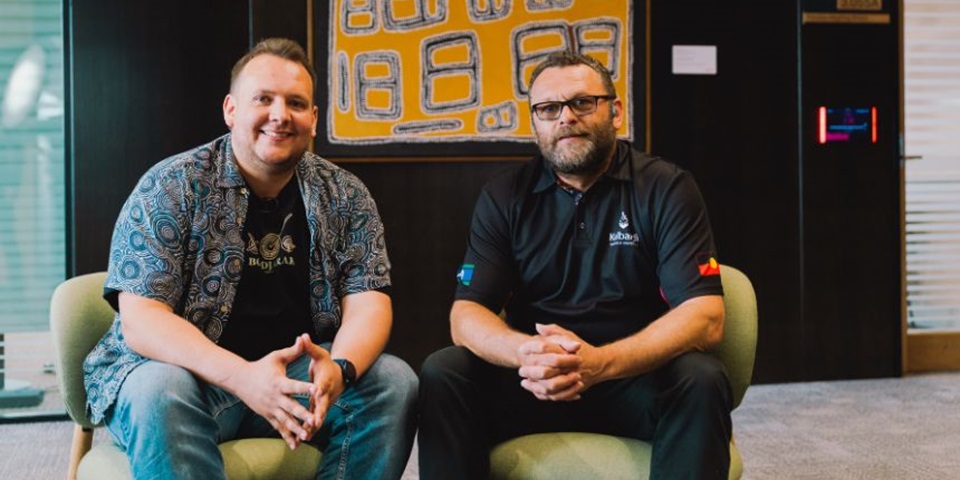
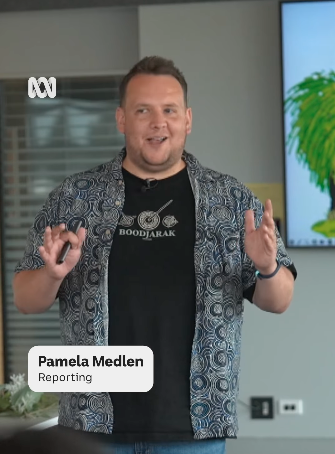
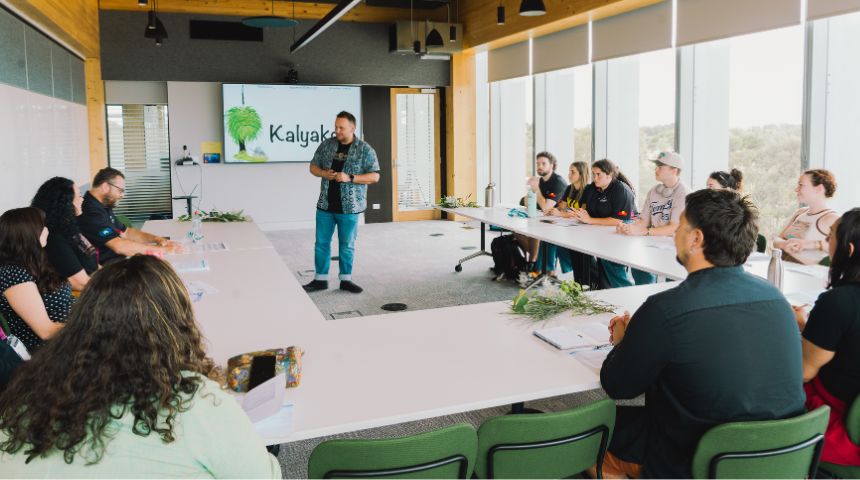
Today, through the University’s Boordawan Movement, he’s taking a step towards changing that by working with his cousin Dylan Collard and the First Nations team to reintroduce Noongar language lessons to campus.
It’s a full circle moment for the two men – continuing a family legacy of cultural leadership.
The story began with Aaron’s mum, Noongar Elder Marie Taylor, who wrote the first Aboriginal language course ever taught at an Australian university – right here at Murdoch University.
The family’s connection to the campus runs deep.
The land is the traditional Country of her grandmother, and Marie spent much of her youth visiting and holidaying here. She recalls how the bushland would regenerate after seasonal fires, and women would gather food behind the flames.
“They would come behind the fire and collect all the cooked animals for a feed,” she said. There were also places where women shared knowledge with younger generations – a practice that continues today in a new form.
When Marie was asked to write the course, she sought guidance in the bush. On that walk, she found a traditional fire stick.
It was like the bush was telling me ‘nothing has changed’… to experience something like that blew me away. I’d never thought about teaching my language and culture to university students, but I felt like on that day I was given permission.
Now, her son Aaron and nephew Dylan are carrying the family legacy forward. They are reigniting language on campus through Noongar classes for First Nations staff and students, creating spaces for cultural pride and continuity.
For Aaron, the work is deeply personal and profoundly significant.
“Language is identity,” he said.
“When we speak Noongar, we’re not just using words – we’re connecting to our Ancestors, to Country and to each other.
Every word we teach is a thread that ties us back to who we are.
Aaron says that keeping First Nations languages alive matters because they hold knowledge systems that can’t be translated – about land, seasons, kinship and spirituality. They are living archives of resilience and belonging.
“Teaching Noongar isn’t just about the language surviving – it’s about culture thriving.”
His hope is that by helping ensure that Noongar is spoken and shared, the culture it carries will continue to speak loudly into the future.
Learn more about how the Boordawan Movement is supporting First Nations students to thrive academically with deep connection to culture and community.
News
Keeping Noongar language alive: a family legacy
Posted on