News
Homeland communities living with contaminated water continue their fight for change
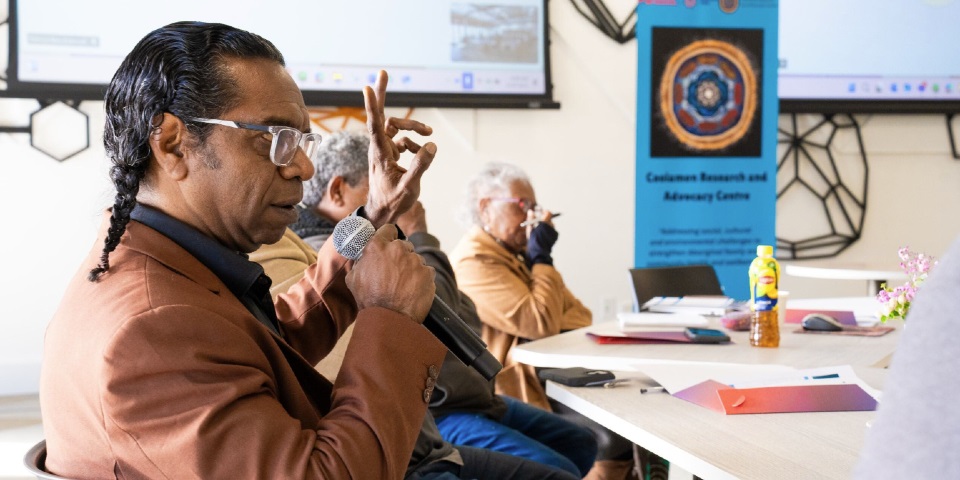
Nearly a quarter of remote Aboriginal communities in Western Australia live with contaminated drinking water.
The stories behind the statistics are equally sobering. Communities like Wakuthuni and Pandanus Park have faced water contamination and the heartbreak of preventable health crises.
Professor Roz Walker, Dr Mara West and Professor Rhonda Marriott from Murdoch University’s Ngangk Yira Institute for Change are working alongside these communities to reclaim control over what comes out of their taps.
“Everyone has a basic right to safe and reliable drinking water, and yet remote Indigenous communities still face challenges accessing it,” Professor Walker said.
They often rely on groundwater sources, which are regularly contaminated with nitrates, uranium, iron, manganese and other harmful substances.
Dr West challenged whether anyone would drink this water, given the choice.
This month, Murdoch hosted the 2025 Water Roundtable, Boola Kep Boola Koort – Many Waters, Many Hearts with representatives from seven remote communities in Western Australia and Torres Strait Islands.
One representative spoke of unborn babies with kidney stones. Another spoke of people dying around them, despite living healthy lives. Both pointed to contaminated water.
The Ngangk Yira team have been tirelessly working alongside communities, service providers and government for the past six years through a series of roundtables and research projects.
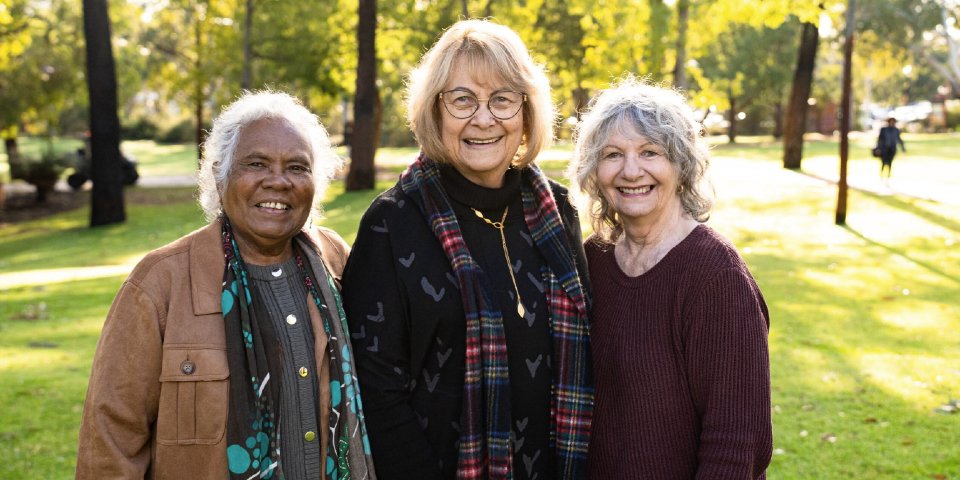 Image: Dr Mara West, Professor Rhonda Marriott and Professor Roz Walker.
Now, the quiet revolution in water access and advocacy they’ve helped lead is slowly starting to affect change.
Some communities across the Kimberley have undergone infrastructure upgrades through Water Corporation, following years of advocacy and collaboration.
“These upgrades are not just technical fixes,” Professor Walker said. “They are the result of listening, learning and building trust.”
This year’s water roundtable was the first time many of these communities have had a chance to talk with each other and share their stories.
While some spoke of progress, they also voiced frustration at change not happening fast enough.
We can’t wait another 10 years – our old people are dying and our kids' lives are being cut short today.
“We are told that we meet world standards for drinking water – but only just,” said a representative from Fitzroy crossing. “So, there is more that must be done.”
“In a suburban house you wouldn’t put up with it – there would be filters installed that clean the water. But not in our communities.”
Representatives from Djarindjin, Lombadina and the Ngaanyatjarra Lands shared stories of taps, pipes and even stainless-steel tanks being eaten away by water so contaminated that its corrosive.
“If this happened anywhere else in the world, it would have been fixed yesterday,” one said.
The need for better standards and accountability and the right to have a voice was a common theme from all communities. There was also a universal call to build local capacity.
“We have contractors sent out to do the work that we want to do for ourselves,” a Fitzroy Crossing leader said.
We need to build local capabilities to manage our own infrastructure, and yet we haven’t given localised industry a proper crack.
The feedback from leaders made clear that the systemic challenges of water access, sanitation and infrastructure in remote homelands remain. Professor Walker said self-determination was a critical part of solving them.
“We need more Aboriginal people to have a seat at the table,” she said.
“This ongoing series of community-led roundtables, workshops and research programs have brought communities together with government and industry partners to co-design solutions.
“The importance of this can’t be underestimated – having a voice in the solutions ensures that they are culturally relevant, sustainable and actually embraced by communities.”
From the inaugural International Water Conference in 2019 to the Indigenous SMART Communities Workshop and the Co-design Workshop on Water and Sanitation in 2021, the team has consistently created space for Aboriginal voices to shape the future of essential services.
Professor Walker describes it as requiring “a different view of a different world”.
We’re talking about big shifts in thinking and the way we do things – where employment is reframed to build local capability and where communities are equipped to manage their own water systems.
Her reflections, alongside those of Dr Mara West and Professor Rhonda Marriott, have helped shape a policy agenda that is both practical and ambitious.
The focus is bringing together stakeholders and partnerships to engage in practice-led, evidence-based policy reform.
“Universities do so much research, they understand our problem, and they need to be part of drafting the policies that solve this,” a community leader said at this year’s roundtable.
The 2025 Water Roundtable will help shape the next phase of advocacy, co-designed solutions and a renewed research agenda, serving as a checkpoint in the journey.
“The important thing is that we listen, we learn, and we just keep chipping away,” said Dr West.
“So, it was really heartening to see Water Corporation and Health Department representatives join us for two full days exploring the challenges and also solutions.”
News
Homeland communities living with contaminated water continue their fight for change
Posted on