News
Collaboration aims to accelerate development of next generation medicines
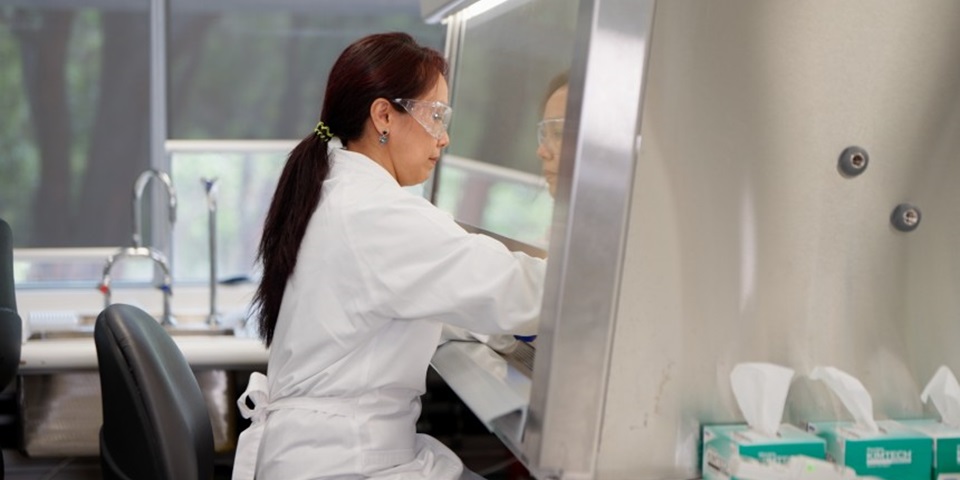
Three Western Australian organisations are joining forces to help accelerate the development of a new generation of medicines for people living with rare genetic and neurological diseases.
The Personalised Medicine Centre (PMC), a joint initiative between Murdoch University and the Perron Institute, biotechnology company Syngenis Labs, and the Perron Institute are collaborating to establish a specialised preclinical safety testing platform for RNA-based medicines designed to treat diseases affecting the brain and spinal cord.
RNA-based medicines represent one of the most promising advances in modern drug development. Unlike many conventional medicines, they can be designed to act on the genetic instructions involved in disease, offering the potential for highly targeted treatments, including therapies tailored to people with rare genetic conditions.
The collaboration comes as Western Australia builds significant expertise in these emerging technologies and receives a significant funding boost. The Stan Perron Charitable Foundation has committed $221 million over the next decade to establish the Rare Care Comprehensive Centre at Perth Children’s Hospital, with the PMC set to play a key role in its Treatments and Trials Flagship. The PMC is also backed by a $3.99 million Medical Research Future Fund grant to scale up as a national facility for developing antisense oligonucleotide therapeutics, including bespoke treatments for rare diseases.
As the number of research programs focused on diseases with few or no effective treatments grows, and the pipeline of promising experimental medicines expands, so too does the need for specialised facilities and expertise to evaluate their safety and help prepare them for clinical trials.
Testing to be delivered at the PMC
With the support of the Perron Institute and Syngenis Labs, the platform’s work will be carried out at the PMC, led by Dr Jessica Cale and Dr Kelly Martinovich, under the guidance of Dr May Aung-Htut.
The new platform will bring together laboratory-based testing and preclinical studies to assess how these medicines behave, identify potential safety concerns and help researchers determine the most promising candidates for further development.
By integrating these capabilities more closely with drug discovery, the partners aim to reduce delays, improve efficiency and shorten the time needed to move promising medicines through the early stages of development.
Building on Western Australia’s growing expertise
Western Australia has developed significant and growing expertise in RNA-based medicines, bringing together researchers, biotechnology companies and clinicians working to translate scientific discoveries into new treatments.
The collaboration between Syngenis Labs, the Perron Institute and the PMC builds on these strengths and represents an important step towards creating a more complete and integrated drug development capability in the state.
One of the major challenges in developing new medicines is the time required to move from discovering a promising treatment to gathering the safety information needed to support its further development.
By establishing a dedicated preclinical safety testing platform, the partners aim to bring these activities closer together, allowing researchers to identify potential problems earlier, refine their treatments and make faster, better-informed decisions.
The platform will also support the development of personalised medicines for rare genetic diseases, where treatments may be designed for very small groups of patients or, in some cases, individual patients.
Preparing for the future of personalised medicine

Professor Anthony Akkari, Director of the Personalised Medicine Centre, said the collaboration represents an important step towards accelerating the development of personalised medicines.
“Western Australia has developed considerable expertise in RNA-based medicines, and we are seeing a growing pipeline of promising therapies for rare genetic and neurological diseases. We now need the infrastructure and expertise to match that progress.
“For patients and families affected by these diseases, time matters. Establishing this specialised safety testing capability will allow us to identify potential problems earlier, improve the development of new treatments and shorten the time required to move promising medicines towards clinical trials.
“Black Swan Biotech, another Western Australian biotechnology company developing RNA-based medicines for motor neurone disease, is expected to be a major user of this facility. With several experimental therapies in development, the company is enthusiastic about the opportunity to access this capability and accelerate its drug development programs.
“Ultimately, this collaboration is about preparing for the future of medicine, where treatments will increasingly be tailored to smaller groups of patients and potentially individuals. We are building the expertise and infrastructure today that will help make those personalised medicines a reality.”
Syngenis Labs: supporting innovation in drug development
Thomas Hanly, Managing Director of Syngenis Labs, said:
“Western Australia has a remarkable opportunity to become a global leader in personalised RNA medicines, particularly for children living with rare genetic and neurological diseases. For many of these children, conventional drug development is simply not an option because their condition may affect only a handful of patients worldwide or, in some cases, just one individual.
“With tens of thousands of Australian children living with rare diseases and many families still searching for a diagnosis, the opportunity to develop highly targeted, potentially life-changing medicines is substantial.
“Working alongside the Perron Institute and the Personalised Medicine Centre, we want to remove the technical, financial and infrastructure barriers that prevent promising discoveries from reaching patients.
“This collaboration is about reducing dependence on overseas facilities and accelerating the development of treatments for patients who currently have few or no therapeutic options. In addition to funding, Syngenis will play a key role in supporting the collaboration by manufacturing GLP grade sequences and, in the near future, GMP grade sequences, providing Australia with a complete end to end sovereign capability to help thousands of patients.
“Ultimately, our ambition is to help make personalised medicines commercially and clinically achievable, even when the treatment is being developed for just one child.”
Perron Institute: advancing translational research
Steve Arnott, Chief Executive Officer of the Perron Institute, said:
“A dedicated preclinical safety testing platform is essential to accelerating drug development. Compressing the time this process takes must be an important focus for the Perron Institute if we are to remain globally competitive and continue to deliver the outcomes the Institute is known for, both nationally and internationally.
“The ongoing development of this kind of horizontal capability, where an expert team provides these services to all research teams, is critical to achieving the timely outcomes the world is seeking.”
A platform for future growth
The new platform is intended to support both existing research programs and the growing number of RNA-based medicines being developed in Western Australia and across Australia more broadly.
It will bring together different approaches to early-stage safety testing, including laboratory studies and studies in living systems, to help researchers better understand how potential treatments behave before they progress to more advanced development.
The initiative will also create opportunities to develop local expertise, strengthen partnerships between research institutions and biotechnology companies, and expand Western Australia’s capacity to support the development of new medicines.
As advances in genetics and biotechnology make it increasingly possible to design treatments for specific diseases and individual patients, the need for more flexible and efficient drug development systems will continue to grow.
The collaboration between Syngenis Labs, the Perron Institute and the Personalised Medicine Centre represents an investment in that future, helping position Western Australia as a leading centre for the development of next-generation personalised medicines.
News
Collaboration aims to accelerate development of next generation medicines
Posted on
Topics
Community and Partnerships, General, Health, Research, Science, Technology
Health Futures Institute
The many interlinked facets of human health, from understanding the genome and its variable expression, to disease surveillance, health data linkage, mental health and navigating life's milestones, intersect at the Health Futures Institute.Learn more about our research.