News
Associate Professor Jatin Kala appointed to co-lead the IPCC’s upcoming climate report
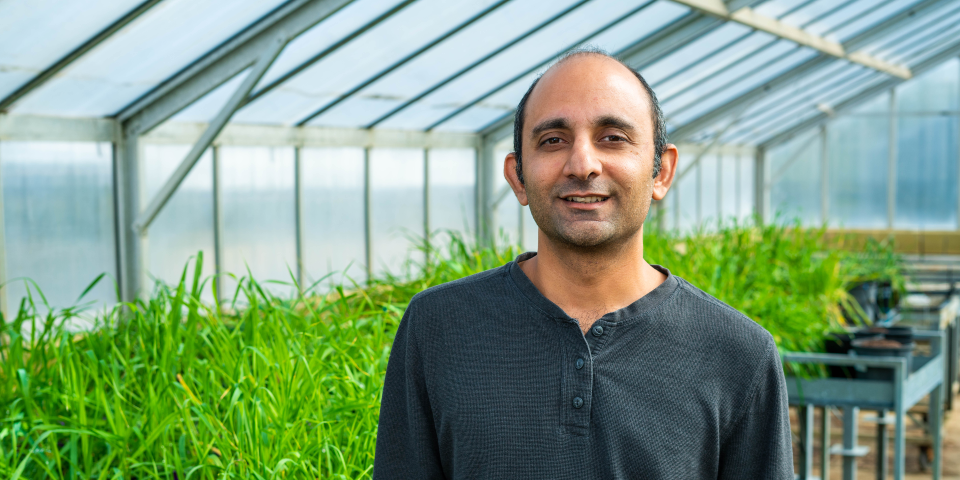
Murdoch University’s Associate Professor Jatin Kala has been selected to help lead the next major global climate assessment by the Intergovernmental Panel on Climate Change (IPCC).
As a coordinating lead author for Chapter 1 of the IPCC’s 7th Assessment Report (AR7), Dr Kala will work alongside other international experts to critically review and assess the latest science underpinning climate change and its impacts, as well as mitigation and adaption strategies.
Dr Kala, from the School of Environmental and Conservation Sciences, and the College of Environmental and Life Science, said it was an “honour” to be selected as a coordinating lead author at the IPCC after a very competitive international call for authors.
“For climate scientists, contributing at this level is considered the pinnacle of our field,” he said.
“This role gives me the opportunity to work with some of the world’s leading experts to shape our most up-to-date understanding of climate change, it’s impacts and how we adapt and mitigate.
“This will help come up with the solutions we urgently need."
Dr Kala’s research focuses on creating high-resolution regional climate models for Western Australia to predict local impacts of climate change.
While global climate models are very useful, their coarse resolution of 150–250 km makes them unsuitable for local analysis.
To address this, Dr Kala and his team have developed downscaled models with a resolution of just 4 km — the first of their kind for Western Australia.
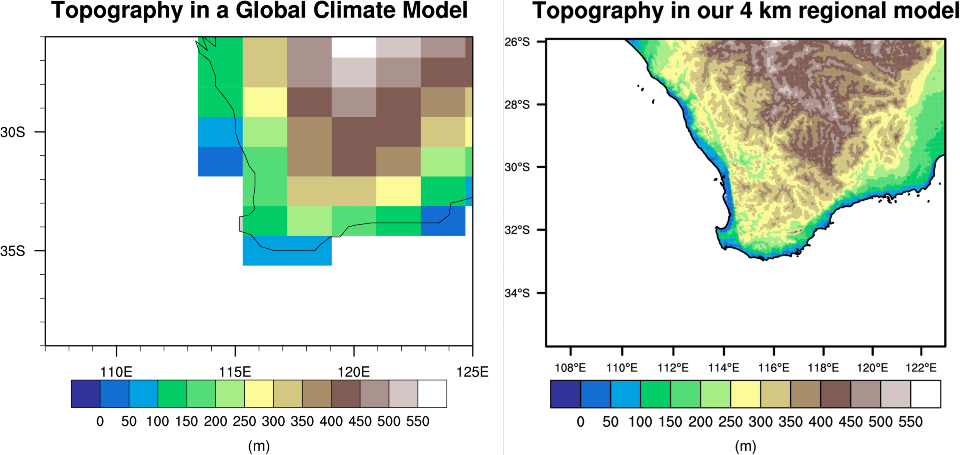
"While regional climate models have been developed for Queensland and New South Wales, the models we’re creating are a first here in WA,” he said.
“This work is crucial because our state faces unique climate challenges, and having accurate, high-resolution data will help communities and industries plan for the future.”
Using these models, Dr Kala’s team is quantifying climate signals under high, medium, and low emissions scenarios, revealing trends in rainfall and temperature.
Most models point to a drier future in the southwest, while the northwest shows mixed signals.
While projections vary, Dr Kala said the message for southwest WA was clear.
“It is getting hotter and drier, and we have high certainty that this will continue into the future unless greenhouse gas emissions fall rapidly,” he said.
“We need to make sure planning accounts for these changes in climate.”
This project, the Climate Science Initiative of Western Australia, is funded by the Department of Water and Environmental Regulation WA and made possible via collaborations with the NSW Department of Climate Change, Energy, the Environment and Water via the NARCliM2 project, and the PAWSEY Supercomputing Research Centre.