Blog
Golden gifts
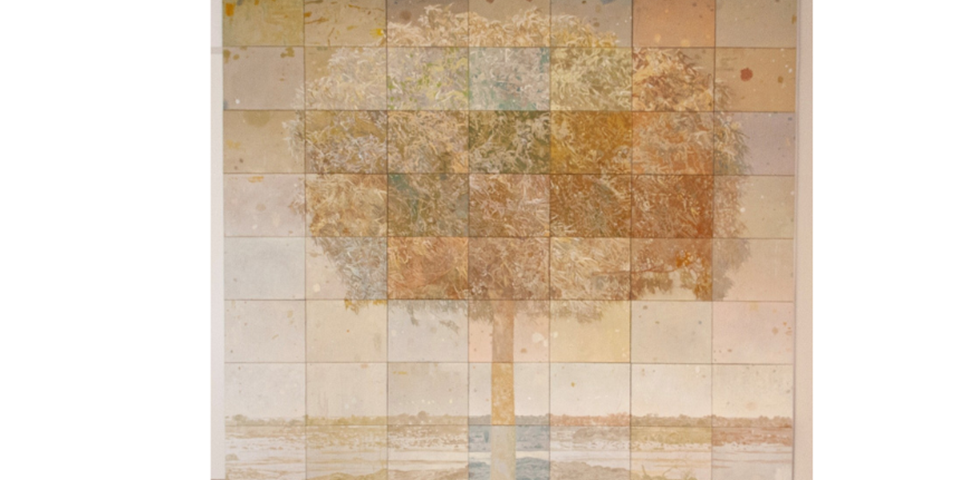
We’re delighted to announce several important artworks recently bequeathed to Murdoch University Art Collection through the Federal Government’s Cultural Gifts Program to support the “Gold Horizon” campaign which seeks significant artwork gifts to acknowledge the Collection’s 50th Anniversary.
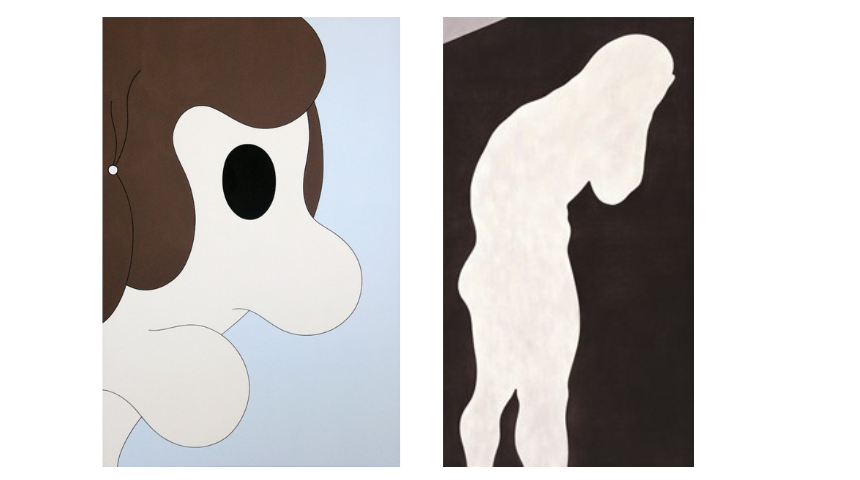
Above left: Brent Harris - Tomorrow, 2007, oil on linen, 199cm x 127cm. Donated through the Australia Government’s Cultural Gifts Program by Kevin Goodall.
Above right: Brent Harris - Plato’s Cave No.5, 2005, oil on linen, 244cm x 136 cm. Donated through the Australia Government’s Cultural Gifts Program by Kevin Goodall.
West Australian art collector, Kevan Goodall has generously gifted two important paintings by Brent Harris who is recognised as one of Australia’s foremost and celebrated contemporary artists, widely recognised as both a highly skilled painter and printmaker.
Brent Harris’ artworks can be unsettling, tender, humorous, and deeply reflective - often all at once. They pose questions about intimacy, desire, spirituality, sexuality, and mortality. For over four decades, his practice has been showcased in major exhibitions and acquired by institutional collections across Australia and New Zealand.
This donation signifies a notable enrichment of the Collection’s existing representation of 50 paintings, drawings and editioned prints that span Harris’ practice from 1994 to 2021. The first of Kevan Goodall’s gifts is a painting titled “Plato’s Cave No. 5” from Harris’ 2005 series of ten large scale paintings of the same name. The inspiration of “Plato’s Cave” series is the philosopher Plato’s famous allegory about shadows, perception, and truth. At first glance, the painting reads as a bold black-and-white figure. But on closer inspection, the viewer will encounter a painted surface alive with delicate layers of colour and texture. Harris is renowned for this kind of technical finesse, where craftsmanship and concept meet. The allegory behind this painting (prisoners mistaking shadows for reality, until one escapes to discover the world beyond the cave) resonates as much today as it did in ancient Greece.
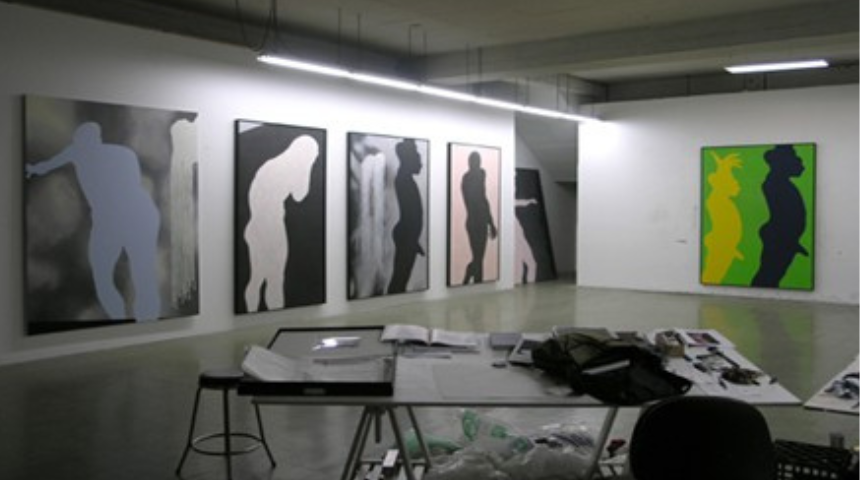
Above: The Plato’s Cave painting series in Brent Harris studio in 2005. Plato’s Cave No.4 (represented in The National Gallery of Australian Collection) is on the far left. Kevin Goodall’s donation of Plato’s Cave
No.5 is second from the left.
Whereas “Plato’s Cave No. 5” is steeped in philosophy and allegory, Kevan Goodall’s second donation of Harris’ painting titled “Tomorrow” (2007) reflects on intimacy and psychology. This head portrait was part of a body of work that pushed Harris’ exploration of figuration into bold and unexpected directions. Unlike the “Plato’s Cave” series, “Tomorrow” stands on its own—not part of a larger series but rather drawing on elements explored by Harris since the 1990s. Its curious figure feels at once familiar and strange, with echoes of his earlier 1994 series titled “Appalling Moment”. There’s something timeless and contemplative about this artwork, as if the head is caught between states of thought, memory, and transformation. Together with “Plato’s Cave No. 5”, it presents two very different but equally powerful aspects of the artist’s practice.
Further generosity has been gratefully received from another art collector and Murdoch University Art Collection Board member Mr Jason Ricketts and his wife Robyn. The Ricketts have generously gifted an important painting titled "Flowering (Mourning)" by Gregor Pryor who is artist, writer and academic with a practice spanning thirty-five years. Pryor graduated from RMIT University with an emphasis on painting and this discipline continues to be the touchstone of his studio practice. Pryor art is very project centred and has often been informed by the stimulus of travel and seeing new places through foreign eyes. These eyes arrived in Western Australia in 2003 and continue to discover new forms and concepts that have driven his practice since then. There is a strong emphasis on place and the role that botanical endemism and loss plays in shaping the landscape.
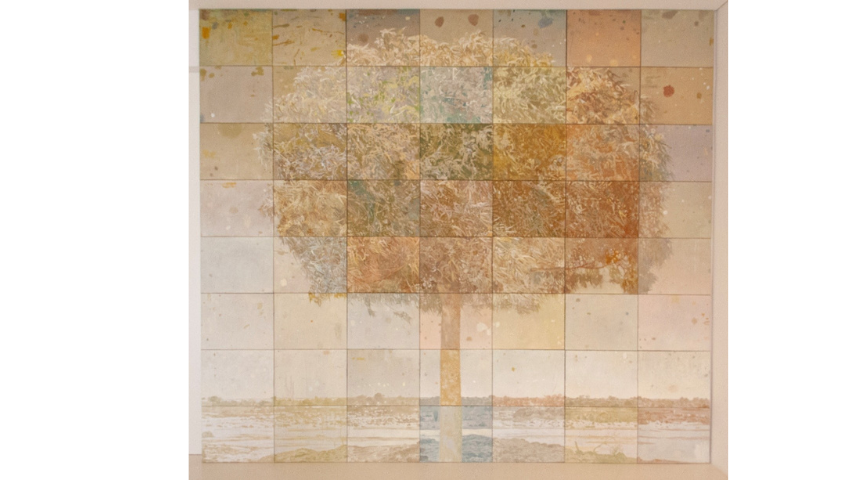
Above: Gregory Pryor - Flowering (Mourning), 2009, oil on linen, 56 individual panels with total dimensions of 330 cm x 372.5 cm. Donated through the Australia Government’s Cultural Gifts Program by Jason and Robyn Ricketts.
The creation of “Flowering (Mourning)” was the result of a number of field trips Pryor undertook to Malpa country in the goldfields region of Western Australia. During one of the field trips Pryor encountered a single desert kurrajong (Brachychiton gregorii F. Muell.) in flower that stopped him in his tracks, as it stood out from its surroundings of low granite outcrops, straggly old acacias and the dry and brittle scattered undergrowth. It was lit by the early morning sun, making it glow even more dominantly from its surrounds, with the luxuriant green leaf-cover glistening and sparkling from the muted tones elsewhere. On approach, he noticed that the emu footprint-like leaves and the intense inflorescence had attracted swarms of bees and other insects, industriously extracting benefit from what looked like a complete ecosystem. This ‘newness’ and abundance of life was a marked contrast to the stillness and timelessness of the surrounding environment.
In so many ways, this tree looked alien, or somehow mysteriously and inexplicably transplanted to this site. Pryor later learned about its ubiquitous presence in vast areas of the Yilgarn craton, and how it had survived and adapted to the harsh climate. As a rare non-sclerophyll and deciduous tree in this landscape, it is an outlier, but for Pryor, its tidy straight trunk and uniform canopy was more reminiscent of the trees that proliferated in the western canon of landscape painting that had emerged from the more uniform forests of Europe.
We are deeply grateful to Kevan Goodall and Jason and Robyn Ricketts for donating these remarkable artworks through the Federal Government’s Cultural Gifts Program. With their scale, presence, and conceptual richness these paintings will be cornerstones of our Collection allowing future generations of students, researchers, and visitors to engage with the depth of these artists’ talent and vision. We look forward to celebrating the success of the “Gold Horizon” 50th Anniversary artwork donation campaign in an exhibition titled “Framing Tomorrow” that will be launched at Murdoch University Art Collection’s annual soirée held on Saturday 22nd November 2025.