Blog
Transforming cow welfare from the ground up
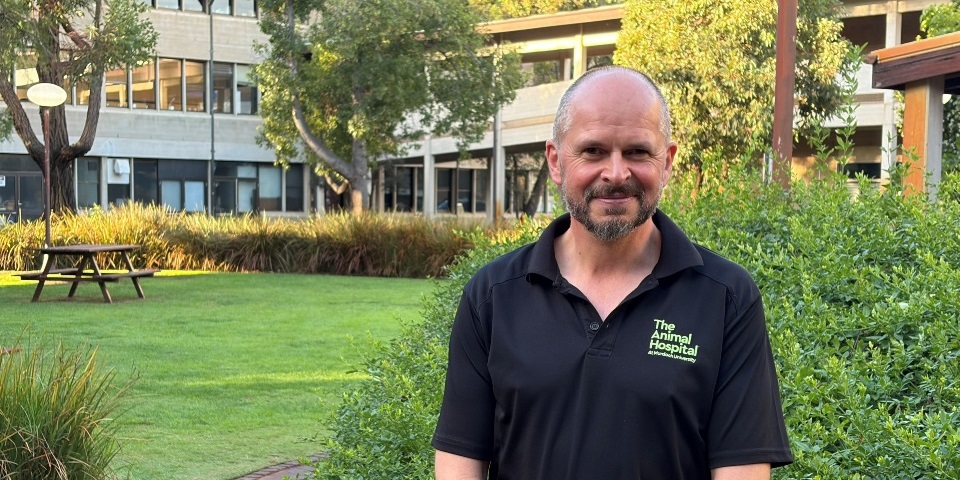
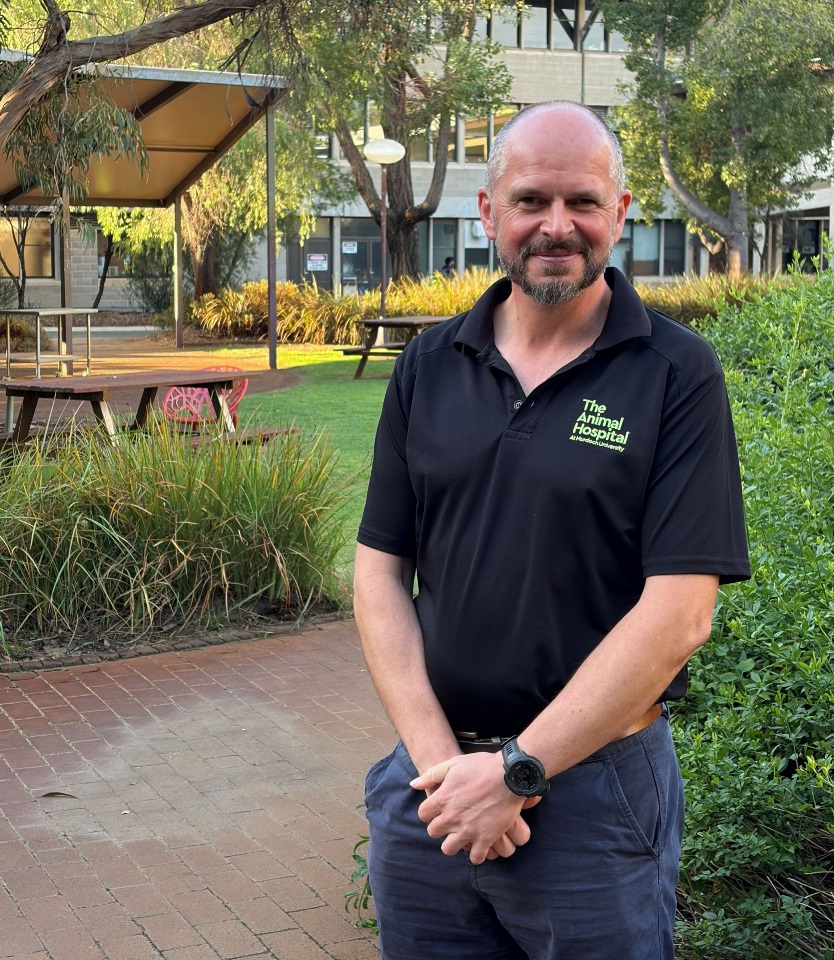
Professor Nick Bell (MA VetMB PhD PG cert Vet. Ed. FHEA DipECAWBM (AWSEL) MRCVS) has brought extensive cattle expertise into his new teaching role at Murdoch University’s School of Veterinary Medicine. Growing up on a farm, with around 100 dairy farms on his doorstep, Professor Bell’s passion for cattle has taken him across the world in a quest to discover contemporary best practice in cow welfare and pioneering research examining healthy hoof management. We caught up to find out more about how he is settling into Western Australia and bringing global findings to benefit both budding vets and local farms…
You obviously had a well-established career in the UK, why the move to WA at this juncture in your profession?
Okay. Like all things, there are several factors. Probably the primary one was the adventure and opportunities for my family. I have a wife and two teenage children. I was very immersed in my veterinary consultancy, running my own business, my own team of people, which was very exciting and thrilling, taking me all over the UK and the world. But I was spending less and less time at home. My wife and I realised we only had a few years before the kids left the nest and thought - let's have a family adventure! Naturally, I could see there were some great career options for me too. We saw the opportunity here at Murdoch and came over in July 2025.
So, looking at your career, you've moved between clinical practice, academia, industry, and farms. What was it that convinced you that if you were looking to improve animal welfare, you'd be better working across sectors rather than just in one?
I guess your pathway evolves, and opportunities open up. If you'd asked me at the start to describe the route to my end goal, it probably wouldn't have looked like this. But actually if I look back, I would say it's not surprising that it happened because I grew up on a farm. And all I wanted to be was a farmer really. I loved our livestock and there's nothing that gave me more enjoyment than being a livestock farmer.
My Dad was instrumental. He said, look, if you work on developing a career, you can always fall back on farming. Whereas if I go into farming, it's very hard to then switch careers. I come from a family of vets, so the veterinary option was always the obvious one to pursue. So, I accepted that I was either going to be a vet frustrated at not being a farmer, or a farmer frustrated at not being a vet.
How did I end up working quite so broadly across industry? That again was an evolution. While I enjoyed being a clinician, I loved the structure, coaching and planning of being a consultant. And I was being asked to do more and more consultancy. So I ended up being pulled towards consultancy through the enjoyment and the requests from farmers, consultants and other veterinary colleagues. In the end I had to make a decision, was I going to be a clinical vet, or was I going to be a consulting vet? And the consultancy won.
I was also maintaining an academic interest and that kept pulling me back in as well. So, for a long time, I brought my consultancy interest into academia. And that worked quite well because research informs practice and practice informs research. I used my consultancy to come up with research ideas - to solve real problems on real farms. It's worked quite well, finding the important questions that need answering and using research to find those answers.
If you have a farming background, you would probably be best placed to become a consultant dealing with farmers, because you know what they're like, their issues and what makes them tick?
Yes. I do look at farmers with a huge amount of admiration. I did work predominantly with the dairy industry before coming here, where I've very much gone back to looking at beef operations and sheep farming. But my career has been built on working with dairy farmers. The breadth of expertise you require as a dairy farmer is just mind blowing. I look at dairy farmers and I think I'm not sure I would have ever made it as one, because they have to be not just experts at looking after livestock, which is my area, but they have to know the workings of the parlour and milk storage issues. They have to understand agronomy, crop growing and pasture management. They also have to know how to build the infrastructure around the dairy, and fix tractors and vehicles. Frankly, it’s mind blowing all the things they have to deal with, and it’s been a real privilege to work with people of that calibre.
Lameness and cattle foot health has been a consistent focus for you for more than two decades. Can you give me an idiot's guide to the common things that go wrong with their feet?
Yes. I often have to explain that I don’t go near cats and dogs and that I'm a cattle vet, that I deal with farms, and actually, my main area of interest is that the foot health of dairy cows. People are often shocked that you can actually create a career largely based on foot health.
It was the subject of my PhD, so that's why I've ended up with that specialist interest. After the PhD, as a researcher and as a vet again, I've been able to broaden out. By studying cow's feet, you inevitably have to study elements of the environment and how the environment is being managed. So it opened up a whole new area of interest for me in how we build and manage cow tracks and concrete passageways, shelters and yards.
You develop an interest in nutrition because there's some nutritional components to managing foot health, infectious disease too, because some of the conditions causing sore feet involve infections. And then hoof trimming, which I'm particularly passionate about. If we can manage foot shape and overgrowth, then that's very good for preventing certain conditions that are the equivalent of developing an abscess under your fingernail, or a corn on your foot. We can manage those things quite proactively.
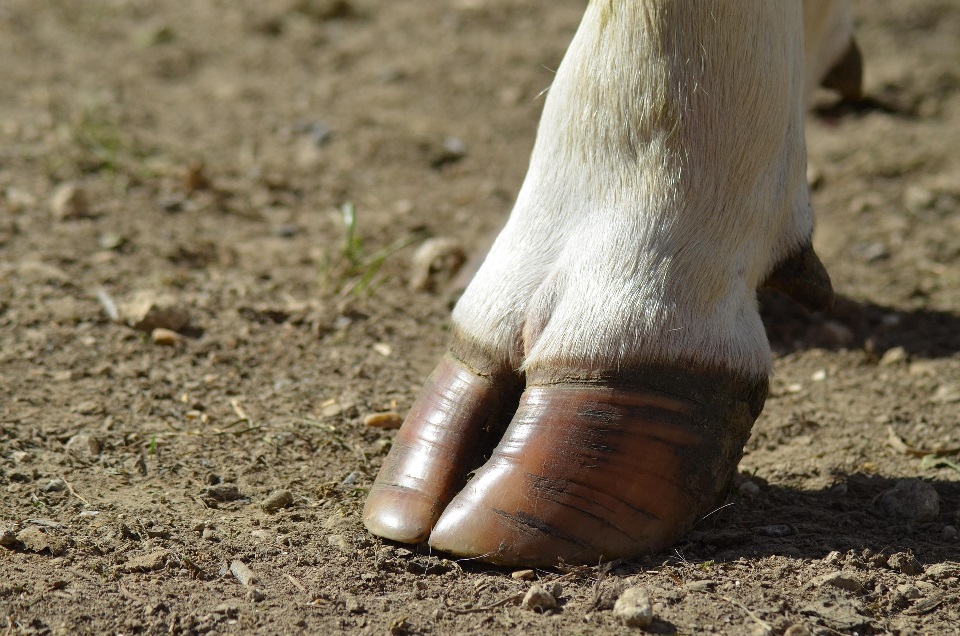
So, the cow interacting with the floor surface inevitably creates challenges – is it because of the weight of the animal?
It's the weight, because some of these dairy cattle are now getting to be a ton in weight. But also, because they have to walk considerable distances. And they're walking on surfaces that become challenging because of either a lot of rainfall, or because there's erosion on the surface. It’s impossible to maintain a perfect surface all of the time, and so the cow's foot has to cope with a variety of conditions. The system works most of the time, but it only needs a short period of failure in order to generate sore feet.
Is there an optimum condition?
It's a great question - what is the ideal environment for the cow’s foot? It will be pasture on the optimal day of the year. That's what the cow’s foot has evolved to cope with - soft, areas on the margins of woodland is where the auroch (the ancestor of the dairy cow) evolved.
The challenge is the perfect conditions out in pastures never last for terribly long. It's either too dry or too wet for a proportion of the year. So, we inevitably have to look at housing in certain places around the world. In the UK, you'd be looking at housing for six months of the year.
In the Middle East where I worked for a while, the housing is actually to protect the cow from the heat. We look at the use of sheds or roofing to shade cows in Western Australia as well. So, the optimal environment for the dairy cow very much depends on the climatic conditions.
What we can do in the housed environment situation is look to mimic the conditions out on grass. We use a lot more rubber matting now than we did 30 years ago. That's been a big, exciting development strategically, using matting to give the cow a more cushioned floor surface to walk on.
But in virtually every dairy system the cow has to be in contact with some concrete at some point. There are a few dairy farmers who get round it by having mobile dairy they take out to the field. It's not an easy system to manage, but from the cow's perspective, she never comes into contact with concrete, and the foot health is absolutely superb. It has many merits, though it brings with it many logistical challenges.
So presumably with foot infections, walking day in, day out in a boggy farm in Herefordshire is going to make the situation any better?
The lame cow is an emergency. By the time she's showing us the signs of pain, we know that the situation is significantly impacting her life. The cow is a prey species, so it has evolved to mask the signs of pain until they become unbearable. The trained farmer will spot signs of lameness early, much earlier than the average person, and will be attuned to it. Even so, the cow is very good at masking her pain.
Who is dealing with lame cows in WA?
In a lot of countries around the world, there are well established hoof trimming services that go around, and for the most part shorten toes and rebalance the claws and keep the foot shape correct. Much like a farrier would for a horse. If there was a lame cow, then the properly trained hoof trimmer can do the trimming around a lesion of the loose horn and apply what we call a block. So, the good claw would receive a wooden block to raise the injured claw off the ground. Or they could apply an antibiotic that's been prescribed by the vet onto an infection. There is a profession of people who are dedicated to that role. But here in WA, it is the veterinary surgeon or the farmer who would do the treatment.
How has being on farms shaped the kinds of research questions that you chose to pursue?
I've always been looking for the gaps, and sometimes the gaps are staring us in the face because we fill the gaps with opinion, and opinion can be quite strong, and quite hard to challenge. The only real way we can adjust an incorrect opinion is the research that can come in to either challenge the current dogma or introduce a more appropriate approach for the modern dairy cow.
The modern dairy cow is bred to actually perform better in the environment that we're faced with. The traditional cow probably wouldn't thrive so well in Western Australia as the modern Holstein, which actually can produce milk very successfully and get back in calf very successfully here in spite of the climatic challenges that we face.
One of my interests is the use of data to make evidence-based decisions, not just in research, but on farms. I've got a little bit of a reputation for liking Excel spreadsheets, but one of the things that I'm really trying to instil in our students is that we can do all sorts of diagnostic tests, and we can do all sorts of investigations, but we have available to us a free diagnostic test in the form of very rich, high quality data recorded from our dairy farms. I see this opportunity, so much in WA because the bigger scale means that the farmers will generate more data, and with more data we can make better quality analyses and insights into what's going on.
I work on data every day. More and more we can use the new technologies, the Artificial Intelligence, in order to assist us with pulling the data, checking its quality, cleaning it, and then completing a meaningful analysis. This is where I think we'll go through quite a transformation in the farm net role. This is where the high value will be, high value to animal welfare, high value to the farmer, and the economics of farming. Artificial Intelligence can do an excellent job of creating the analytical reports but crucially, our vet students need to be able to interpret this and facilitate the discussions with the farmers to act on it.
You worked at the Bristol Veterinary School in the UK. When you look back, are there lessons you learned then about teaching future vets that influence how you approach the role at Murdoch University today?
Yes. I ended up spending eight years at the University of Bristol and worked alongside Professor John Webster, a major figure in animal welfare science. He was my PhD supervisor and quite inspirational. He had an interest in cow's feet. He was also very interested in nutrition, so he was quite an important mentor for me.
My time at Bristol really shaped the way I approached my evidence-based approach to veterinary medicine. I’m a great believer in using science and the latest evidence to inform the advice that we share with our clients. It was also the place where we did a lot of work on how we interact with clients and colleagues. We were seeing this traditional veterinary approach which had been very much to tell people what to do. That works fine if you've got a cow with mastitis. You give them this tube to treat the cow, and the farmer is just going to follow your instructions and that gets great results.
But the more you start looking at bigger, more complex problems, the more you need to work collaboratively. Because, as a vet, you're going into a farm, and you're just seeing the farm in a snapshot moment. You might get a very different impression if you're there say, at 4 o'clock in the morning. I do my best to get to farms at 4 o'clock in the morning, as well as 4 o'clock at night. But naturally, you still end up missing crucial information. So that's where the team approach comes in. We did quite a bit of work using facilitation techniques, and a methodology called motivational interviewing in order to help coach our clients towards the optimal solution for them and their farms, rather than going in with preconceived ideas. So I try and bring in that style of approach here.
I'm a vet first and foremost. But as a vet, I've also become a coach. I try and bring in that style of coaching into the teaching that I do. I'm very fortunate that most of the teaching I do is at the last two years of the vet training, which is where we're coaching our students to be the coaches of their clients ultimately.
With the fourth-year students, I'm involved with a lot of problem-based learning. We call them interactive case studies, where we would take a case that the team or I have encountered, and we would describe the approach that we would go through, which also includes how we would converse with the farmer in finding solutions. We usually start with an individual animal that we would see, and we would work through how we would tackle that individual animal and then broaden it out to how we would approach that from a herd dimension point of view. So always trying to bring back the teaching to real life and real problems that I encounter as a vet.
What are some of the biggest challenges in turning good science and the latest research into everyday practice?
I like to think big, and the only way to really tackle these big questions and big challenges is to try and bring people together. Lots of input from those involved, collaborators, team members etc and that works at the big scale as well as the farm scale.
My favourite projects have always been those where we're trying to get a big group of farmers to buy into a concept, see the relevance of it, and work towards the common goal. That stems from my desire to find solutions to the challenges with lame cows. I worked with some farms where they were very well on top of their lameness issues, and as a consultant, I would offer to try and share those ideas. The fastest progress has been where we have accelerated that exchange of ideas directly (with me as the middle man) through farmer-led discussion groups.
What can get in the way of that is that there are competitive rivalries, and actually the farmer that's doing well….. why would they want to let the rest of the industry know they’re doing well because that just makes everyone else more efficient. It drives down the price of milk and makes everything more competitive for the farmer that's shared.
But actually by and large, farmers are very generous people. They live in communities where they know helping their neighbour, is such an important part of being in that community. Thankfully, farmers are very good at working collaboratively on these things.
So, presuming then, throughout your career, you've done a lot of conference presentations - bringing together the industry, presenting the latest findings, and new knowledge disseminates that way?
Yes, and the potential for impact is spread over millions of animals. That's what excites me. There's a weight of responsibility with that, because you've got to be confident that you're on the right track. And that's where, again, the science comes in, in monitoring the impact and identifying the situations where maybe it hasn't worked as well as expected.
You've got to accept, particularly if you're doing something that is maybe a stretch target, that you're not quite sure it's going to succeed. You've got to monitor the situation closely. You have to carefully make sure it is succeeding and not inadvertently backfiring and generating the wrong results. And we have seen that. We had a situation where we could see hoof trimming done in the correct way was beneficial. So, you screen herds and get the hoof trimmer in on farms more regularly. And before you know it, you're facing a situation where over trimming, and thin soles, and tender footed cows is a potential new problem being generated. So then you have to respond accordingly.
We then had to focus on improving the quality of trimming. The old haircutting adage jumps to mind here - it's not what you remove that’s important, but what you leave behind on the foot. And so with this refocused attention on the quality of hoof trimming, we developed hoof trimming qualifications, and the periodic re-accreditation of trimmers.
That example aside, you realise that the power to impact lots of animals is multiplied exponentially once you start working with trimmers who are trimming 10,000 cattle individually each year, and if you can reach 500 or a 1000 of those trimmers, you are then impacting a lot of cattle.
What do people often misunderstand concerning welfare when it comes to production animals?
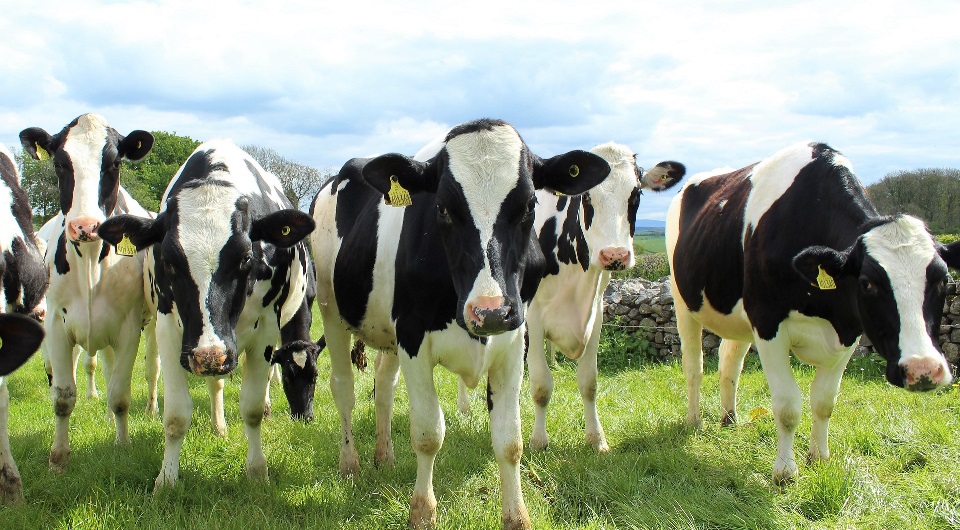
I think most of the public know that farmers care deeply about their animals. And I would say that it is almost without exception, particularly in the dairy industry. He or she is milking those cows twice a day, three times a day. They will have calved the animals and shared their lives from day one. I think what certain sectors of society struggle to see is that the farmer is constantly exposed to, and has come to terms with, the cycle of life. As people, we see the lifecycle, see our parents get older, see our grandparents pass on, but we are still very much sheltered from it. It occurs at a distance. Yes, we do see it with our pets to a degree. But farmers see it at a big scale, animals are constantly coming through their system and leaving the system. They have come to terms with it. And if there weren't lifecycles, we wouldn't have animals born.
I think what some people struggle with is understanding that the farmer knows when the time has come for a cow to leave the herd, and it can appear quite clinical. It's not a decision that any farmer takes lightly. I think every farmer would love to keep their cow forever because they do become attached to them. They accept that there is a point at which cows have to leave the herd and it is not a reflection of a lack of caring. It's a pragmatic reality that comes from seeing life cycles play out constantly in front of you.
How do you see Australia's production animal systems in terms of a difference to the UK and Europe?
I'm still a relative newbie. I've only been here 10 months. I've been used to there being 100 dairy farmers within 10 miles of my house and around 10,000 dairy farmers in the UK (7,000 in GB and 3,000 in Northern Ireland). There are fewer than 100 dairy farmers in the whole of Western Australia, which is roughly 10 times the size of the UK. So suddenly it's adjusting to the fact that there are fewer farms, with different challenges to do with accessing resources and advice.
Plus, there is virtually no housing here. My career has been very much focused on designing shelter for cow comfort. I think we will probably see some innovation in this area as time goes on. I worked in Saudi Arabia and the quality of care for the cows is the best I've seen anywhere in the world. The interesting dynamic in Saudi Arabia is that the milk price is exceptionally good. It’s because the dairy farmer controls the supply all the way to the shop. The farmer sees the return on investment and can reinvest back into the dairy farm. This allows the income from the milk sales to go back to the benefit of the cow, which increases cow welfare and productivity which improves the supply chain. That level of integration is quite uncommon around the world.
The dairy farmers in Australia are very good, very committed, and I can envisage some of those approaches coming to Australia if the economics permit. The conditions here are absolutely ideal for dairy farmers and I can see there being a resurgence. The cows can deal with the climate. The challenge here with the dry climate is ensuring there's a constant high quality food supply. But that's what farmers are very good at and so I can see that there are all the ingredients for having an absolutely thriving dairy industry.
What skills or mindset do you think will serve graduates well who are looking to enter the production animal industry?
There are a few things that I think will help them through their careers. One is to be able to use the science in order to give them some evidence-based foundations to their approach to cases and advice to clients. Being able to read and understand the published papers, the scientific literature, will give them the confidence, and will give the client the confidence that they know what they're talking about and that they've researched their subject well. Being prepared underpins so much of whatever work you do, and actually reading the scientific trials or papers on a subject will keep them current, keep them progressing through their careers and help them build their knowledge, problem solving skills and their expertise.
But probably more fundamental to that is to accept that we know ‘a little’ about our subject, and that we need to phone friends and ask colleagues and draw support around us when we're not sure. It happens every day. I phoned someone with more expertise than me on a subject just today. We never stop learning and by talking to our colleagues we learn and discover better ways to do things all the time.
The key thing is to know that when they finish here at Murdoch, that we’ve just given them the essentials. The introduction. We've crammed as much as we can into those five years. But actually, you continue to learn every day of your career and by embracing that lifelong learning approach, and maintaining that curiosity, you should thrive in the profession.
Blog
Transforming cow welfare from the ground up
Posted on
Wednesday 3 June 2026
Topics