Blog
Building the Next Generation of Veterinary Specialists
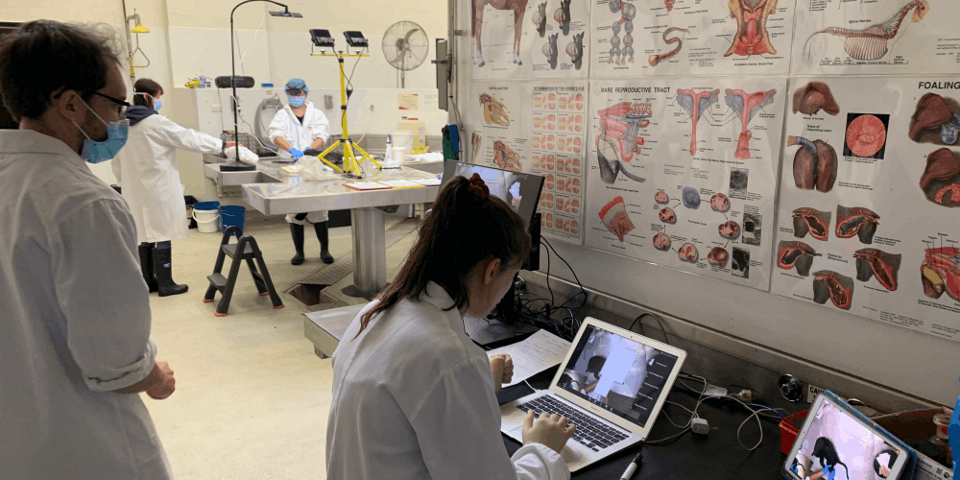
When vet students graduate from Murdoch University, they leave with a Doctor of Veterinary Medicine degree which enables them to work in a primary care vet practice. However, reflecting the world of human medicine, there is a vital demand for specialist veterinary expertise. Over recent years Murdoch has developed a broadening range of Residency Training Programs (RTPs) which enable veterinary graduates to pursue specialist fields. These are postgraduate programs, typically lasting three to four years. They are similar in level to a PhD, but with a different focus. Research is an important component, and the trainees are intensively trained in a specific clinical discipline.
Murdoch’s Professor Robert Shiel is an RTP supervisor and outlined the expansion of the University’s offering and the establishment of new programs that are often unavailable in other Vet Schools across Australia. Professor Shiel is himself an RTP graduate, having completed one in Small Animal Internal Medicine in Dublin before completing his PhD on hormonal diseases.
“Specialist training is a structured, rigorous pathway involving clinical practice, research, teaching and national or international examinations. It is the veterinary equivalent of training as a human medicine specialist,” he said.
“Students sit a formal examination through an Australia, European or American specialist college. These exams are rigorous and include written, practical and oral components. Once they qualify, graduates can register as a specialist with the Australasian Veterinary Boards Council with specialist registration at a higher tier then general registration.”
In earlier days, Murdoch ran RTPs in several areas including medicine and surgery of small animals and horses, anaesthesia and emergency and critical care. However, recent expansion means Murdoch now offers specialist training that also includes oncology, diagnostic imaging, and anatomic and clinical pathology. Opportunities for such specialist veterinary training in Australia are very limited. Previously, those interested in some of these fields had to travel to Europe or the USA to receive training. There are a small number of other Australian universities and private referral practices that offer training in certain disciplines, but spaces are limited and few providing such a multidisciplinary training experience.
In addition to the expansion in subjects, Professor Shiel emphasised the concurrent increase in collaboration that the RTPs are fostering.
“We are now doing much more collaborative research, and many projects now involve multiple schools across the University. Some of these are molecular studies investigating disease mechanisms and biomarkers, and others are clinical. We are collaborating with human researchers and partnering with other Australian universities and veterinary practices and research groups in both Europe and the United States,” he said.
“This makes the research highly translational. We’re studying diseases that occur in animals, sometimes in specific species or breeds, and comparing them with similar conditions in humans, which benefits both veterinary and human medicine.”
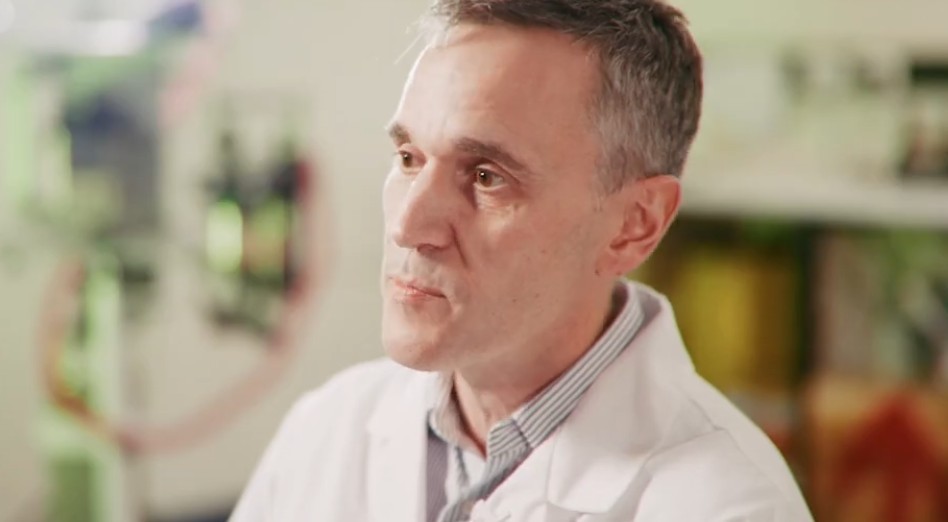
Professor Shiel also sees further expansion in the breadth and quality of Murdoch’s RTPs following the large philanthropic gift announced in 2025 that will support the building of a brand-new, leading-edge Vet School on campus.
“This will enable us to modernise facilities and greatly enhance the training we can provide to residents. The investment from local business figure Ted Powell is directly linked to the future quality of specialist training and research.”
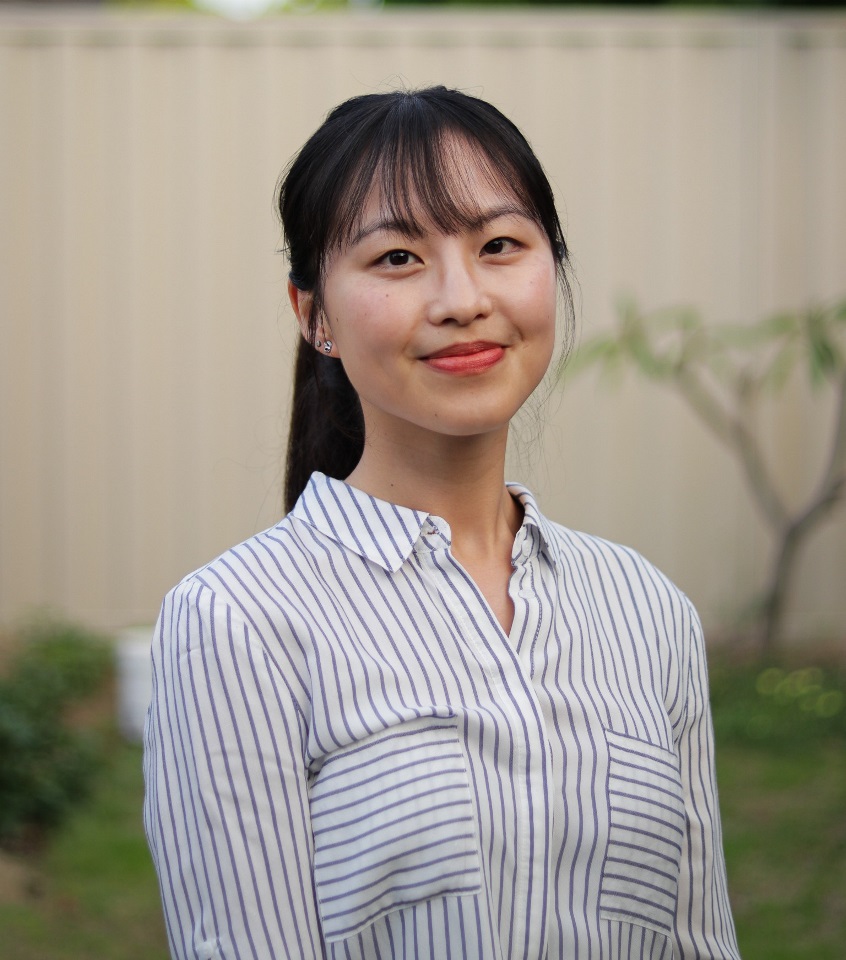
Doris Ma is a student currently in the final year of her Registered Training Program in Diagnostic Imaging. Amongst her study is an examination of the impact of Artificial Intelligence in clinical practice. AI algorithms are being brought to the analysis of X-rays and other diagnostic imaging to see whether AI can extract the same diagnostic information as a specialist. This will be particularly valuable in emergency settings where there may not be immediate access to a specialist opinion.
We caught up with Doris to discover more about her specialised learning journey...
Doris Ma Q&A
Did you realise you wanted to study to be a vet when you were young?
Initially, I wanted to pursue a career in singing but quickly realised that was probably idealistic. A little Pomeranian joined my family as I was going through high school, and at the same time I realised I was more interested in the sciences than the other school subjects. Towards the end of school, I had the decision to pursue human or veterinary medicine and opted for the latter pathway.
And you were in New Zealand?
Yes, that's where I grew up.
Where did you study your veterinary degree?
I studied a Bachelor of Veterinary Science (BVSC), graduating from Massey University in New Zealand in 2020.
So how did you end up here in WA?
Midway through my final year in university, I realised how much I enjoyed radiology lectures and workshops and knew that it was the path that I wanted to take. I worked towards securing a radiology training program and was first accepted as a rotating intern at the Animal Referral Centre, a specialist hospital in Auckland, where I worked for one year. Rotating internships let you work across multiple disciplines, which is important for confirming this is the right path for you while consolidating your knowledge in a specialist setting.
Unfortunately, no clinics in New Zealand offered radiology training programs, so I searched overseas and landed up in Sydney for a year. I completed a second rotating internship at the Small Animal Specialist Hospital (SASH) with the goal of transitioning to a radiology internship the following year, but I was unsuccessful due to the level of competition. When I saw Murdoch had a radiology internship, I jumped at the opportunity. I was lucky to be offered a position, moved to Perth, and this has carried on into my current Residency Training Program.
What was it about Diagnostic Imaging (radiology) that you enjoyed?
It appealed to me because it is inherently problem solving. You are often working with limited information - sometimes just an image, without much information as to why the pet has presented, or the age, breed or even species of the pet. However, the answers are often within the image itself. It feels like detective work where you work through clues, integrate findings and your knowledge and come to a logical conclusion. I enjoy the structured approach to uncertainty.
When you graduate from the RTP you have a new qualification in your post-nominals?
Yes, it would be DipECVDI which stands for Diplomate of the European College of Veterinary Diagnostic Imaging. Whether you qualify under the Fellowship (Australasian), American, or European College depends on what college your supervisor is a part of.
What is the suite of imaging technologies that you work with?
X-rays, CTs, Ultrasound, and MRI are the four main modalities. We also do Fluoroscopy, essentially X-ray but in real time. Contrast studies include feeding barium and assessing its movement through the gastrointestinal tract, and angiography which is the study of vessels.
The profession also utilises scintigraphy which involves injecting a small amount of radiotracer into the body and looking for areas of uptake that might indicate inflammation in the body. Currently, this is not offered at Murdoch as it necessitates niche, specialised technology.
So, do veterinary clinics refer certain cases to Murdoch that end up requiring your specialist skills?
Yes, radiology is more of a supporting service rather than having primary case management. We are part of the diagnostic process that other departments rely on. For example, a clinician might request a CT or MRI. We take the pertinent clinical information, assess suitability for performing imaging and which region to image, then interpret the study in light of the information. If we find a mass, or other pathology, we might recommend taking samples which help to narrow the possible diagnoses. Ultimately, this helps clinicians with a final diagnosis. They then continue with the case management of the animal. We’re not directly involved in treatment or outcomes, but we might see the patient again if they come back for follow-up imaging.
Does the Vet School complete a CT or MRI on horses?
Yes, we do have a standing MRI and CT here. It's constrained to the size of the horse, and you can't sedate the horse too heavily as it needs to remain standing, so you are limited to certain parts such as the extremities or head. Horses may become unpredictable so there is a risk of injury to the horse, handlers, and potential damage to imaging equipment.
I don't work too closely with the equine department as I mainly focus on small animals, but I have spent a few weeks shadowing our large animal radiologist and observed a few CTs. I learned it can be challenging as success often depends on the temperament of the horse. If they decide they've had enough, you can't really proceed with imaging.
What else do you enjoy about the diagnostic imaging world?
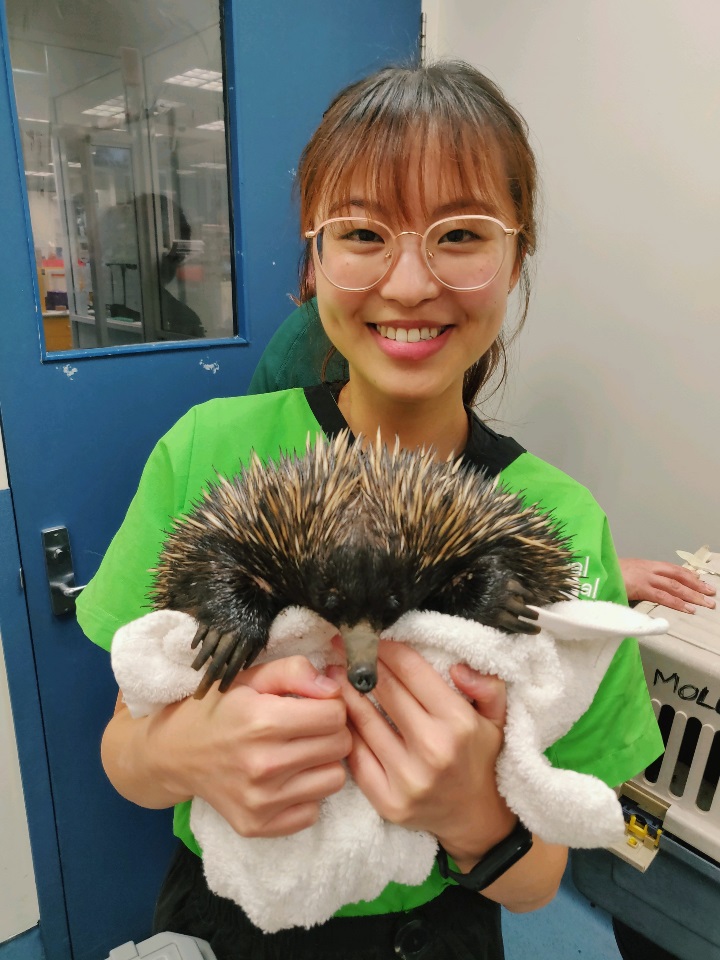
I like that diagnostic imaging is relatively non-invasive, especially modalities like ultrasound or X-ray where the animal only needs light sedation or sometimes no sedation. You can discover things that initially weren’t suspected, which is really valuable. It’s rewarding to be able to aid clinicians in their diagnosis and case management in that way.
What have been some of the more memorable cases that you have worked on?
There are several, but three cardiac cases stood out. Two cases involved a very rare congenital heart condition in young animals, called left ventricular noncompaction. We were able to describe the changes seen on an echocardiogram which hadn’t been well documented before. Sadly, it was not possible to save the affected puppies, but it was meaningful to be able to characterise this condition so clinicians can recognise it in the future.
One had gotten quite a bit of media coverage, where a puppy had rolled onto a sewing needle, and the needle had traversed its chest and went into its heart. It was stuck inside the heart muscle, but the puppy was largely fine. We did a suite of imaging and ultimately confirmed the needle’s location inside the heart. The dog went onto have cardiac surgery, which was a success, and emerged fine and healthy.
Blog
Building the Next Generation of Veterinary Specialists
Posted on
Wednesday 3 June 2026
Topics