Blog
A vet who found her voice
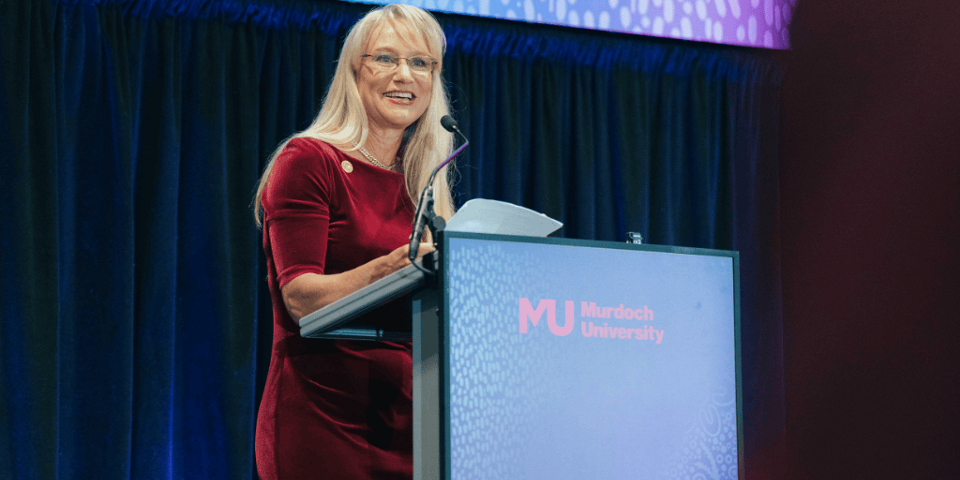
Dr Jonica Newby (BSc 1988 BVMS 1989) is an award-winning Australian science communicator whose career has uniquely blended veterinary insight with powerful storytelling. After graduating from Murdoch’s School of Veterinary Medicine, she went on to become a beloved presenter, producer, and director on ABC TV’s Catalyst, where for two decades she translated complex science into compelling, emotionally resonant stories. Jonica is also the author of The Animal Attraction and the acclaimed Beyond Climate Grief, and is a sought-after speaker and moderator. In this Q&A, she reflects on her journey, the role of science communication, and the enduring influence of her veterinary roots.
What are some of your favourite memories of Murdoch?
I remember my colleagues, my comrades, my friends. When I was at the vet school, it was an incredibly social environment. There was this amazing sense of camaraderie that comes from being part of a small, close-knit group. Even though the Vet School was still quite young at the time, it already had so many wonderful traditions. One of my favourites was our annual revue. This was a full theatre-style comedy production we put on each year. I took part two or three times, and it meant six weeks of writing skits, rehearsing, and generally throwing ourselves into the fun of it.
We had dress-up nights and all sorts of quirky social traditions. Not only were we together four and a half days a week for the course, which was intense, with lectures every morning and practicals every afternoon, but we were also bonded by all of these social activities. It really was a unique experience, and it’s something we still talk about today.
The course itself was unlike many other university programs because it felt almost like a job. We were together all day, every day, five days a week, and that created incredibly strong relationships.
Another thing I remember clearly is how supportive we were of one another. If someone was struggling or having trouble passing exams, the rest of us would rally around to help them. There was a genuine sense of looking out for each other.
Are you able to distil what coming to Murdoch University gave you in the long run?
Murdoch gave me a real sense of practical, can-do capability. You learn how to make do with whatever you have. Sometimes we had all the proper equipment, and sometimes we had nothing more than a piece of rope and a Ute. You might have to be the one who restrains an animal yourself rather than having a specialist there to do it for you. You had to be able to do everything, and that mindset definitely carried through into my career as a Vet School, and later as a TV producer and director.
That practicality meant I could turn my hand to anything: making props, solving problems on the fly, teaching myself to shoot footage, even buying my own camera so I wasn’t just the person in front of the lens. I was soon doing everything behind the scenes too - finding props, dressing sets, creating the visual elements I wanted. Looking back, I’ve always felt that the vet school gave me that resourceful, hands-on attitude.
The other thing Murdoch gave me was a very broad grounding in the biological sciences, broader, I think, than if I’d studied medicine. We covered conservation, ecology, ecosystems, and animal behaviour all in a wide-ranging way. Studying behaviour in particular gave me an insight into neurochemistry, which later became a focus for me as a reporter on Catalyst, exploring the brain in both animals and humans.
So, for me, Murdoch absolutely set me up for what I truly wanted to do: to become a creative broadcast scientist.
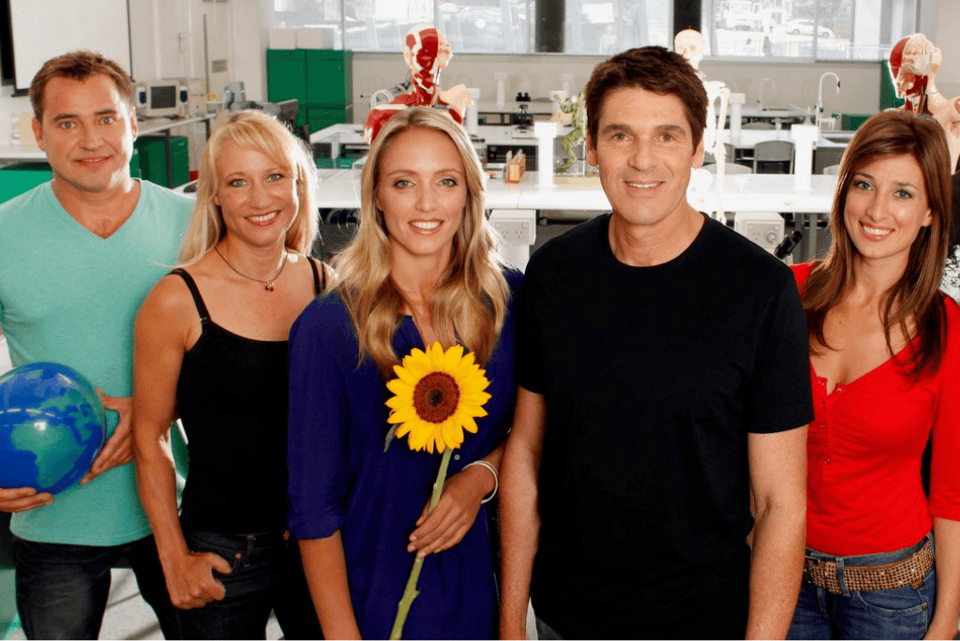
How did you go from qualified vet to TV presenter? What was the journey?
Within a couple of years of graduating, I knew what I really wanted to do. I wanted to be a reporter on Quantum, as it was called then. Even while I was at university, I was drawn to the creative side of things. A few of my classmates eventually became TV vets, but that wasn’t for me. I wanted to be a broader science communicator. So even during the degree, I had a sense that I didn’t want to be a practicing vet long term.
As for how I actually made the transition, well, the first job I applied for was one that Katrina Warren ultimately got. I didn’t get it and in hindsight, it worked out perfectly. She was a great fit for what she went on to do, and I was much better suited to the ABC.
After graduating, I practiced for three years in a mixed practice about an hour and a half north of Sydney on the Central Coast. Then I applied for a role at the Pet Care Information and Advisory Service. There, I was involved in commissioning research on the health benefits of pets and working on urban animal management and planning. We funded people doing interesting work in those areas, so I learned a lot about research, communication, and collaboration.
I also became very involved with the Australian Veterinary Association through a schools program I loved called PetPEP. I helped rewrite it and eventually ended up on the AVA Board of Directors for three years. But even then, I still had my eye on science communication and television.
Alongside my day job, I started doing radio for The Science Show on ABC Radio National. While I was working in pet care, I wrote and recorded pieces for them, probably ten or twelve segments in total and hearing them broadcast was incredibly exciting.
Eventually, someone who’d heard one of my radio specials encouraged me to apply for an open call the ABC was running for television programs written by subject experts. So, I put a submission in. I ended up writing a five-part, half-hour TV series having never written television in my life. It was very much a dive-in-at-the-deep-end moment.
Amazingly, the series was selected. I left my job, moved to Sydney, and spent a year making five half-hour episodes, which became The Animal Attraction - the story of how humans and our closest animal companions came together.
What are the standout highlights from your time on the show Catalyst?
There were so many highlights, it was the most extraordinary job, and I was there for 17 or 18 seasons. It was full-on the entire time. One major standout for me was the progression from being “just” a presenter and writer to eventually doing everything: directing, sketching out storyboards for the graphics designers, imagining the whole film from start to finish, writing it, sourcing music, shooting my own footage after teaching myself how to use a camera - the whole creative process.
Some of the most memorable experiences were from the early days, when I was still working closely with a producer. One trip that really stands out was filming on Country in the far north. We were flown in by chopper and camped on the banks of the Blyth River.
One night, the community hung a big sheet between two trees and screened the film Yolngu Boy. Around a hundred Yolngu people gathered to watch it, and I sat in among them. And then, just a few hundred metres away, and apparently completely safe, was the Blyth River, filled with saltwater crocodiles. It was extraordinary.
We were up there because AQIS, the quarantine service, was teaching Aboriginal hunters how to identify signs of disease, essentially how to perform field autopsies and collect specimens to help improve surveillance for exotic diseases in the north. So it was, in its own way, a very vet-based story.
Another unforgettable trip was spending three or four weeks in New Zealand with a crew, being flown by chopper onto restricted islands where no one is normally allowed. We spent nights filming the kākāpō, at the time one of the most endangered birds in the world, with a population of around 50. My editor affectionately called it a “three-foot budgie” - it’s a large, flightless parrot, about two feet tall, and only active at night.
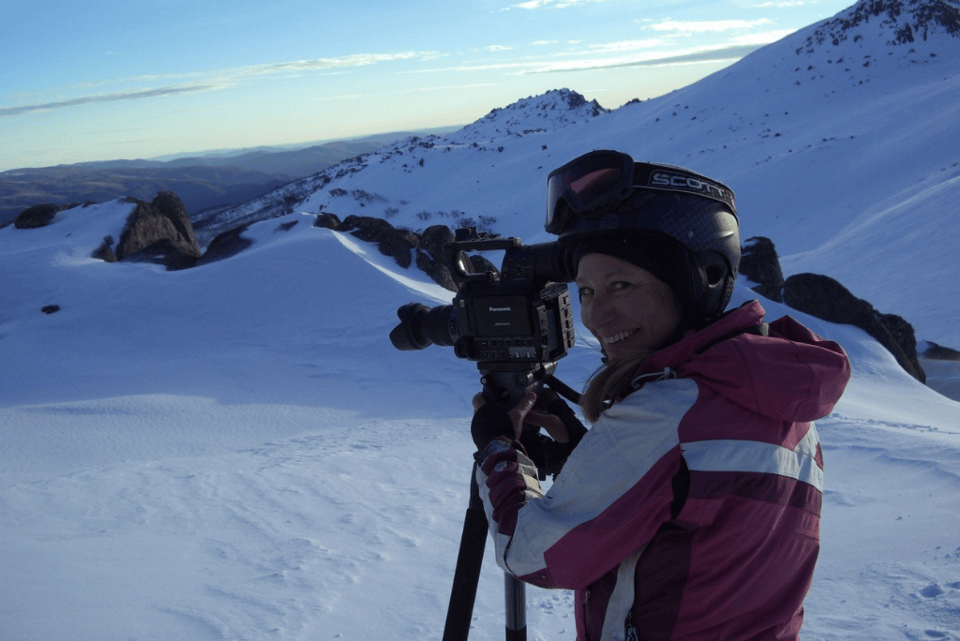
Another huge highlight for me was a film called Taking Australia’s Temperature. I travelled around the country following a very structured script I had written, and it was the project that forced me to teach myself how to shoot professionally. My very first attempt at professional filming was on top of, or just below, Mount Kosciuszko in winter, wearing ski gear, with a friend holding the instruction manual while I tried to figure out this camera I had only just acquired.
At that time, around 2011, there was still a lot of public scepticism about climate change, so I decided I would not speculate or editorialise. Instead, I simply set out to show the actual records: Has it become hotter? Has rainfall changed? Have sea levels risen? It ended up being an amazing film to make, and it really marked the beginning of all the shooting I would go on to do afterwards.
The following year, I made an even more ambitious project: a one-hour special called Do Not Panic: Surviving Extremes, which remains one of the standout pieces of work in my career. I came up with the slightly mad idea to stage two fully conceptualised extreme weather disaster scenarios, one a catastrophic fire in Sydney and the other a devastating cyclone and flooding event in Tweed Heads. I developed the concepts with the SES and the RFS and even enlisted the ABC news teams to create mock news reports. We built incredibly detailed scenarios with maps, alerts, and all the elements you would see in real coverage.
Then we ran these scenarios with unsuspecting families in their own homes. I had a team of around 40 people, including paramedics and military personnel, enact the unfolding disasters to see how the families would react under pressure. It was all about understanding why people often go into denial, how the brain responds in extreme stress, and why decision-making changes during a crisis. But it was also a Trojan horse for talking about climate change and the increasing severity of extreme weather.
The knowledge I gained from that project, and the experts I worked with on disaster psychology, PTSD, and the long-term mental health impacts of trauma, stayed with me. I remained in contact with many of them. It ended up being not only one of the most significant and personally transformative films I ever made, but also the most ambitious, filmically, of my entire time on Catalyst.
Blog
A vet who found her voice
Posted on
Wednesday 17 December 2025
Topics