Blog
A career on the wild side
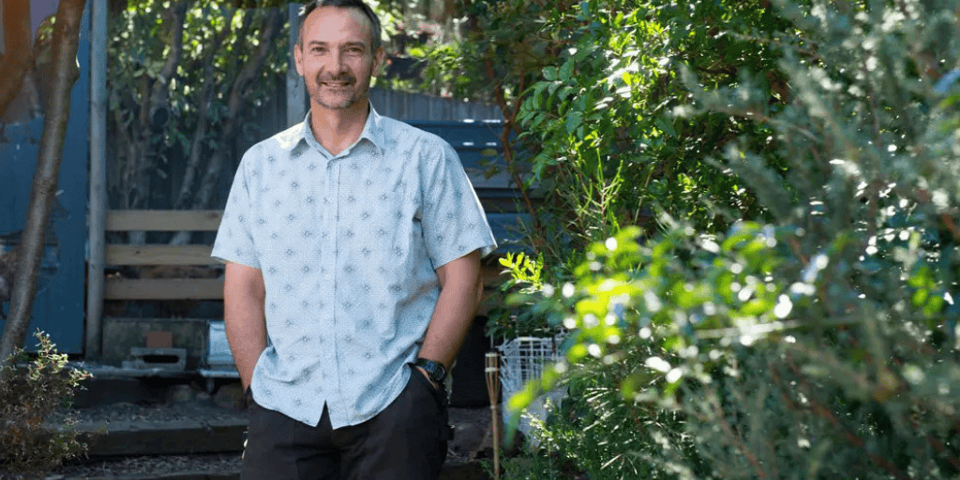
Dr Rupert Woods AM (BSc 1985 BVMS 1986) is a leading figure in Australia’s wildlife health and One Health sectors, bringing decades of veterinary, scientific and policy expertise to the nation’s most pressing environmental and biosecurity challenges. A Murdoch-trained veterinarian with advanced qualifications in zoo and wild animal medicine, he has worked across zoos, government and national wildlife health networks. As CEO of Wildlife Health Australia, Rupe has strengthened national surveillance, emergency preparedness, and cross-sector collaboration to protect biodiversity and community wellbeing. In this Q&A, he reflects on his career, Australia’s wildlife health future, and the importance of informed, collective decision-making.
What are some of your favourite memories from your time at Murdoch?
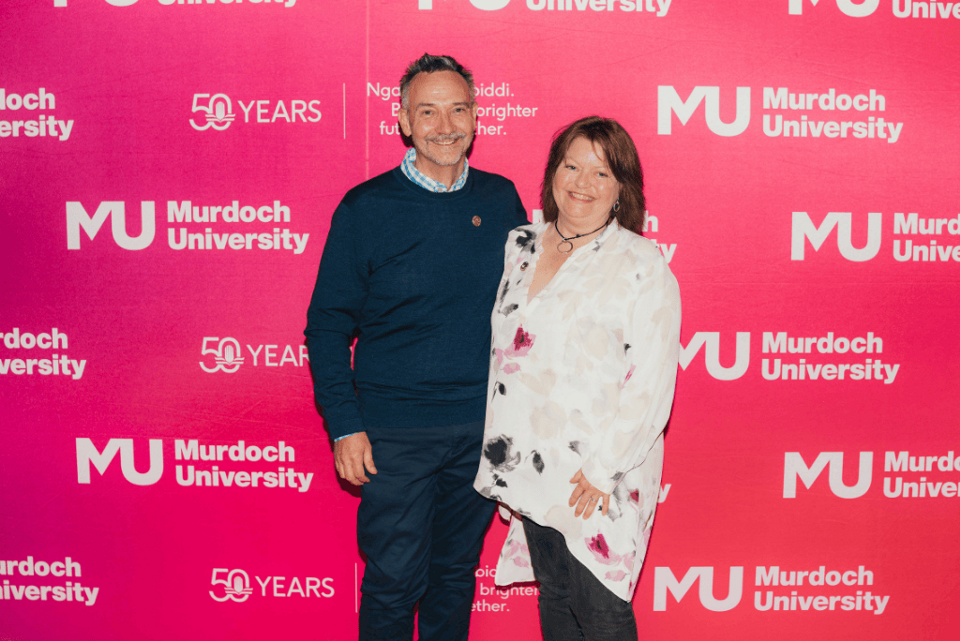
There are many good memories from Murdoch, but the highlight would have to be meeting my wife, Evelyn. Evelyn and I were in the same year at Murdoch, both studying vet science. The first year was mostly introductory, general-type studies, so it was really in second year that we got together. I remember after our first interaction (which left me almost speechless with nervousness), I went home and told my brother, with whom I was renting a share house, that I had met the person I was going to spend the rest of my life with. Of course, he, having had much more experience with these sorts of things than I, burst out laughing. But here we are, over 40 years later, and still going strong.
Other memories include Happy Hours, friendships made, and shared experiences, all against the backdrop of a crushing workload and the struggle to get through a hugely demanding vet degree. Vet pracs at Perth Zoo with Ray Butler, the then Head (and only) vet on staff. With Nick Gales at what was then Atlantis Marine Park. Post-morteming a tiger shark and swimming with dolphins.
I also have a vague memory of discovering a textbook called Zoo and Wild Animal Medicine by Murray Fowler. I desperately wanted to purchase a copy, but it was well out of reach financially, only to later receive it as a prize for something that I can't quite remember. The prize itself wasn’t memorable, but what was memorable were the pages that showed: 1) the correct position for bottle-feeding a baby polar bear, and 2) how to set up ropes to turn over and reposition an elephant once it had become recumbent after darting, as well as many other essential tips for someone fascinated by wild animals.
I also remember our lecturers: Professor John Howell, Len Cullen, Bridy Stanley, Rick Read, Graham Wilcox, and many others. There were wheelbarrow races, Muresk, playing cricket against the staff, wearing scrubs for the first time, and trips into the field to work on farms, among many other experiences.
You’ve worked closely with so many different wild animals — is there one encounter that really stood out?
Given a life spent among animals, there are many memorable encounters. Two stand out — one from about thirty years ago with a captive animal, and another more recent experience with wild animals.
The captive animal experience was with a Japanese giant salamander. I was undertaking a residency in zoo animal medicine at Sydney’s Taronga Zoo under the expert tutelage of Dr. Larry Vogelnest and Dr. Francis Hulst. It was my first weekend alone on call at the zoo when we received a call from one of the keepers, saying that the female Japanese giant salamander had attacked the male, and he wasn’t in a good way. At the time, Japanese giant salamanders were considered vulnerable to extinction, and Taronga had two — a male and a female — who were part of an international captive breeding program. The keepers had increased the water temperature in the animals’ enclosure to encourage them to breed. Japanese giant salamanders are truly extraordinary creatures. They can grow up to 1.5m in length and weigh up to 25kg. They are ancient, ancient creatures. At the time, I hadn’t seen a Japanese giant salamander before, but I had worked with their smaller cousins, the axolotls, which some readers might be familiar with, in veterinary practice.
To cut a long story short, the male had been pretty badly bitten, so I anaesthetised him, sewed him up, gave him some antibiotics, and sent him back to a dedicated hospital enclosure to recover. I thought nothing more of it until the Monday morning, when, back at work, Larry, Francis, and I sat in the vets’ office going through the weekend reports from the different sections of the zoo, outlining any health concerns or occurrences of note from the weekend.
When asked how my first weekend on call was, I replied that it had been “pretty quiet.” However, they seemed somewhat disconcerted when they came to the report about the salamanders. “Rupe, I thought you said the weekend had been pretty quiet?” said Larry. “Yes,” I replied. “But what about the Japanese giant salamander?” asked Larry. “Oh, that,” I said. “Yes, he was bitten by the female... Is there a problem?” “Do you know how many Japanese giant salamanders there are in captivity?” Larry asked. “No,” I said, thinking they must be a fairly commonly held species. “Two,” said Larry. “What, two at Taronga?” I asked. “No,” said Larry. “Two globally.” “Oh,” I said. “And do you know where our two Japanese giant salamanders came from?” Larry asked. “Japan?” I replied, somewhat tentatively. “Yes,” said Larry. “A gift from the Emperor of Japan.” “Oh,” I said, to which Francis chimed in with, “…and they are considered a Special Natural Monument to the people of Japan and are protected by their central government.”
Anyway, suffice it to say that my approach to treating animals at Taronga was watched much more carefully by Larry and Francis from then on. The good news was that the male made a full and speedy recovery, and both animals eventually returned to Japan, having fulfilled their ambassadorial duties and inspired thousands of zoo visitors with the wonders of these ancient animals, the need to protect them, and the amazing country from which they hailed.
The second, more recent episode occurred a couple of months ago, in the wilds at around 81 degrees, 52 minutes north, at the edge of the Arctic Sea. My wife, Evelyn, and I were fulfilling a lifetime dream to travel and see polar bears, walruses, and puffins. We spent a week circumnavigating Svalbard, including heading north from the island group to the edge of the pack ice. We saw our polar bears, walruses, and puffins, and were on our way home when, quite unexpectedly, we came across thousands of harp seals dispersed in small groups of five to fifteen animals, lying on small ice floes that stretched from horizon to horizon as far as the eye could see. It was simply amazing, and one of the greatest wildlife spectacles anyone could hope to see. What made it even more poignant was that, as we all know, the polar ice cap is melting at an alarming rate, which led, as we finally left them and headed south, to us wondering about their future.
Later, in the same trip, we visited Iceland. In Iceland, there is — or was — a glacier called Okjökull, or the Ok glacier, located northeast of Reykjavik. Okjökull was declared dead in 2014 due to climate change, which prompted a couple of glaciologists to draft a “Letter to the Future,” which reads:
“Ok is the first Icelandic glacier to lose its status as a glacier. In the next 200 years, all our glaciers are expected to follow the same path. This monument is to acknowledge that we know what is happening and what needs to be done. Only you know if we did it.”
The letter now sits on a plaque at the site of the old Ok glacier. It made me reflect on the future of the harp seals, oblivious to the changes we are making on the planet, and to acknowledge, as with Ok, that we know what is happening, what needs to be done, and whether we will have the courage and wisdom to make the necessary decisions to ensure a future for the seals and for all of us.
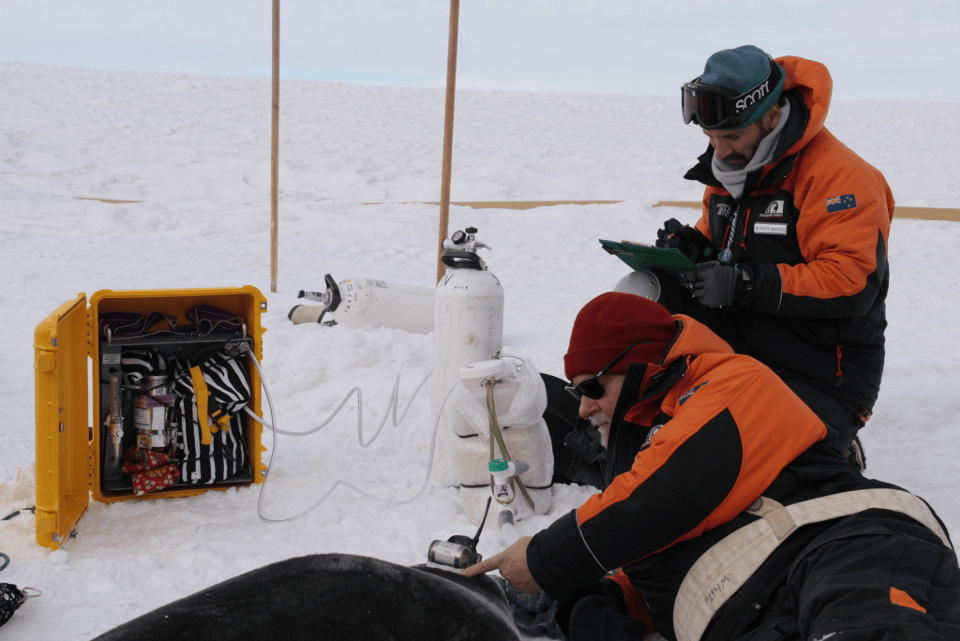
Wildlife health and human health are deeply connected. What’s one thing you wish everyone understood about how our well-being depends on the health of animals and ecosystems?
One thing I wish everyone understood is that wildlife health isn’t separate from our own — it’s the foundation beneath our wellbeing. Healthy ecosystems regulate our climate, filter our water, pollinate our crops, and maintain the balance that keeps diseases at bay. When wildlife is stressed or ecosystems are degraded, that balance falters, and we feel the effects in very real ways — socially, environmentally, and economically.
What gives me confidence is that when we invest in wildlife health, we’re actually investing in human health, environmental integrity, and long-term resilience. It’s one of the smartest and most compassionate things we can do for future generations.
With so much talk about climate change and biodiversity loss, what gives you hope when you look at the future of wildlife conservation?
What gives me hope is the extraordinary commitment I see in people — scientists, First Nations communities, volunteers, land managers, students — all working together with a real sense of care for country. We’re seeing a shift from isolated efforts to genuinely collaborative approaches, where diverse knowledge systems are valued and practical solutions are being implemented on the ground.
I’m also inspired by the next generation. Their passion, their curiosity, and their refusal to accept decline as inevitable are incredibly powerful. When you bring that energy together with science, community wisdom, and good policy, there is every reason to believe we can turn things around.
Blog
A career on the wild side
Posted on
Wednesday 17 December 2025
Topics