Blog
The leader rebuilding connection in our communities
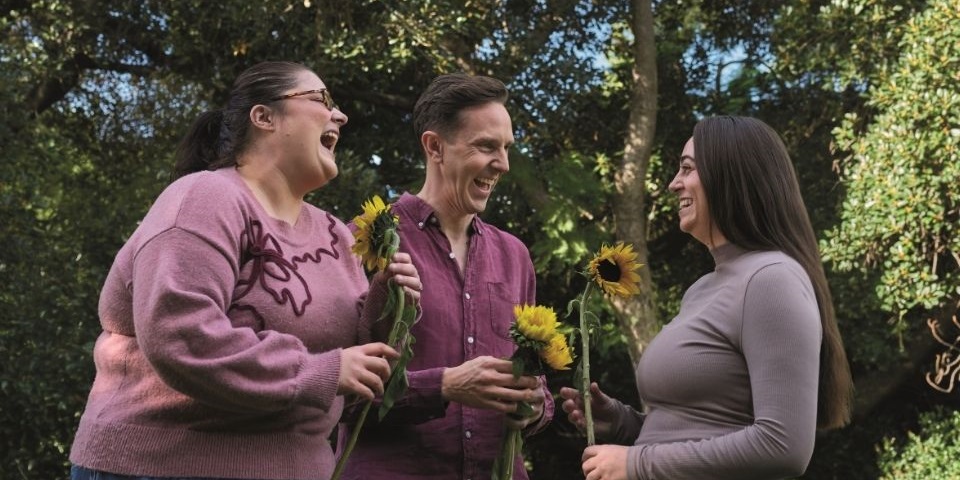
Ben Kent has built his career around a simple belief: that strong communities make everyday life safer, fairer and more resilient.
Whether he’s working with school students, young leaders or local neighbourhoods, his focus is on people – and creating the conditions for them to look out for one another.
Ben manages the community engagement team at RAC, responsible for road safety education, sustainable transport and youth development programs. His work spans classrooms, community halls and digital spaces, helping people navigate everything from learning to drive to stepping into leadership.
But the throughline of his career isn’t transport or education. It’s the social fabric that holds communities together.
I’ve never chased money. I’ve chased purpose. If I can put my hand on my heart and say I’m helping to create a better world, that’s what drives me.
Murdoch University gave him the language and tools to act on that instinct – though it had been shaped much earlier. Ben grew up in Moora, in Western Australia’s Wheatbelt, where contributing to community was a central part of life.
“Country towns can’t survive without volunteering. You can’t just float through a place and consume services. You rely on each other,” he said.
His family was involved in Rotary and local community organisations. Doing your bit was simply part of life. Stacking chairs late at night after events and helping out where needed weren’t extracurricular activities. They were how things worked.
This upbringing was followed by a period of travel that affirmed the direction he wanted to take in his career.
After high school, Ben spent a year living in Germany and later in Argentina. In both places, he encountered cities where daily life felt more connected and humane.
“The way cities were built, the way people relied on public space, public transport, each other – it felt kinder. More cohesive,”
That made returning to Perth jarring.
“So many of us are so wealthy here that we can retreat into our homes and backyards,” he said. “But that’s come with loneliness, isolation, and a loss of community.”
The drive to do something about it led him to Murdoch University, because it felt like an open community. Coming from a private‑school environment that felt narrow and prescriptive, he was looking for a place that valued curiosity over conformity.
“I wanted to get as far away from that world as I could,” he said.
From the moment he arrived on campus, Murdoch’s openness resonated.
Conversations felt less competitive, more considered. The University’s emphasis on sustainability, social responsibility and collaboration aligned with instincts he’d developed through travel and community life in the country.
His study of Sustainable Development also strongly aligned with his values. His sense of purpose sharpened and he met people with similar drive. One academic still stands out in his mind: Allan Johnstone.
“Allan was one of those lecturers who was constantly refreshing the material,” Ben said. “You never felt like you were learning something outdated.”
Allan’s impact went beyond lectures. He offered detailed, handwritten feedback. He stayed back to talk. He connected students to industry, scholarships and graduate pathways.
“You felt like he was investing in you,” Ben said. “And that made you want to invest back.”
Through Allan and others, Ben began to see how theory translated into practice – through intensive units, site visits and guest speakers who were actively shaping cities and communities. Murdoch didn’t just talk about sustainability. It lived it.
After graduating, Ben worked in state government on urban regeneration and sustainable transport projects, but once again it was volunteering that pulled him closer to his purpose.
He became involved in his local “Town Team”, grassroots groups that revitalise neighbourhoods through markets, events, murals and shared spaces. He led a group of volunteers to transform streets, launch an arts hub, and bring people together.
Seeing that impact close to home really brought it home for me. I could see the change we were making.
That work confirmed something he already suspected – that change was most effective when it happened close to people’s everyday lives. This understanding led him to RAC, where he now applies those same principles at scale.
Care, in Ben’s role, isn’t always gentle. It’s often challenging. It means naming hard truths about road trauma. It means pushing through bureaucracy. It means insisting on inclusion.
Ben is queer, and his experience of being on the outer in certain environments has shaped how he leads.
“I have very little tolerance for exclusion,” he said. “We’re at our best when we bring diverse people together and let them challenge how we think.”
That shows up in how he runs his teams – noticing when someone is off, checking in early, building trust and cohesion that lasts. It also shows up in the programs he champions.
One moment stands out. An autistic young man joined one of Ben’s youth leadership programs and with the team’s support he delivered a powerful presentation.
“His parents came up to me in tears,” Ben said. “They said, ‘You’ve changed our son’s life. He’s found confidence and belonging.’”
For Ben, those moments matter as much as the big metrics. They reflect the kind of belonging he’s spent his career trying to create.
“I’m grateful Murdoch exists,” Ben said. “It creates space for people who want to tread a different path – and shape something better.”
Blog
The leader rebuilding connection in our communities
Posted on
Monday 29 June 2026