Blog
The community leader changing the way services are delivered
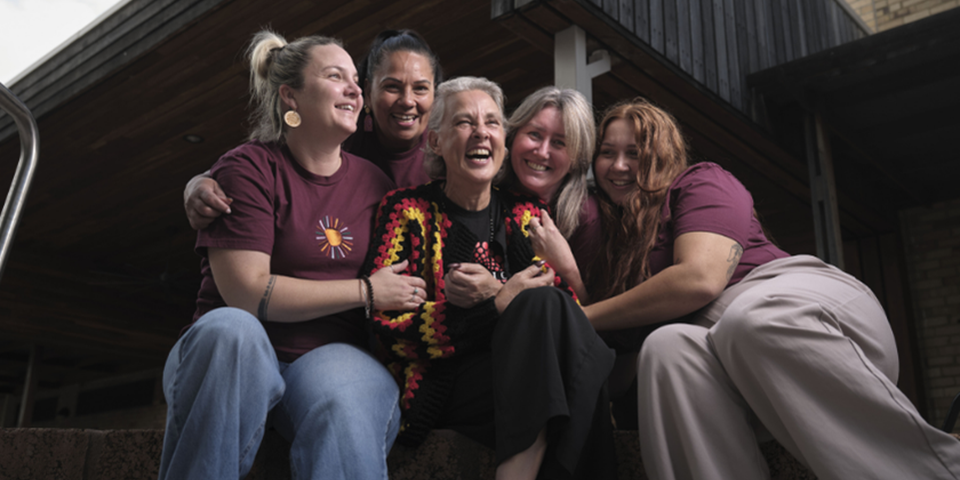
The Champion Centre at the City of Armadale has become recognised across Australia as a model for what genuine, community-led engagement can achieve. However, many people still struggle to define exactly what makes it work so effectively.
For Jodie Clarke, who helped build the municipal facility from the ground up with Aboriginal leadership embedded at its core, it comes down to one fundamental principle: relationships come first, and everything else grows from there.
The Centre is a gathering place in Armadale for Aboriginal people and government agencies working with Aboriginal families.
“Anybody can walk through the door,” Jodie said. “And they do.”
Families may arrive asking for help with rent, Centrelink, housing or health, but that first request is rarely the full story.
“If we take the time to listen, we realise there are ten other issues sitting behind that one. So, we help with those too.”
This is what Jodie describes as relational work. The Centre doesn’t treat people as problems to be processed through services. Instead, staff provide support over time, building trust and navigating systems alongside them.
Jodie has worked in Aboriginal and community development for nearly 40 years, but nearly 20 years at the Centre is her life’s work.
Long before the doors officially opened, Elders, families, and community members spent almost a decade advocating for a dedicated space where Aboriginal people could gather, connect, heal, learn, and lead on their own terms. Jodie helped make it a reality.
“This is a municipal facility with embedded Aboriginal leadership, Elder cultural authority and an Aboriginal team that is employed by the City,” Jodie explained. “That’s rare.”
Over time, the reputation of the Champion Centre has spread. CEOs from small shires, major cities and international delegations now sit across the table from Jodie, asking the same question.
“How do we build this?”
For years, the answer was in her head rather than any formal documents or guidelines. But a conversation at Murdoch University prompted a shift.
“Why can’t you research it yourself?” Associate Professor Jenna Woods asked her.
That question has led Jodie back to university as a mature‑age student, undertaking research to document the Champion Centre model.
That’s the beauty of Murdoch – they’re not trying to change the way we do things, they want to help understand and share them.
A key part of the Centre’s success lies in how services are delivered. Rather than families navigating fragmented systems on their own, service providers hot‑desk from the Centre.
They are expected to engage with the community directly and respectfully, and Jodie retains the cultural authority to decide whether a service is safe enough to operate there.
“We flipped the model,” she explained. “Instead of 17 people knocking on one family’s door, we bring services into a place that feels safe.”
The environment reinforces that approach. Children are welcome, food is shared, and the kitchen is treated as the heart of the building.
If a family arrives in crisis, staff will pick up a child, make a meal, or simply sit and listen, allowing parents the space to engage with service providers without fear.
The impact of this work has accumulated over generations. People who once attended as children now return as adults, bringing their own children.
One of those children is Jenna – now Dean of the School of Indigenous Knowledges – who first came to the Centre when she was young.
“She’s one of my kids,” Jodie said, smiling. “Watching her become who she is now – even if we only played a small part – that’s legacy work.”
For Jodie, the research she is undertaking at Murdoch is about spreading the success of the Centre for the benefit of other communities.
“I want communities to understand how it was built,” Jodie said. “Because it is transferable, but only if you understand the process underneath.”
At age 55, returning to study hasn’t been easy, but it has felt like the right decision.
It feels safe here, that matters a lot to me.
As she undertakes the research that will underpin more communities benefiting from the Champion Centre model, Jodie has one eye on the future that she will leave her grandchildren.
“I don’t want my grandchildren to grow up and find nothing has changed,” Jodie said. “I want their generation to inherit something better.”
It’s a brighter future that Jodie is building every day – in conversations, over meals, amid crises and among small victories – at the Centre that she helped start.
Blog
The community leader changing the way services are delivered
Posted on
Friday 3 July 2026