Blog
Stephen's brighter future
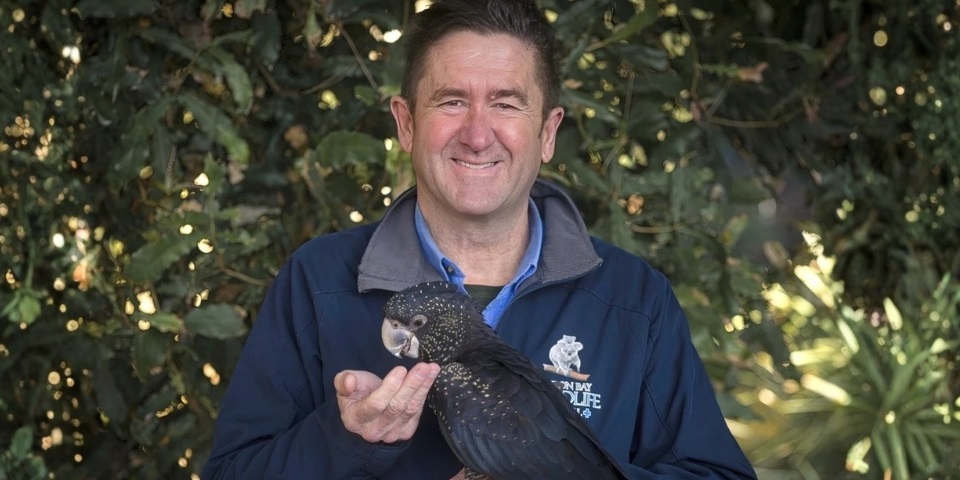
How a mobile wildlife hospital, and the vet who dreamed it up, are giving Australia's native animals a fairer go.
Right across Australia, injured native animals arrive at veterinary clinics every single day. A koala clipped by a car, a wedge-tailed eagle brought down by a fence line, a green sea turtle tangled in fishing gear. Vets do everything they can, but wildlife care is almost entirely unfunded, carried on the goodwill of clinics, rescuers and carers who quietly absorb the cost themselves.
"Wildlife don't get an even break," says Dr Stephen Van Mil. So, he set out to change that.
The seed was planted early. Stephen still remembers being five years old, driving through the hills of Perth with his mum and dad and telling them he was going to be a vet. "I never ever wavered," he says. He briefly considered studying in South Africa, until he learned the course was taught in Afrikaans. Then, while he was still in high school, Murdoch University opened Western Australia's first veterinary school. He was one of the early applicants, got in, and spent five fantastic years training with us.
Today Stephen is the founder, director and CEO of Wildlife Recovery Australia, and he's created something genuinely one-of-a-kind: Matilda, Australia's only mobile hospital built solely for wildlife.
Matilda is completely self-sufficient. With her own solar panels, generator, deep-cycle batteries and fresh and grey water tanks, she can roll into almost anywhere and be treating patients within the hour, no power point or plumbing required. That independence has already carried her a long way.
The reality of the work is not gentle. Almost every animal that comes through the door arrives in trauma, and the team deals with a great deal of loss. Around 40 per cent of the wildlife they see makes it back into care or the wild, which means most do not. But the days that make it all worthwhile are the releases.
"There's nothing more thrilling," Stephen says, than watching a recovered wedge-tailed eagle climb back into the sky, or a sea turtle slip back into the ocean. "Our job is to get animals better and get them back in the wild where they belong."
Just as important to Stephen is who comes next. With vets in short supply and wildlife-trained vets rarer still, Wildlife Recovery Australia takes education seriously, hosting students from across Australia and around the world on placements now booked out to 2028. The national tour itself doubles as advocacy: the team recently spent three days at Parliament House in Canberra, building support for a federally funded national framework for wildlife care.
Ask Stephen what a brighter future looks like, and his answer reaches well beyond any single animal. "It's a brighter future for wildlife right across the country," he says, "and for the veterinarians, the nurses, and the young people wanting to get into this space. There is a very bright future."
Stephen is one of the many faces of a brighter future, contributing every day in his own unique way to making a brighter future a reality.
Blog
Stephen's brighter future
Series
Posted on
Wednesday 8 July 2026