News
World-first research to advance camel health and conservation
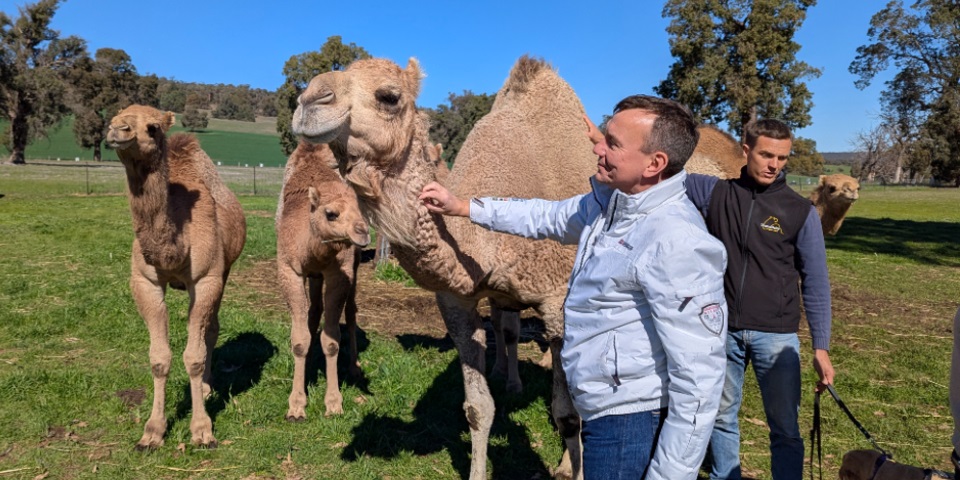
Murdoch University has entered a landmark partnership with Saudi Arabia's Al-Nahdi Family to deliver the world’s most comprehensive genetic map of camels.
This initiative, the first in a comprehensive global One Health program, is set to transform how camel populations are understood, bred and conserved by building a high-quality pangenome of dromedary and bactrian camels.
“Partnering with Murdoch University to unravel the camel pangenome marks the first step in this ambitious and pioneering program,” said Omar Al-Ghamdi, CEO of Al-Shmoul Holding, the subsidiary of the Al-Nahdi Family engaged in the project.
In 2024, the Al-Nahdi Family initiated a One Health Program for camels, seeking to bring together leading minds worldwide to revolutionise all aspects of camel healthcare. One Health is an integrated approach to tackling health challenges, recognising that the health of people, animals and ecosystems are closely linked and interdependent.
“Our goal is to advance camel genomics research, promote long-term preservation through the maintenance of genetic diversity, and strengthen the cultural conversation around camels not only in Saudi Arabia, but globally.”
The Al-Nahdi Family has entrusted the global Swiss-based life science consultancy Arcondis to manage the program and to identify suitable partners.
As part of their international search, Arcondis learned about the work of local Western Australian camel farmer Dr Max Bergmann. Having previously worked with Murdoch University on camel milk research, Dr Bergmann then connected Arcondis with the University.
“Engaging Murdoch University as a core research partner has been a key success for our program. The research team’s expertise aligns strongly with the sponsor’s goals, laying a solid foundation for innovation and long-term impact,” say Arcondis’ program managers Dr. Samantha Gordine and Dr. Daniel Jiménez.
We very much look forward to the collaboration and are thankful to Murdoch’s commitment to significantly enhancing the scientific knowledge about camels to improve their health, populations, and wellbeing.
Dr Bergmann operates Western Australian camel dairy DromeDairy, which will provide the initial genetic samples from which researchers will get baseline data. The sampling will then expand to camel populations from across the world to get a comprehensive global genetic map of all camels.
“I’ve been working on camel breeding and operating a camel dairy for ten years, as well as doing research on camel milk and milk products,” Dr Bergmann said.
“So, to be able to expand camel research here in Western Australia, but on a global scale, presents a terrific opportunity.”
Camels are much more than a symbol of desert resilience – they are a cornerstone of cultural heritage and economic livelihood across the Middle East, North and East Africa and Western and Central Asia.
Globally, there are approximately 41 million camels (the vast majority domesticated), yet despite their importance, camel populations face increasing threats from inbreeding, climate stress, disease and loss of genetic diversity. Wild Bactrian camels are critically endangered, presenting an urgent imperative to preserve populations.
Professor Sulev Koks, a leading genomics expert, says understanding the genetics of camel species will help address some of the risks facing camel populations.
“Our advanced genomics capabilities will deliver the worlds most detailed genetic map of camels, paving the way for better management of camel breeding programs and health,” Professor Koks said.
“This research project will shed light on the link between observable traits and underlying genes, with a focus on addressing inbreeding in the context of specific breeding traits such as milk, racing and beauty characteristics, to preserve the cultural and health status of camels.
“It will also open the door to new opportunities.”
The research will be spearheaded by Murdoch University’s multidisciplinary team of genomics, veterinary, bioinformatics and conservation experts, including Professor Koks, Associate Professor Mark Watson, Associate Professor Abha Chopra and Dr Jordan Hampton.
Recent genomic studies in Saudi Arabia have revealed striking differences in genetic diversity across camel populations. Mountainous populations show higher genetic diversity, while coastal populations show signs of genetic isolation and reduced diversity.
These findings underscore the urgency to develop more robust genomic tools to guide breeding and conservation strategies.
Murdoch’s research team will use advanced sequencing technologies to build a high-resolution pangenome, linking observable traits – such as endurance, disease resistance and even culturally valued racing and beauty characteristics – to their underlying genetic markers.
This will help address inbreeding and support sustainable breeding programs that respect both scientific and cultural priorities.
Closer to home, Dr Bergmann sees an opportunity for healthier, more productive camels that he believes have a far bigger role to play in Australia’s food system.
“We can have a DromeDairy camel that is friendly and productive and resistant to disease, which would be tremendous for the industry,” Dr Bergmann said.
“It will also provide the basis for developing camel-specific veterinary care, as right now we have to adapt medicines for other animals like cows and horses to treat them.”
The partnership marks the beginning of a long-term collaboration that intends to extend beyond research into teaching, community engagement and regional development.
“This project is not just about camels – it’s about connecting industry, science, culture and conservation in a meaningful way,” Professor Koks said, highlighting the importance of embedding One Health at the heart of these initiatives.
News
World-first research to advance camel health and conservation
Posted on
Topics
School of Veterinary Medicine
Murdoch Veterinary School is responsible for oversight and delivery of all veterinary-associated education, including the training of professionally registrable veterinarians and the next generation of specialists. The School is also responsible for the operation of an emergency, critical care, primary care and referral teaching facility, and conducting of research into animal health, welfare and disease.