News
WA’s clean energy future boosted with launch of new metals hub
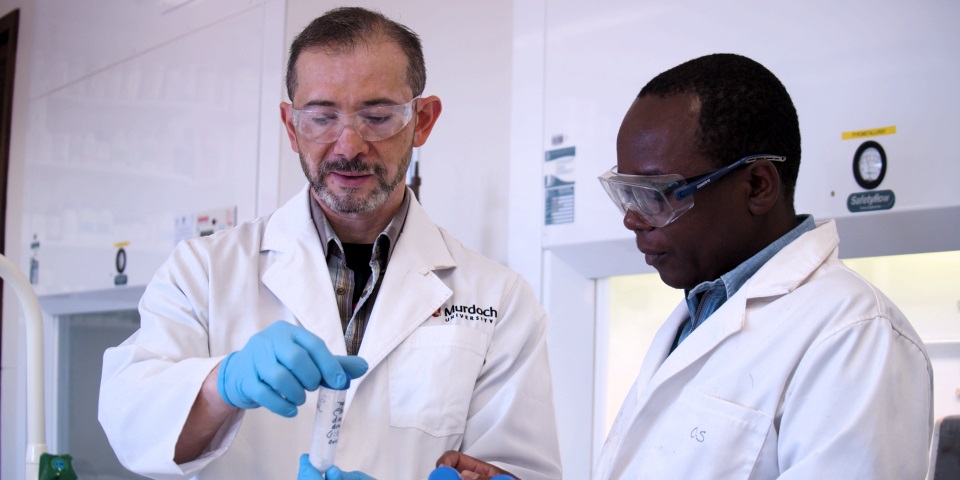
Murdoch University has unveiled a new Extractive Metallurgy Hub in Rockingham, marking a major milestone in Western Australia’s transition to sustainable metals production technologies and a low-carbon economy.
The new facility will be a flagship for research, education and industry collaboration, focusing on the extraction, processing and recycling of critical minerals essential to battery technologies and green steel production.
“This hub represents a significant step forward – not just for Murdoch University, but for the entire state,” said Professor Aleksandar Nikoloski, head of hydrometallurgy research at Murdoch.
It’s about creating the technologies and skills needed to support a sustainable future, powered by clean energy and circular economies, and promoting collaboration between industry, academia and government.
Western Australia already produces more than half the world’s lithium and holds globally significant stores of vanadium – two metals central to battery production. As global battery demand grows at 34 per cent per year, the time is now for the state to establish its role as key player.
Murdoch University’s Harry Butler Institute will operate the hub, which will open with research projects already underway in collaboration with major industry players, including Rio Tinto, IGO, Lynas, Tronox, Thorion Energy and South Korean raw materials giant POSCO.
This project received support from the Minerals Research Institute of Western Australia and grant funding from the State Government’s Investment Attraction Fund, administered by the Department of Energy and Economic Diversification.
Located near Rio Tinto’s green iron plant in Rockingham, the facility will also play a key role in developing green steel technologies, extending Murdoch’s five-year partnership with the miner on lithium innovation.
“We’re looking at the entire lifecycle of critical minerals – cleaner reagents, cleaner processes, and scalable technologies,” Professor Nikoloski explained.
It takes skill, effort, and collaboration to make real change, and that’s exactly what this hub is designed to foster.
The Hydrometallurgy Research Group located at the new facility, led by Professor Nikoloski, specialises in extracting critical metals like lithium, nickel, cobalt, rare earths and vanadium from both primary sources (ores) and secondary sources (electronics and used batteries from urban waste, and slags, processing residues and tailings from mining waste).
Their work is central to building a circular economy for metals, where materials are reused indefinitely to support sustainable technologies.
“Battery production is expanding rapidly, but the materials we need are finite and increasingly difficult to source,” said Professor Nikoloski.
“The good news is metals are essentially indestructible. If we can recycle them effectively, we solve both supply and disposal challenges.”
According to the Future Battery Industries CRC Final Report, Australia has the potential to build a $17 billion domestic battery industry by 2030, supporting over 61,000 jobs. Murdoch’s new hub has the potential to be a cornerstone of that growth.
“This is our opportunity to ensure the industry born from these minerals stays right here in Western Australia,” Professor Nikoloski said.
We’re laying the platform for a future where WA is not just a commodities exporter, but a global renewable technology powerhouse.
The hub will also serve as a training ground for the next generation of metallurgical engineers and scientists, embedding industry-relevant research in a developing precinct to accelerate innovation and practical solutions.
It aims to enhance the University’s industrial chemistry and process engineering programs in critical minerals processing, advancing from mining to extraction to battery manufacturing and recycling.
This will strengthen Australia's sovereign capability, leveraging our world-class mineral resources and skilled workforce, with the Hub serving as the focal point for industry, academia and government to deliver these benefits.
Professor Peter Eastwood, Deputy Vice Chancellor of Research and Innovation at Murdoch, said this continues a long legacy for the University.
“When Murdoch was founded 50 years ago, it was to support the mineral resources boom with education and technical expertise,” Professor Eastwood said.
“Today, we’re doing the same, but for the State’s next great boom in critical minerals.
We will find innovative solutions and new ways of extracting and processing critical minerals such as lithium and rare earths and developing technologies such as vanadium flow batteries for storing of clean renewable energy.
The strategic location of the Extractive Metallurgy Hub, coupled with deep research expertise, decades of experience in metallurgy education and pedagogical development and strong industry ties, presents a major opportunity to rapidly progress sustainability initiatives for Western Australia and beyond.
“My vision is for technology to improve life today without degrading the earth for future generations,” Professor Nikoloski said.
“I welcome the engineers and scientists of the future to join me in delivering this vision.”
News
WA’s clean energy future boosted with launch of new metals hub
Posted on
Topics
Harry Butler Institute (HBI)
As experts in the area of sustainable development, the Harry Butler Institute enables industry to deliver maximum economic value to our community, whilst simultaneously safeguarding the environment.