News
Talent recognised at 2025 Australian Awards for University Teaching
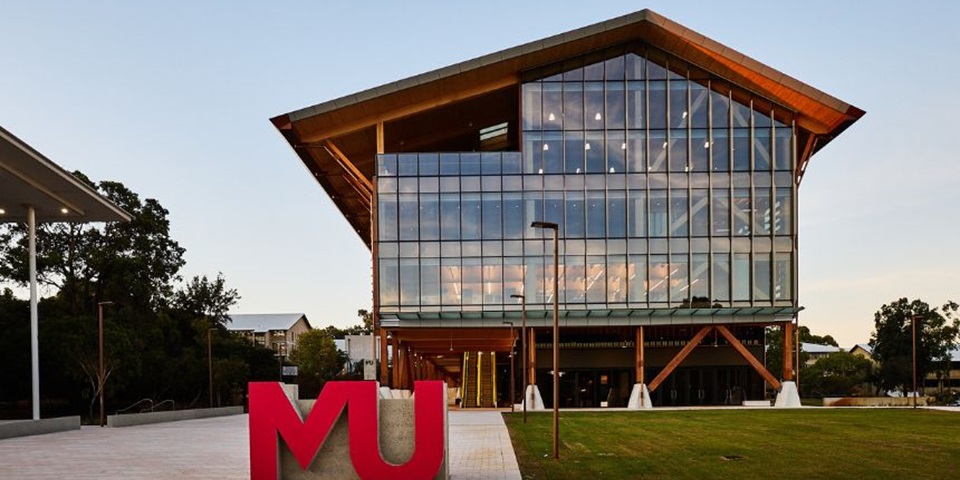
Murdoch University has received two Citations for Outstanding Contributions to Student Learning at the 2025 Australian Awards for University Teaching.
Dr Anahita Riegler and the Eco-Economy Project Team — Dr David Zhang, Professor Antonia Girardi, Dr Amy Huang, Dr Linda Yang and Ella Durand — were acclaimed in the prestigious awards.
Since 1997, the AAUT have recognised exceptional educators with Citations awarded to individuals and teams who have contributed to the quality of student learning over a sustained period.
“We are immensely proud of Dr Riegler and the Eco-Economy Project Team, whose innovative approaches and dedication to student learning have set new benchmarks in teaching excellence nationwide,” said Don A. Klinger, Deputy Vice Chancellor Education.
2025 Murdoch recipients
Dr Anahita Riegler, Senior Lecturer Criminology

Dr Anahita Riegler received the Citation for Outstanding Contributions to Student Learning for transforming traditional approaches to teaching and assessment in Criminology through creative, inclusive practices with ethical AI integration.
“When I entered the first-year undergraduate compulsory Criminology unit with students from diverse age groups, educational backgrounds, and various entry pathways I did not just see students struggling with writing, I saw a systemic failure in how we were teaching them to think, express, and engage,” explained Dr Riegler.
“Referencing errors, poor structure, shallow analysis, and plagiarism were not isolated issues; they were symptoms of a deeper disconnect between students and scholarly writing. I did not patch the problem; I reengineered the learning experience.”
Through her approach, Dr Riegler introduced scaffolded assessments that built students writing skills step by step, embedded collaborative learning to support peer insight and used teaching by analogy to make complex ideas accessible.
Most radically, she transformed the rubric from a static checklist into an interactive learning guide, empowering students to take ownership of their development.
The results of these changes were significant.
“The students began to write with greater confidence and clarity as emerging criminologists. The quality of their submitted essays improved, and breaches of academic integrity decreased dramatically.”
Her work didn’t stop there. Faced with new challenges posed by generative AI, Dr Riegler continued to lead by example, embracing these technologies and integrating them into her teaching practice to equip students with ethical, critical, and practical skills for academic writing in the digital age.
“In 2023, GenAI disrupted higher education, posing a challenge to the inclusive, skills-based approach, I had developed.
“I did not retreat, I led. Others debated risks, I pioneered integrating GenAI tools into my practice. My students now learn to write with AI – critiquing, refining, fact checking – while grasping the ethical dimensions of digital authorship.”
The Eco-Economy Project Team

[L-R]
Dr Amy Huang – Senior Lecturer in Management
Dr Linda Yang – Senior Lecturer
Ella Durand – Manager, International College Engagement
Dr David Zhang – Lecturer in Management
Professor Antonia Girardi – Pro Vice Chancellor, Business
The Eco-Economy Project Team received the Citation for Outstanding Contributions to Student Learning for integrating sustainability in teaching to foster innovative and cross-cultural approaches that motivate and inspire students, enhancing their learning experience and engagement with global challenges.
The team employed experiential learning pedagogy to create engaging environments for Murdoch’s undergraduate students — who benefitted from real-world, internationalised work-integrated learning through community engagement and social impact.
The project connected students with the disadvantaged Indonesian fishing island of Maringkik where economic challenges and limited infrastructure provided the students with meaningful opportunities to work with the community to develop sustainability awareness, practical skills and intercultural competence.
Since 2021, 70 Murdoch students from 43 disciplines across the sciences, social sciences and business, have been involved in developing business proposals and plans for the island community, seeking alternative income sources to shark fishing.
This has resulted in the students successfully co-designing projects with the fishing village to protect the vulnerable marine life, create alternative income sources and build a sustainable community. To date, 25 practical proposals have been developed, with 18 successfully implemented, touching every corner of life on Maringkik and effecting real change.
The project engages students cognitively, behaviourally and emotionally, and empowers them to become active learners and agents of change who create a lasting real-world impact.