News
Study assesses impacts of drones on whale sharks
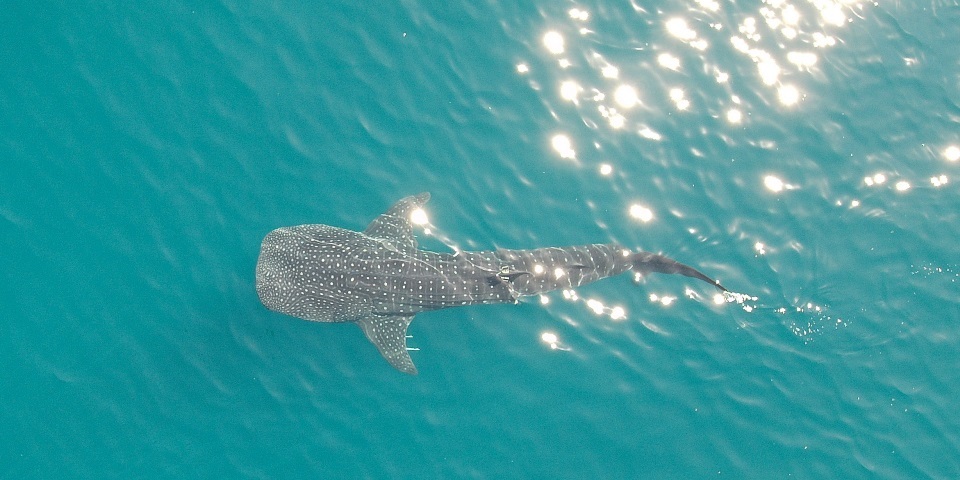
A new study led by Murdoch University has found drones flown above the ocean are unlikely to disturb whale sharks, the world’s largest fish.
In recent years, using drones for wildlife research has proven to be a valuable tool in collecting data for population surveys, observing behaviour and measuring animals’ physical dimensions.
“As drones become more common in wildlife research, there’s a growing need to make sure the drones themselves aren’t changing animals’ natural behaviour,” said lead researcher, Dr Samantha Reynolds from Murdoch University’s Harry Butler Institute.
“We know drones can affect some marine animals, like whales, dolphins and seabirds, but those responses vary a lot between species and situations, and have typically been measured only by observation,” she said.
The study was the first to use biotelemetric data to assess the effects of drones on the natural behaviour of water-breathing marine species, rather than relying on observation, which can be biased.
The research team attached motion-sensing tags to 13 whale sharks at the Ningaloo Reef in Western Australia, which recorded data on their swimming effort, tail movement, and diving behaviour — which can indicate stress, agitation, or an attempt to escape.
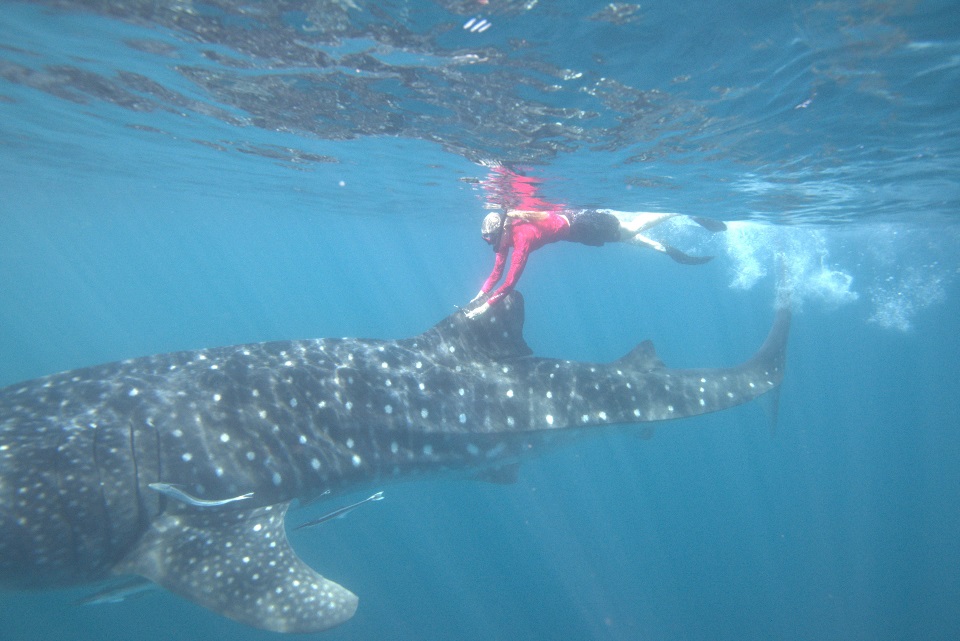
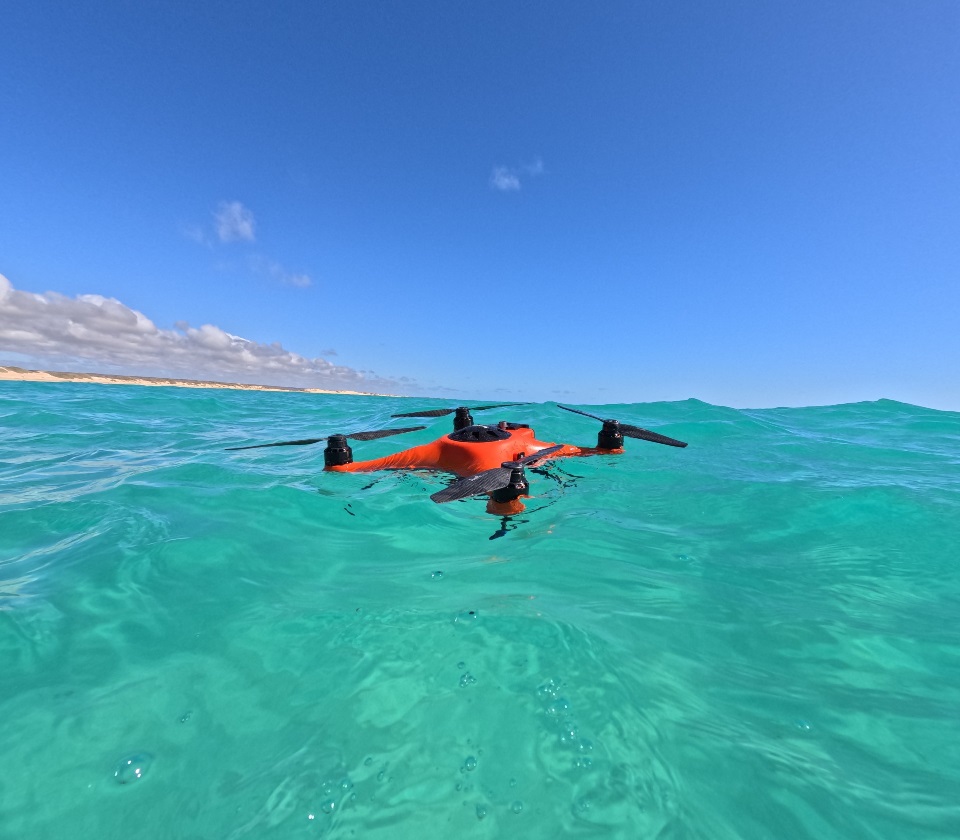
While the sharks were being tracked, a drone was flown directly above them at different heights between 10 and 60 metres, including while the drone ascended and descended.
The team then compared the tagged data with periods where no drone was flying above the whale sharks.
Dr Reynolds said the results were encouraging.
“We found no evidence that drones disturbed whale sharks when flown overhead at heights between 10 and 60 metres,” she said.
“The whale sharks behaved the same way with a drone overhead as they did normally.”
Dr Reynolds said the study should provide confidence to researchers and managers that drones are a minimally invasive research tool for whale sharks but emphasised that a precautionary approach was still essential.
“Although we couldn't detect any effects on whale sharks, it is possible there might be physiological effects that weren’t measured in this particular study, or that drones could impact whale sharks during different behaviours such as feeding,” she said.
“The findings also apply specifically to whale sharks. Other species in the same ecosystem, such as seabirds, turtles, dolphins, and whales are known to be more sensitive to drones and may respond very differently.
“While our results are reassuring for whale sharks, they don’t mean drones are risk‑free. We still recommend a precautionary approach — flying as high and as briefly as possible and only using drones when they genuinely add value.”
Under Western Australian law, drones used for commercial and recreational purposes “must not disturb wildlife” and must maintain a separation distance of 60m from whale sharks and marine mammals.
Drone flights conducted for this research were allowed under a permit granted by the Department of Biodiversity, Conservation and Attractions.
The paper, Using biotelemetry to assess drone effects on whale sharks, was published in the journal Ecosphere.
The study was co-authored by researchers from ECOCEAN Inc, Swansea University, James Cook University, and Griffith University.
News
Study assesses impacts of drones on whale sharks
Posted on
Topics
Harry Butler Institute (HBI)
As experts in the area of sustainable development, the Harry Butler Institute enables industry to deliver maximum economic value to our community, whilst simultaneously safeguarding the environment.