News
Small-scale desalination technology could be the answer to water security in remote Australia
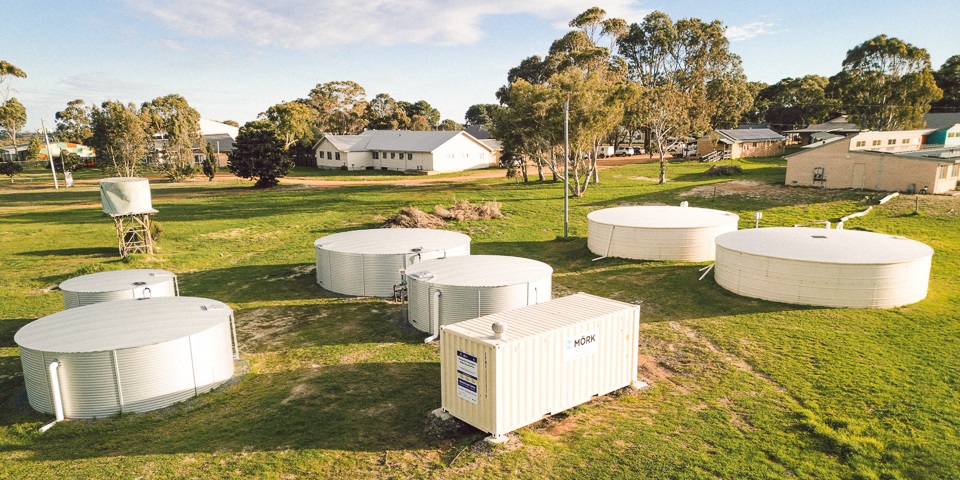
With water security in the spotlight during National Water Week, new technology supported by researchers at Murdoch University has the potential to solve water scarcity issues in remote and rural Australia.
While many cities enjoy a steady flow of safe and reliable water, remote communities often face a different reality.
With freshwater sources non-existent or severely depleted, during times of drought, many rural towns depend on water being trucked daily from metropolitan areas at great cost and inefficiency.
As part of the WaterSmart Farms project, researchers from Murdoch University, in collaboration with scientists at the Department of Primary Industries and Regional Development, Water Corporation, and industry, have demonstrated the potential of a fully self-sustainable, decentralised desalination unit to offer a solution.
Wongutha Christian Aboriginal Parent-Directed School (CAPS) is an Aboriginal boarding school located more than 700km from Perth, near Esperance.
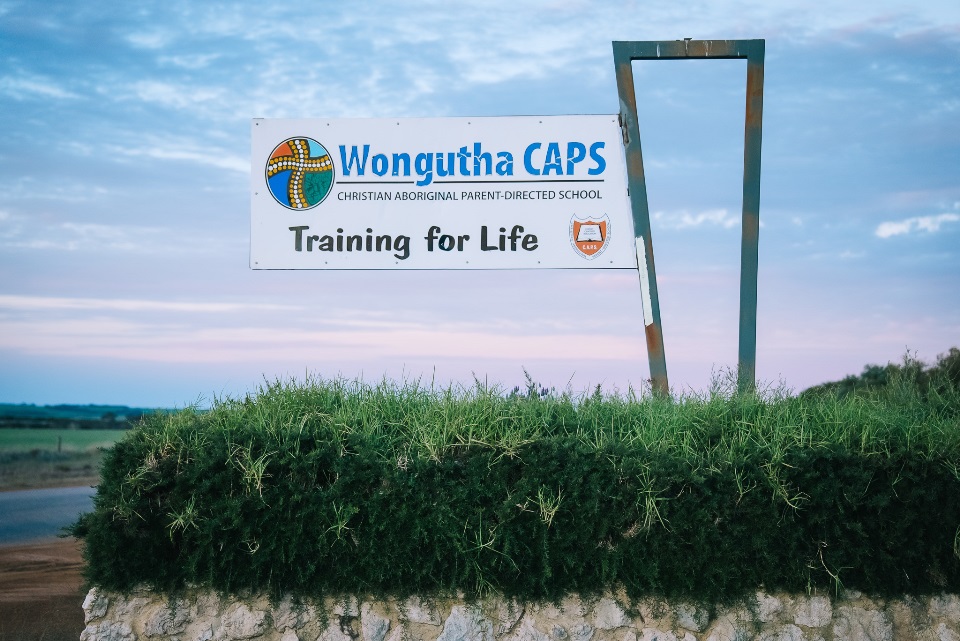
Due to its remote location, the school is unable to be connected to the WA water grid.
Water on site had historically been sourced from a nearby farm, however the quality and quantity of the water has been on a steady decline.
Professor Wendall Ela from Murdoch University’s Harry Butler Institute and a team of scientists worked with industry engineers to build an off-grid desalination unit - small enough to fit inside a shipping container - which is now sustaining the school.
The unit, powered by renewable energy via solar panels and batteries, is able to turn salty groundwater into freshwater, and pump the rejected saline water to a nearby field of saltbush - a drought resistant native plant which is used to feed livestock.
Professor Ela is a distinguished expert in desalination technology development.
“I came to Australia about 12 years ago specifically because of the opportunities here in desalination and water treatment generally,” he said.
It’s the epitome of where you must have this new way of thinking. You have to use inland resources - saline water and renewable energy.

Desalination technology has been in the commercial market since the late 1980’s, however most research has been focused on very large systems which are unrealistic for communities like Wongutha.
Professor Ela has sought to address that gap, with his research focusing on sustainable decentralised and off-grid water treatment systems which provide solutions for rural communities and agriculture, at a fraction of the cost.
“It’s become its own field of applied research - how to use distributed small-scale systems that utilise local resources efficiently,” he said.
“That’s what drew me to the WaterSmart Farms project. Wongutha allowed us to combine locally sourced renewable energy and water from multiple bores without taking too much from any one place, while also integrating rainwater collection and brine management.”
Wongutha CAPS Facilities Manager Kris Nostrini said the unit has supplied more than seven and a half megalitres of water to the site for residents and students to use.
The desalination unit has completely changed our life here at Wongutha.
“We now have a great, steady supply of water, we have a quality supply of water.
“Our students are getting the best quality of water that we can possibly give them, which is comforting to know. It adds to their quality of life and flows through from the commercial kitchen through to their showers.”
Mr Nostrini said one of the great benefits of the project was having students involved in the instalment and management of the unit.
“It’s been great to see them laying pipe, connecting tanks, working on tank pads, and now filling out log sheets of the system running,” he said.
“To learn some of that for myself has been a privilege, but also to be able to share this with our students, and the science behind it all is amazing.
“Something I’d really like to see is for students to take this knowledge to their own communities and be able to look after these units themselves.”
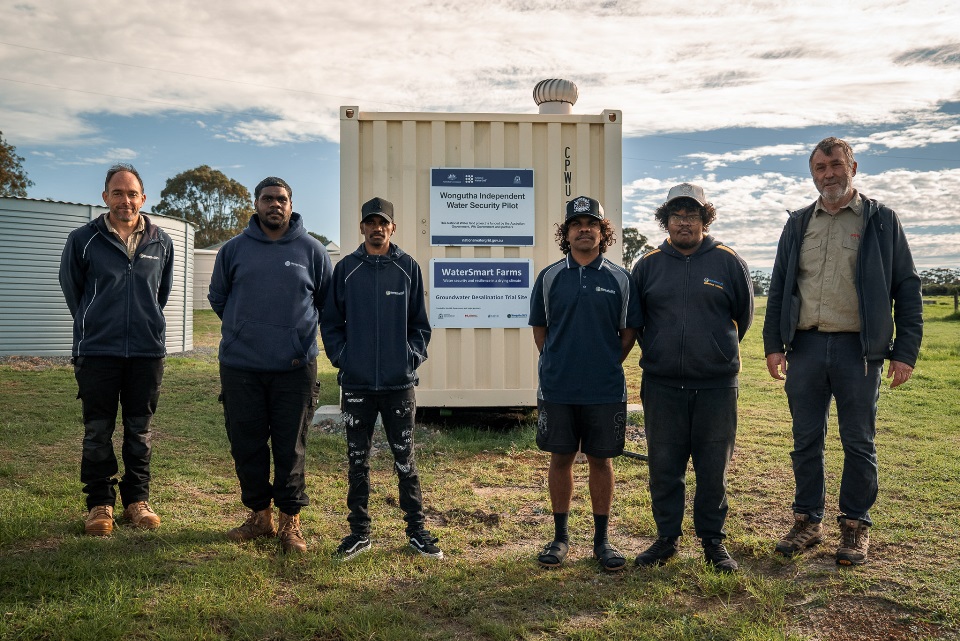
The project was initiated and funded by DPIRD’s WaterSmart Farms initiative and Water Corporation, with additional support from the National Water Grid Fund (NWGF).
The Wongutha system is one of four community-based desalination units being demonstrated as part of the wider DPIRD-led WaterSmart Farms project evaluating over 50 on-farm desalination units to test whether local water and renewable energy can support farms and remote communities. The other three community systems are located in Dumbleyung, Katanning, and Merredin.
Watch the latest edition of our Bright Lights series:
News
Small-scale desalination technology could be the answer to water security in remote Australia
Posted on
Topics
Community and Partnerships, Engineering, First Nations, Research, Science, Sustainability, Technology
Harry Butler Institute (HBI)
As experts in the area of sustainable development, the Harry Butler Institute enables industry to deliver maximum economic value to our community, whilst simultaneously safeguarding the environment.