News
Professor Michael Wear wins inaugural Prime Minister’s prize
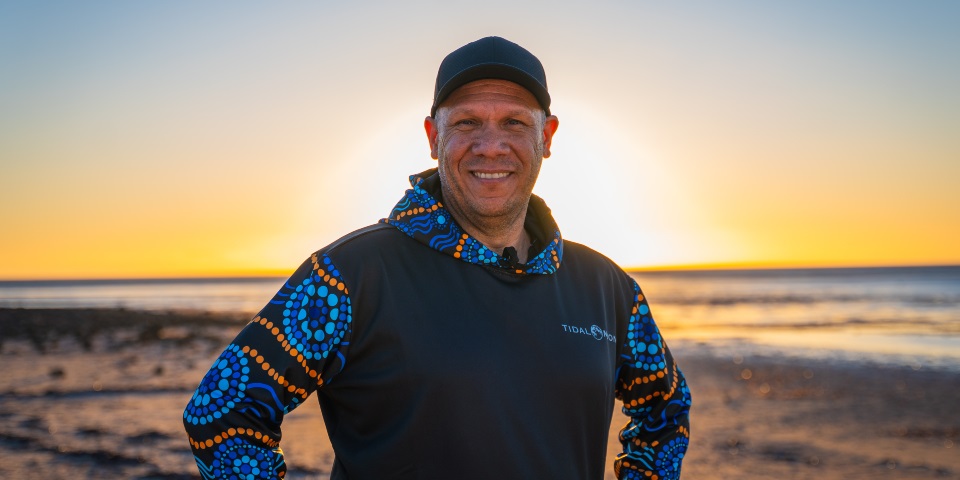
When a devastating marine heatwave struck Shark Bay in 2012, it wiped out vast stretches of seagrass meadows in one of the world’s most biodiverse marine environments.
For many, the loss was catastrophic. For Professor Michael Wear, a Malgana Traditional Custodian of Gutharraguda (Shark Bay) and Murdoch University’s Professor of Practice (Indigenous Environmental Conservation), it was a call to action.
This week, Professor Wear’s pioneering response earned national recognition: the inaugural Prime Minister’s Prize for Aboriginal and Torres Strait Islander Knowledge Systems.
It’s an accolade that honours not just scientific achievement, but the power of Indigenous Knowledge to restore ecosystems and reshape industries.
“I’m humbled, privileged and grateful – and I don’t want to be the last Indigenous scientist recognised,” Professor Wear said.
This is an important recognition of hard work and a signal that you can create your own solutions, using culture, and truly be self-determined.
Professor Wear’s work is rooted in Saltwater Country and guided by a vision that blends cultural knowledge with Western science.
Through Tidal Moon, Australia’s first Indigenous-owned and led sea cucumber fishery and marine restoration company, he has revived a practice that sustained trade for centuries. Once Australia’s first export industry, sea cucumber is now at the heart of a sustainable commercial model that supports biodiversity and cultural continuity.
But Tidal Moon is more than a fishery. It is an emerging leader in ocean ecosystem restoration.
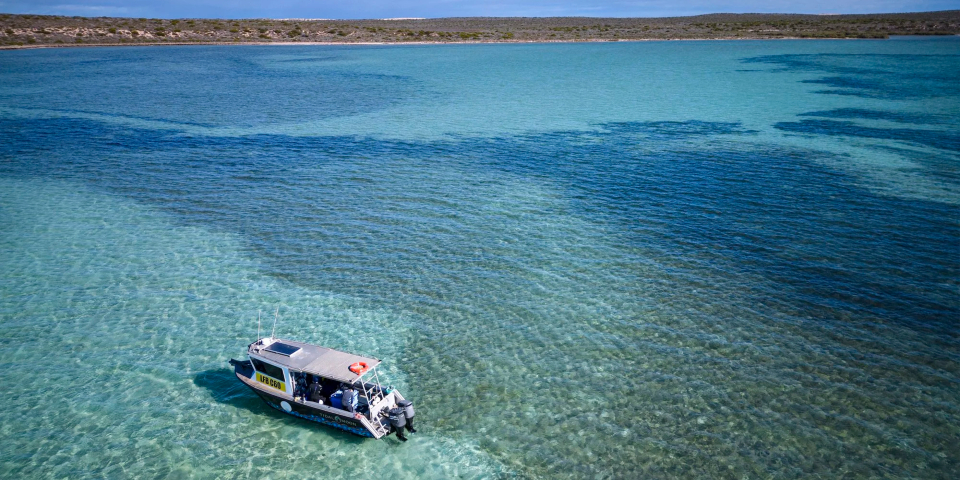 Image: A Tidal Moon dive boat at anchor in Gutharraguda.
Shark Bay’s seagrass meadows – vital for fish stocks, carbon storage and marine life – are slowly recovering thanks to a world-first conservation project led by Professor Wear and colleagues at Murdoch University.
Highly skilled Aboriginal divers harvest healthy seagrass and replant it in damaged areas, creating what he calls a “living library” for marine research and education.
“Science is a practice that Westerners do to achieve an outcome,” Professor Wear explained.
“But in First Nations culture, science is entangled in how we live and engage with the world around us. Tidal Moon shows how the two can connect and collaborate with incredible impact.”
That collaboration extends beyond the water. Professor Wear collects culturally directed observations from divers alongside scientific data on seagrass and sea cucumber populations.
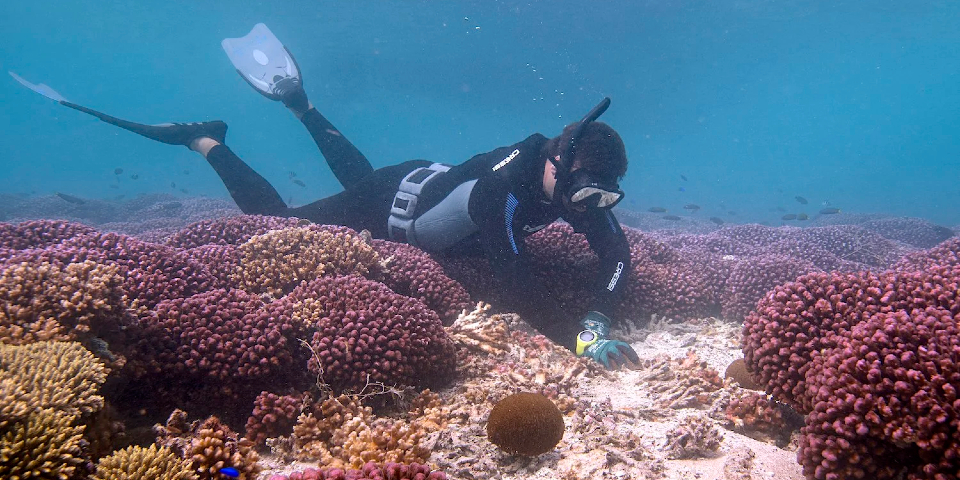 Image: A Tidal Moon diver harvests sea cucumbers among the coral at Gutharraguda.
These insights feed into global conversations on climate resilience and Indigenous-led conservation. He has presented his work to the United Nations, APEC and in the United States as a model for improving livelihoods while restoring ecosystems.
The enterprise is also deeply personal. By creating skilled jobs on Country, Professor Wear is enabling Malgana people to return to Gutharraguda, reconnect with heritage and build futures grounded in culture.
I’ve always said to the young fellas I work with – one day I will reach the limits of what I can do and contribute, and it’s your job to outdo me.
“They must look within to recognise their flaws and improve what they need to, then look around and connect with others in a meaningful way.
“If our young people can do that, they’ll make a difference.”
Professor Wear is quick to note the key role Murdoch University has played in this journey, fostering “two-way science” that respects Indigenous knowledge and Western research equally.
“The University has strong principles that are lived and practiced in a flexible and meaningful way,” he said.
“It allows Indigenous Knowledges and Western Science to come together and create something greater than either could achieve in isolation.”
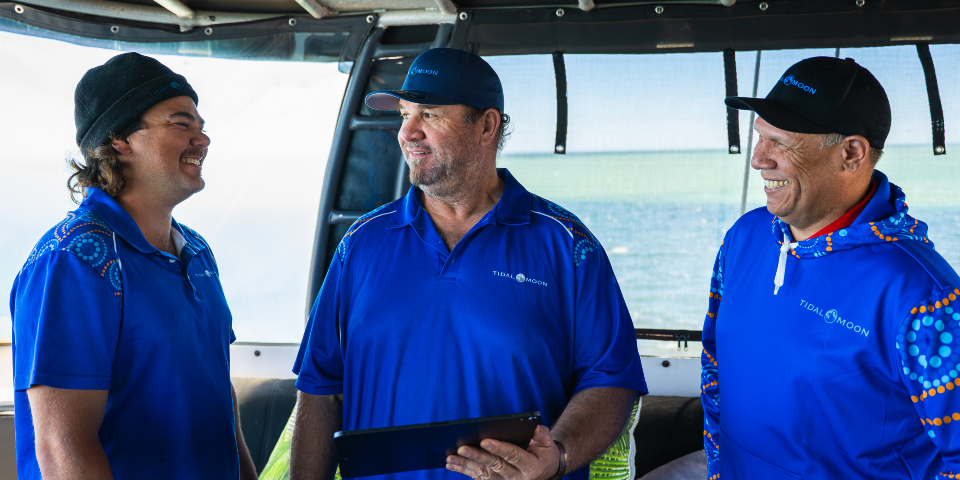
Image: Tidal Moon's Alex Dodd, Sean McNeair and Michael Wear on a dive vessel.
Deputy Vice Chancellor Global Engagement Professor Simon McKirdy said the award was an important recognition of the tremendous value of Indigenous Knowledges.
“As Professor of Practice at Murdoch, we acknowledge Michael's Traditional Ecological Knowledge and the value of his stewardship alongside Western science,” he said.
“We have much to learn from Indigenous leadership and sustainable use of the environment which honours the knowledge gained over centuries of connection to place.”
For Professor Wear, the Prime Minister’s prize comes with accountability to the next generation of First Nations scientists.
“The recognition comes with a great sense of responsibility – to support and champion those who come to be recognised next,” he said.
In Shark Bay, where seagrass roots anchor life and culture, that responsibility is already taking shape – in every blade replanted, every diver trained, and every young person inspired to see science not as separate from culture, but as part of it.
Learn more about Murdoch University's commitment to championing Indigenous Knowledges and recognising Indigenous excellence.
News
Professor Michael Wear wins inaugural Prime Minister’s prize
Posted on
Topics