News
New short film tells the story of UN-backed project that unites Yawuru Traditional Owners and scientists who care for Saltwater Country
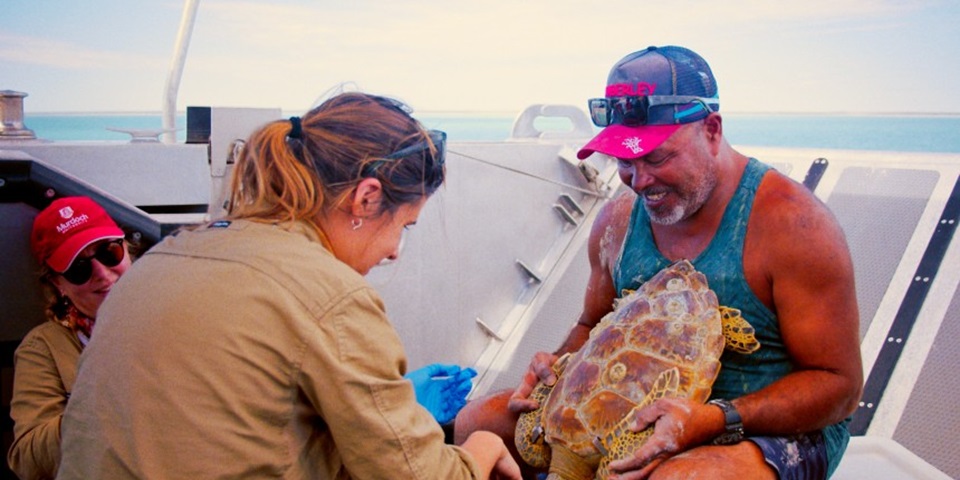
The story of the UN-backed project, Yagarrajalajalan nagula buru - We All Care for Saltwater Country has been captured in a short form documentary by award-winning Murdoch University videographer, Dannon Wu.
The film screened at the Kambarang Indigenous Film Festival at Murdoch University on 24 November 2026 and launched on YouTube on Wednesday.
A world-leading initiative in Western Australia is bringing Yawuru Traditional Owners and scientists together to research Yawuru Nagulagun Roebuck Bay. The project was backed by the United Oceans Decade Action in 2023. The team studies how people from all walks of life use and value the bay, how culturally important green turtles and dugong use its habitats, and how customary hunting fits alongside other uses of the bay.
Given the complex nature of the project, the team use multiple techniques and bringing together different knowledge systems to tackle hard questions. The group includes marine biologists (Murdoch University, James Cook University, Department of Biodiversity, Conservation and Attractions), social scientists (Murdoch University, University of Notre Dame Australia, Edith Cowan University), science communicators (University of Western Australia), Yawuru Knowledge Holders, and joint managers Nyamba Buru Yawuru (NBY) and DBCA.
Since 2023, the Yagarrajalajalan nagula buru - We All Care for Saltwater Country project has focused on mapping and tracking green turtles and dugong. In a big effort, 50 green turtles and 14 dugong have been tagged with tracking devices, generating valuable information about their movements and use of the marine park.
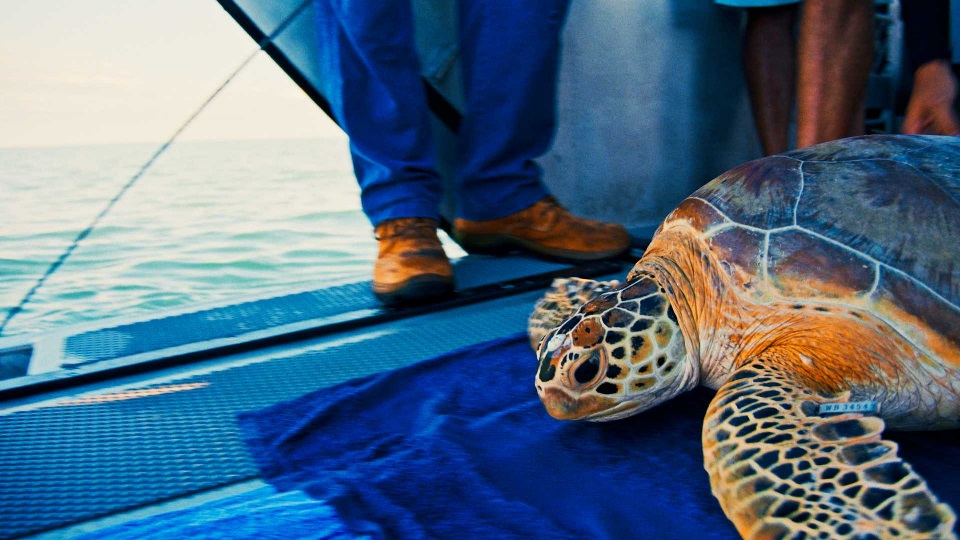
The team has also interviewed more than 150 users of the bay including Indigenous and non-Indigenous participants, allowing them to identify where different activities occur and what important values are linked to places within and surrounding the bay. Workshops have also been held to share this information to community.
The project team is working together to fill critical knowledge gaps to support recommendations and inform future decision-making for Yawuru Nagulagun Roebuck Bay Marine Park. These efforts involve balancing conservation, Yawuru traditional practices of harvesting dugong and turtles, and modern pressures such as tourism.
Murdoch University marine scientist and project co-lead Dr Adrian Gleiss said one of the most important lessons from the project was that two-way science required more than simply bringing different sources of knowledge together.
“What makes this project different is that the partnership is fundamental to the research,” he said.
“It is not Western science with Indigenous Knowledge added on. The research questions, the fieldwork and the knowledge we are building have been shaped together.
“Yawuru people have been looking after turtle and dugong species for tens of thousands of years, and it is a testament to their stewardship that these species are still so abundant in this part of the world.
“If you think about it, scientific observation might only happen over one, two, three years, whereas Yawuru Knowledge has been generated over tens of thousands of years.
“So while us 'modern scientists' might have incredible power to observe the natural environment over a very short period of time, you've had this human observation that has manifested itself in culture over tens of thousands of years.
“I think those different scales and detail of observation are actually very complementary.”
NBY Environmental Services Assistant Manager and co-lead Dean Mathews said the project showed what was possible when Traditional Owners were equal partners in research on their Country.
“For Yawuru people, caring for Saltwater Country is part of who we are,” he said.
“Our knowledge comes from generations of connection to Country.
“On this project, we are working side-by-side and learning from each other to get the best outcomes, balancing modern uses of the Country with traditional practices.
"In modernity, we must consider how do we manage these species sustainably, while still allowing us to hunt and take them as well. How do we understand the knowledge of our activities, our practices and the impacts on these species?"
The approach could have relevance beyond the project itself, particularly as governments, Traditional Owners, researchers and land and sea managers consider how co-management and science can contribute to the long-term management of parks and marine environments.
The team wants to showcase its project and encourage other research groups to engage with Traditional Owners. Team members chose a short film as their medium of choice to spread the word as it as an accessible way to communicate to large audiences. Murdoch University's Dannon Wu was delighted to collaborate with the project and showcase such a beautiful part of the world.
“It’s been a true pleasure documenting this project and its people over the last few years," he said.
"I’ve had a front-row seat to watching such a unique and passionate group of people work together, even when there are conflicting ideas on the surface. The lengths all parties have gone to find common ground is inspiring.
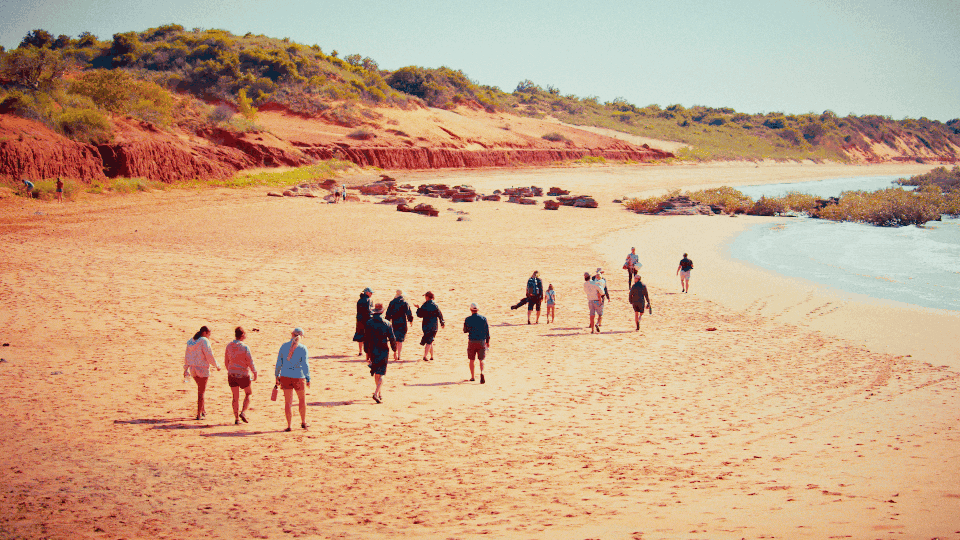
“Yawuru Nagulagun Roebuck Bay is such a visually striking place. You immediately see vibrant, earthy reds and this almost unbelievably bright blue water. The shoreline is a metaphor in itself. Two very distinctive colours that meet in the middle. I thought it was incredibly poetic that the land on which the work was taking place was actively conveying the same message - different groups and people coming together to work towards a common goal. I championed that concept during the making of the short documentary.”
With the project continuing until 2027, there is plenty more to come, with research findings on everything from turtle and dugong movements to how people use and value the bay.
Yagarrajalajalan nagula buru - We All Care for Saltwater Country is funded by the Western Australian Government Department of Energy and Economic Diversification. The project receives additional support from the Department of Biodiversity, Conservation and Attractions (DBCA), Rio Tinto, Parks Australia and the National Environmental Science Program (NESP) Marine and Coastal Hub, and is a collaboration between Murdoch University, Nyamba Buru Yawuru, The University of Notre Dame Australia's Nulungu Research Institute, DBCA, James Cook University's TropWATER, Edith Cowan University, and The University of Western Australia.
News
New short film tells the story of UN-backed project that unites Yawuru Traditional Owners and scientists who care for Saltwater Country
Posted on