News
Music and traffic noise make our imagination more vivid

Have you ever been stuck in a traffic jam with music blasting through the radio, and found your mind drifting off in a daydream? There might be a reason.
A new study from Murdoch University, in collaboration with The Sydney Music, Mind, and Body Lab, at the Sydney Conservatorium of Music at The University of Sydney, has found that both music and traffic noise can make people’s imagination more vivid.
“We imagine on buses, in waiting rooms, or with traffic outside the window. This study was about understanding how those everyday sounds, especially music and noise, can actually change the way we imagine things,” said Associate Professor Jon Prince, from Murdoch University’s School of Psychology.
To test the concept, data were collected from 107 undergraduate students at Murdoch University in Perth.
Each participant watched a short video of a character walking towards a distant mountain and then closed their eyes and imagined continuing the journey for 90 seconds. While imagining, they were played music, traffic noise, both, or nothing at all.
After each trial, the participants completed a series of questions on their imagination, rated how vivid their imagery was, and described their imagery in writing.
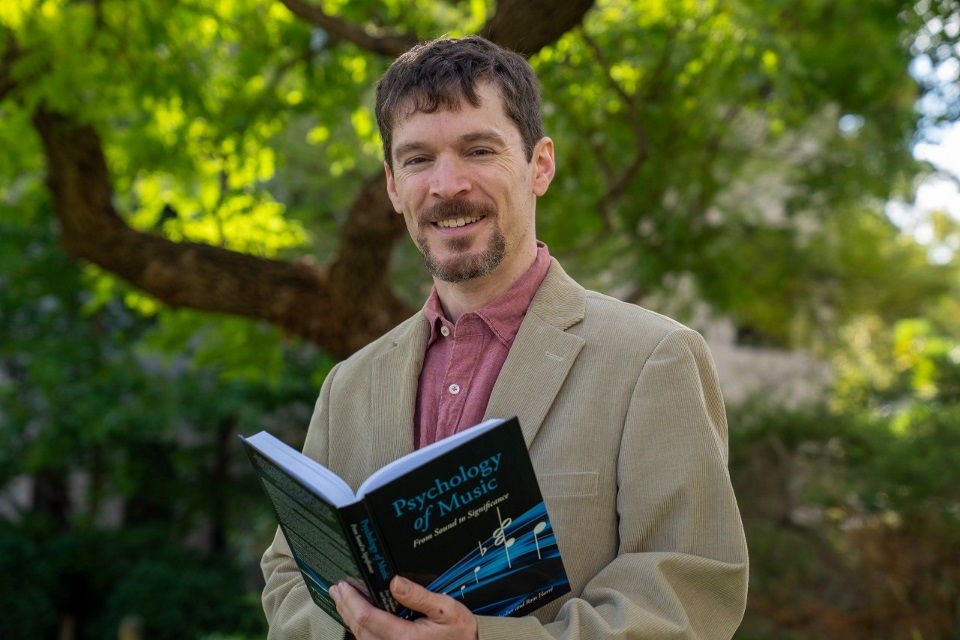
“Surprisingly, we found both music but also potentially disruptive noise like traffic made people’s imagination more vivid compared to silence,” Associate Professor Prince said.
“However, when people listened to music, their imagined journeys were more positive and emotional. Adding traffic noise to the music somewhat dampened that effect,” added co-author Ceren Ayyildiz, PhD candidate at the University of Sydney.
Interestingly, the research team also found that music made people feel like they travelled for longer periods of time and over a larger distance.
Co-Author Dr. Steffen Herff from the University of Sydney said the study shows that what we hear — even traffic noise — affects what we imagine, and makes our imagery more vivid and tangible.
“But music is special in shaping the emotional content of imagination, as well as changing the imagined space and time,” he said.
Ms Ayyildiz said the findings could be useful in both a recreational and clinical context.
“The findings apply to everyday use of mental imagery such as relaxation, role play, visualisation, and also psychological therapy,” she said.
“For example, many types of therapy often use mental imagery techniques to help clients, and because therapy rooms tend to be in urban centres, usually there is traffic noise.”
Associate Professor Prince summarised how the findings could impact therapy sessions.
“The research shows how this traffic noise bleeds into what people imagine, potentially changing how effective the therapy is. Also, it shows that that adding music to the mix brings yet more changes, giving therapists a way to influence imagined content as needed.”
The study, Traffic jams: music and traffic noise interact to influence the vividness, sentiment, and spatiotemporal properties of directed mental imagery, was published in the journal Humanities & Social Sciences Communications.