News
First successful lab colony of polyphagous shot hole borer in WA
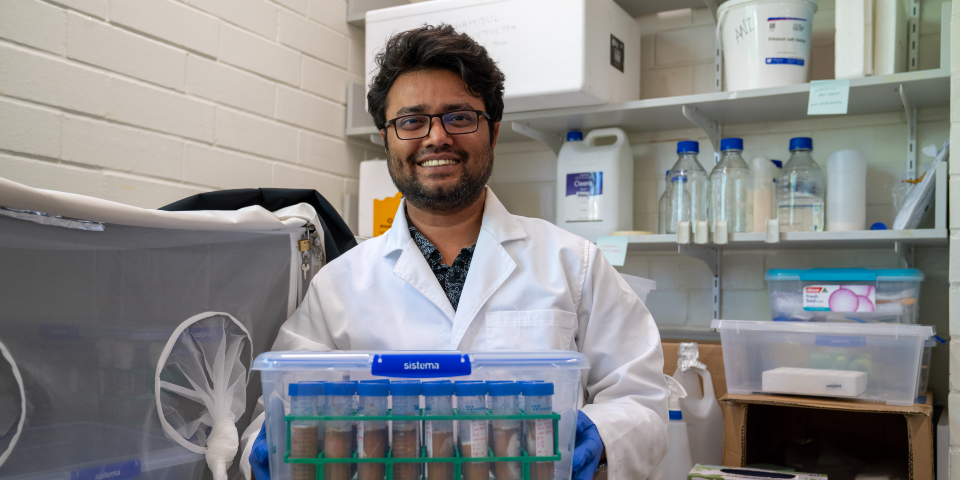
A major breakthrough has been achieved in the fight against the invasive polyphagous shot hole borer (PSHB), Euwallacea fornicatus in Western Australia.
Researchers at Murdoch University have successfully established the first stable laboratory colony of PSHB in the state.
The project, led by PhD student Md Shahidul Islam Khan and supervised by Associate Professors Wei Xu and Rob Emery, will provide a powerful research platform to study PSHB and discover innovative methods to manage this pest.
To establish the healthy colony, the team used beetles sourced from local DPIRD-identified infested sites and developed an artificial diet comprising of pine sawdust and other essential ingredients to replicate natural conditions.
Under laboratory conditions, the beetles complete their full life cycle — from egg to adult — in just eight weeks.
The colony shows strong natural behaviours, including tunnelling, gallery formation, and growth of its symbiotic fungus, Fusarium euwallacea, which the beetle farms and relies on for food.
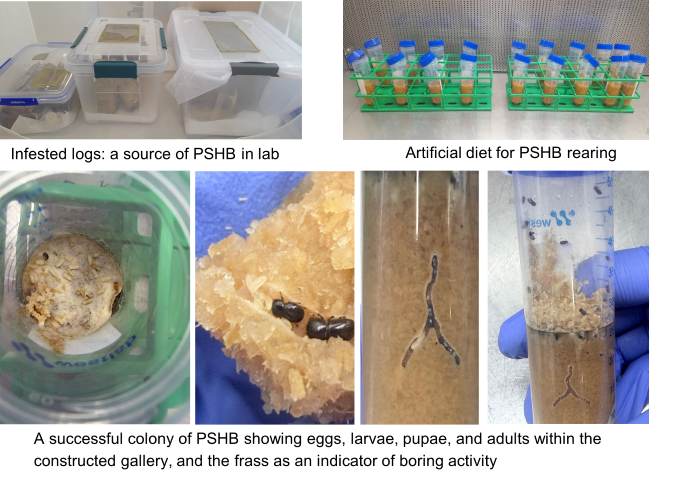
Mr Khan said the lab-based colony will allow them to study the chemical ecology and closely monitor how PSHB behaves inside trees and spreads in the environment.
“With a stable colony, scientists can now rapidly and safely screen potential attractants, repellents, and environmentally friendly control tools that are essential for early detection and long-term management,” he said.
“The colony at Murdoch University will support the development of lure-based surveillance systems, attract-and-kill strategies, and integrated pest management approaches, including the adoption of biological control options.”
Dr Xu said the project will enhance WA’s capacity to manage the high-risk invasive pest.
“This project represents an important step forward in protecting Western Australia’s urban trees, native forests and horticultural industries from the ongoing damage caused by polyphagous shot hole borer,” he said.
“By understanding this pest more deeply, we can develop targeted tools that safeguard the health and resilience of our landscapes for the long term.”
This project was supported by the Harry Butler Institute at Murdoch University and the WA Agricultural Research Collaboration (WAARC).
News
First successful lab colony of polyphagous shot hole borer in WA
Posted on
Topics