News
Double dolphin stranding highlights growing risks in WA estuaries
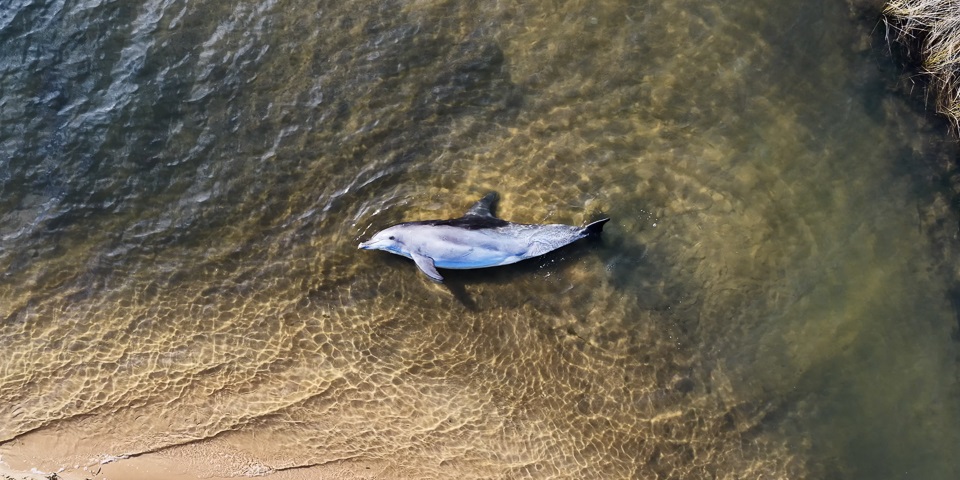
Two dolphin strandings within minutes of each other in Bunbury's Leschenault Estuary last week have highlighted the growing risks increasingly shallow estuaries pose to resident dolphin populations.
Harry Butler Institute Postdoctoral Research Fellow Dr Krista Nicholson witnessed the incident while conducting boat-based surveys in Bunbury with community research group Estuary Guardians Mandurah.
Dr Nicholson is a population ecologist whose research focuses on dolphin strandings in the Peel-Harvey estuary in Mandurah.
The team was tracking Mandurah resident dolphins known to travel between the Peel-Harvey and Leschenault estuaries when they spotted several animals foraging in shallow water.
"Like the Peel-Harvey Estuary, the Leschenault is a shallow system where dolphins regularly forage close to shore," Dr Nicholson said.
As the dolphins moved out of direct view, the team launched a drone to continue observations and identify individual animals from distinctive markings, including white scarring sometimes caused by previous strandings.
"We observed four dolphins spread across the area. Two dolphins moved away while the remaining pair continued feeding near a narrow channel entrance," Dr Nicholson said.
"One dolphin, now identified as local Bunbury resident 'Smiley', suddenly swam across a deeper pool into very shallow water and became stranded.
"We noticed he had rolled on his side and remained stationary. After a few minutes, we contacted the Department of Biodiversity, Conservation and Attractions."
Almost simultaneously, another dolphin known as 'Star' became stranded while attempting to exit a nearby wetland channel.
Both Star and Smiley are local Bunbury dolphins who have been recorded living in the Leschenault estuary since 2007.
"Within minutes, the two dolphins were lying on their sides, lifting their heads to breathe as large schools of fish swam nearby," she said.
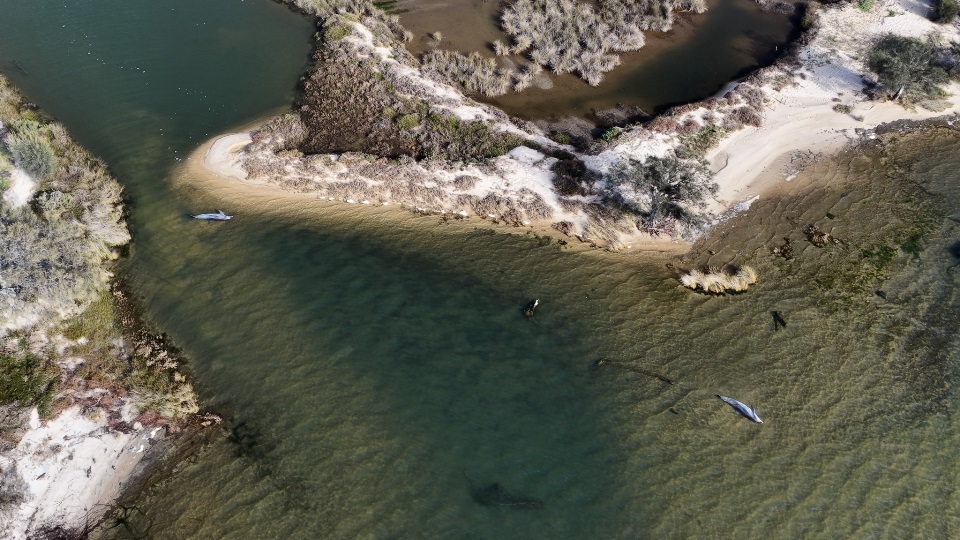
Dr Nicholson said staff from Parks and Wildlife Service responded quickly, carrying both dolphins back into deeper water.
The animals were later observed foraging normally, appearing unaffected by the incident.
Dr Nicholson said dolphin strandings were becoming increasingly common in Western Australia.
"As the climate dries, so do our estuaries," she said.
"Resident dolphin communities follow fish into very shallow areas and can become trapped between sandbars as tides recede or stranded while travelling across shallow sections.
"Changes in water levels, tidal flows and extreme weather events may increase the risks dolphins face while foraging in these habitats."
The Peel-Harvey Estuary supports a resident population of around 90 dolphins, making the community particularly vulnerable to losses.
"Our research shows the Peel-Harvey population can lose, on average, only one adult female per year if it is to maintain its current numbers," Dr Nicholson said.
"Because we have not observed any immigration into the estuary, the loss of dolphins through live strandings will inevitably contribute to long-term population decline."
Dr Nicholson said early detection remains critical, particularly during warmer months.
"Many dolphins in Mandurah carry distinctive white scars caused by severe sunburn sustained during strandings," she said.
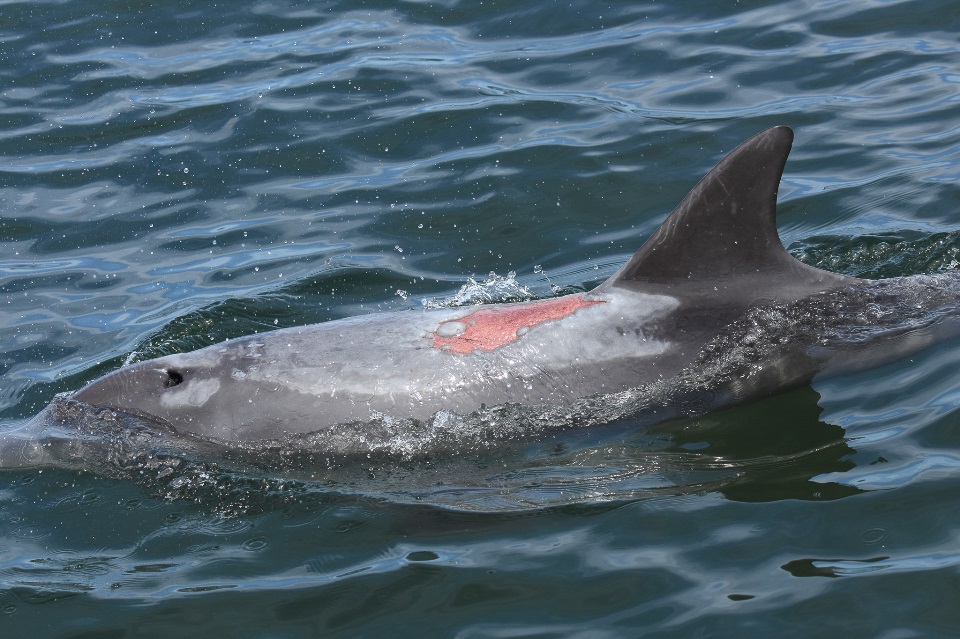
"Some animals die days or even weeks later from complications including dehydration, sunburn, and injuries associated with being stranded.
"With such extensive waterways across the South West and Peel region, community vigilance is vital. The sooner stranded dolphins are detected and reported, the greater their chances of survival."
Anyone who encounters a stranded dolphin should contact the Department of Biodiversity, Conservation and Attractions' Wildcare Helpline on 9474 9055 immediately.
News
Double dolphin stranding highlights growing risks in WA estuaries
Posted on
Topics
Harry Butler Institute (HBI)
As experts in the area of sustainable development, the Harry Butler Institute enables industry to deliver maximum economic value to our community, whilst simultaneously safeguarding the environment.