News
Deep diving manta rays building 'mental maps' of the ocean
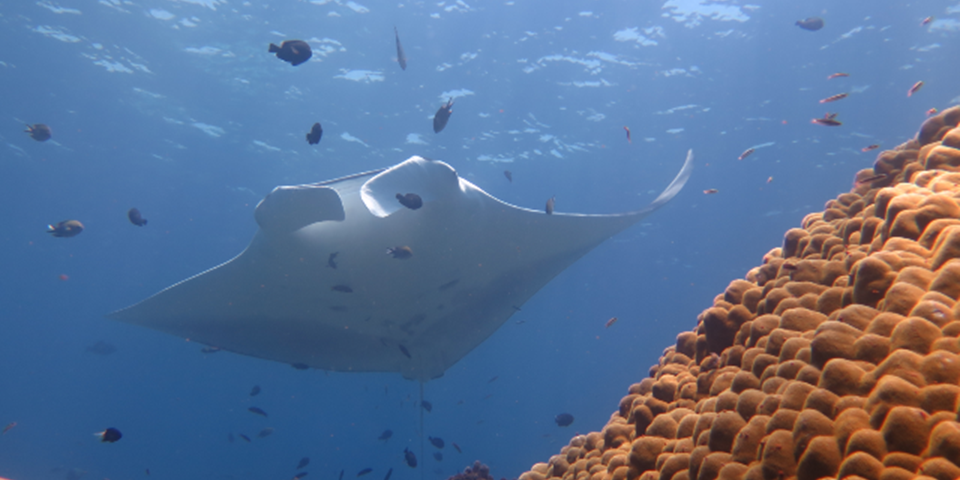
New research led by Murdoch University has found oceanic manta rays may dive more than a kilometre deep to orientate themselves and build “mental maps” of the ocean.
The study, which was published in Frontiers in Marine Science, tracked 24 oceanic manta rays in Indonesia, Peru and New Zealand, between 2012 and 2022.
An international team of researchers tagged the deep diving animals to learn more about their behaviour.
They found manta rays are capable of diving to depths of more than 1,200 metres — far further than initially believed.
Lead author Dr Calvin Beale, who completed his PhD at Murdoch University, said the manta rays may go on these deep dives to gather information before deciding where to go on long distance travels.
“These dives, which are linked with increased horizontal travel afterwards, may play an important role in helping mantas gather information about their environment and navigate across the open ocean,” he said.
He said the deep dives could help manta rays sample the environment, such as the Earth’s magnetic field, oxygen, temperature and light levels.
“By diving down and ‘sampling’ these signals, they could build a mental map that helps them navigate across vast, featureless stretches of open ocean,” Dr Beale said.
“They can be in up to 8,000 metres deep water and there’s no way for them to really navigate. There are no landmasses or anything nearby within days, so it seems like they’re building a mental compass, a map.”
The full study Deep diving behaviour in oceanic manta rays and its potential function can be found in the journal Frontiers in Marine Science.