News
Can hyper-real virtual worlds make us feel better?
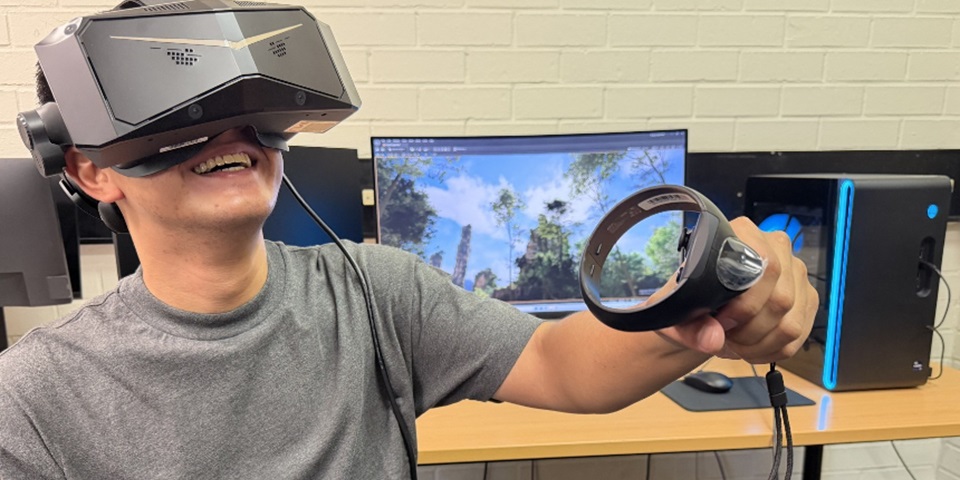
Virtual reality tools have untapped potential to elicit positive emotions for use in education, healthcare, architecture and psychological therapy, according to new research.
The recent study from Murdoch University looked at four core visual factors and associated sub-factors and how they contribute to realism and emotional engagement in virtual reality environments.
Murdoch University PhD candidate and lead researcher Tom Goates said certain design elements in virtual reality can elicit an emotional response comparable to those created in physical environments.
“While early VR research frequently focused on negative emotions such as fear and anxiety, particularly in entertainment contexts, there was limited research around how hyper-realistic nature-based VR environments may induce positive emotional states,” Mr Goates said.
“We now know VR has the potential to also elicit positive emotional states, including awe, joy, and calm, which are increasingly recognised for their psychological and therapeutic value.
“Dynamic lighting can meaningfully contribute to calm; large-scale geometry, such as mountains and trees can induce awe; and geometric manipulation may support calm by enhancing perceptual comfort and visual coherence.
“We are just scratching the surface so far. Virtual reality may have immense capacity which is yet to be discovered. Our study highlights substantial gaps in understanding how these sub-elements interact and influence emotions.
Targeted, design-focused research is now needed to uncover the potential in use of VR design features, using both psychological and physiological measures. Better understanding of these visual factors could allow us to use VR for mental health and stress reduction, nature-based wellbeing, urban design and planning simulations, as well as education and immersive learning environments.”
The paper focused on four core visual factors: geometry, lighting, material surfaces, and colour, and their associated sub-factors that are frequently cited as contributors to realism and emotional engagement in virtual reality environments.
Within these factors, sub-elements such as scale and proportion (geometry), global illumination and shadows (lighting), reflections and material textures (material surfaces), values, and tones (colour) play a direct role in shaping user emotions.
The research establishes an initial framework for understanding the role of visual elements in emotional engagement within virtual reality environments.
“Emotions are vital in the VR experience, as they significantly influence user engagement, memory retention, and decision-making processes,” said Mr Goates.
“Addressing these research gaps will not only improve VR design but also expand the possibilities for immersive experiences that enhance learning, human interaction, and overall wellbeing in meaningful ways.”
The findings of this ongoing research may inform applications in fields such as therapeutic interventions, game design, and simulation-based experiences, where environments designed to evoke relaxation and awe could provide meaningful benefits.
The full study Visual Factors and Sub-Factors for Triggering Positive Emotions in Natural Hyper-Realistic Virtual Reality Environments: A Systematic Literature Review is available in the International Journal of Human-Computer Interaction.
The researchers have now proposed a framework for creating hyper-real nature-based virtual reality environments, and this was recently presented at the Artificial Intelligence and Virtual Reality (AIVR) Conference in Osaka, Japan.
Find out more about how Murdoch is focused on producing the next generation of IT professionals who can help solve real-world problems, by visiting School of Information Technology.
News
Can hyper-real virtual worlds make us feel better?
Posted on